Euro Crumbles as Bitcoin’s Dominance Surges—Is Fiat on the Brink?

Traditional currencies tremble while digital gold flexes. The euro's losing streak deepens as capital floods into Bitcoin—no bailouts, no central bank tricks, just pure market Darwinism.
Why fiat looks fragile:
- Institutional adoption hits new highs (thanks, BlackRock).
- Eurozone inflation still sticky despite ECB's 'mission accomplished' pressers.
- Real yield? Try 'real pain' for bondholders.
Meanwhile, Bitcoin's network hash rate screams 'come at me bro' to legacy finance. The euro's not dying—but it's definitely learning its place in the new hierarchy. (P.S. Brussels bureaucrats still think CBDCs will save them. Cute.)
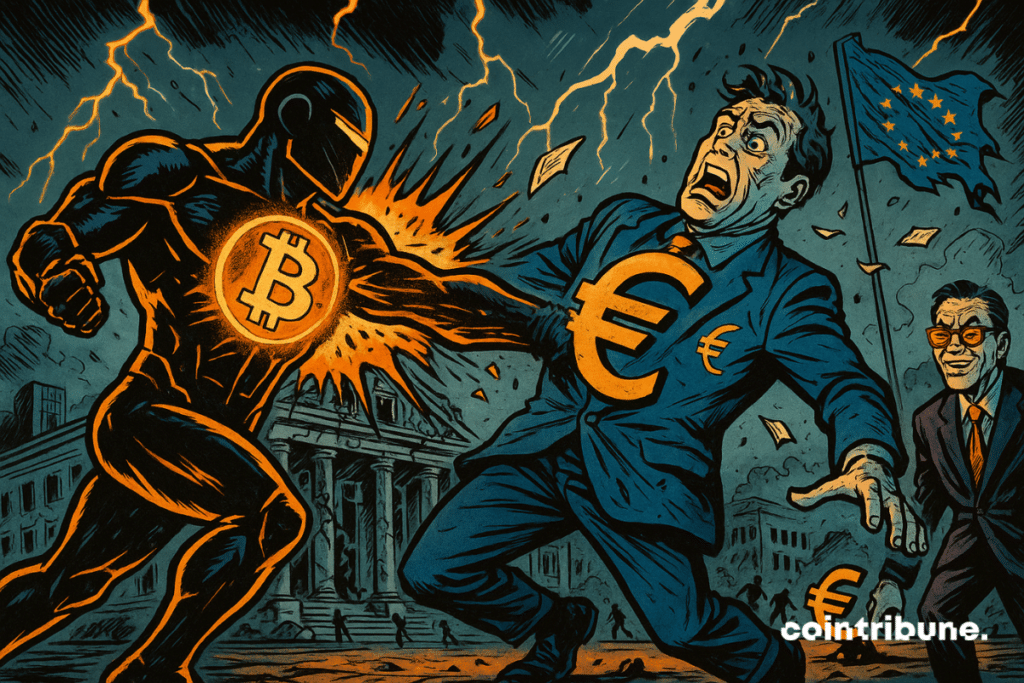
In brief
- Max Keiser claims that “the euro will go to zero against Bitcoin,” a provocative statement backed by market data.
- Bitcoin has broken major resistance levels, confirming a bullish trend against the euro.
- The European Central Bank warns about the rise of dollar-based stablecoins, which threatens the eurozone’s monetary autonomy.
- The loss of confidence in the euro and the institutions’ failure to provide a clear response could strengthen Bitcoin’s dominance in the medium term.
Bitcoin crosses historic thresholds against the euro
While Europe’s monetary sovereignty is increasingly threatened, Max Keiser, journalist and investor, stated that “the euro is falling to zero against bitcoin”.
SPOILER ALERT 🚨
The Euro’s going to zero against Bitcoin. https://t.co/La0WaJ6NZX
This statement, as radical as it is, comes as BTC’s price has reached one of its all-time highs against the European currency. The BTC/EUR chart shows a clear breakout of the resistance zone from €95,000 to €98,000, which had until now hindered bullish ambitions last spring. The current rise is sustained and vigorous, offering momentum rarely seen in this currency pair.
BTCUSDT chart by TradingViewThis momentum did not happen by chance. It results from a technically structured process methodically built over several weeks. After a dip to €85,000 in Q2, buyers took control again by actively defending the €90,000 threshold. Various major market signals support this trend :
- The 50-week moving average, long a resistance, has been broken upwards and now serves as a key support ;
- The current monthly candle is one of the strongest recorded against the euro, indicating a strong influx of purchases ;
- The stair-step bullish structure on weekly charts confirms renewed operator confidence ;
- The next technical targets are now in the €110,000 to €115,000 range.
This robust technical context strengthens the credibility of Keiser’s statement, however extreme it may sound. While the euro is far from having “disappeared”, it appears today significantly weakened in its role as a store of value against a rapidly accelerating bitcoin.
An ECB on the Defensive Against the Rise of Cryptos
While the market applauds bitcoin’s performance, the European Central Bank is sounding the alarm. In a recent warning, the monetary institution expressed concerns over the rapid expansion of dollar-backed stablecoins, warning that they contribute to eroding the monetary autonomy of the eurozone.
Stablecoins are reshaping global finance – with the US dollar at the helm. Without a strategic response, European monetary sovereignty and financial stability could erode. However, in this disruption there is also an opportunity for the euro to emerge stronger.
— European Central Bank (@ecb) July 28, 2025These statements echo the ECB’s strategy, which calls for a return to the euro in digital payments and seeks to restore confidence in its own currency. However, in a market increasingly oriented towards decentralized alternatives, these calls struggle to translate into concrete actions, while bitcoin continues to gain ground.
This climate of monetary tension reveals a shift in perception: where the euro was once seen as an institutional SAFE haven, bitcoin now asserts itself as an alternative store of value for a growing segment of investors, including in Europe.
Far from being just a speculative asset, it is progressively becoming a tool of monetary distrust, a symbol of rejection of inflationary policies and financial centralization. This perception shift is reinforced by regulators’ wait-and-see approach, who struggle to formulate a credible response to the challenges posed by cryptos and Web3 infrastructures.
Max Keiser’s statement reflects a strategic shift in the market, which seems no longer satisfied with institutional promises. If the ECB fails to restore trust in the digital euro and to contain the influence of stablecoins, the darkest predictions could become more than just hype.
Maximize your Cointribune experience with our "Read to Earn" program! For every article you read, earn points and access exclusive rewards. Sign up now and start earning benefits.
