Beware: Your ChatGPT Conversations Could Land You in Court

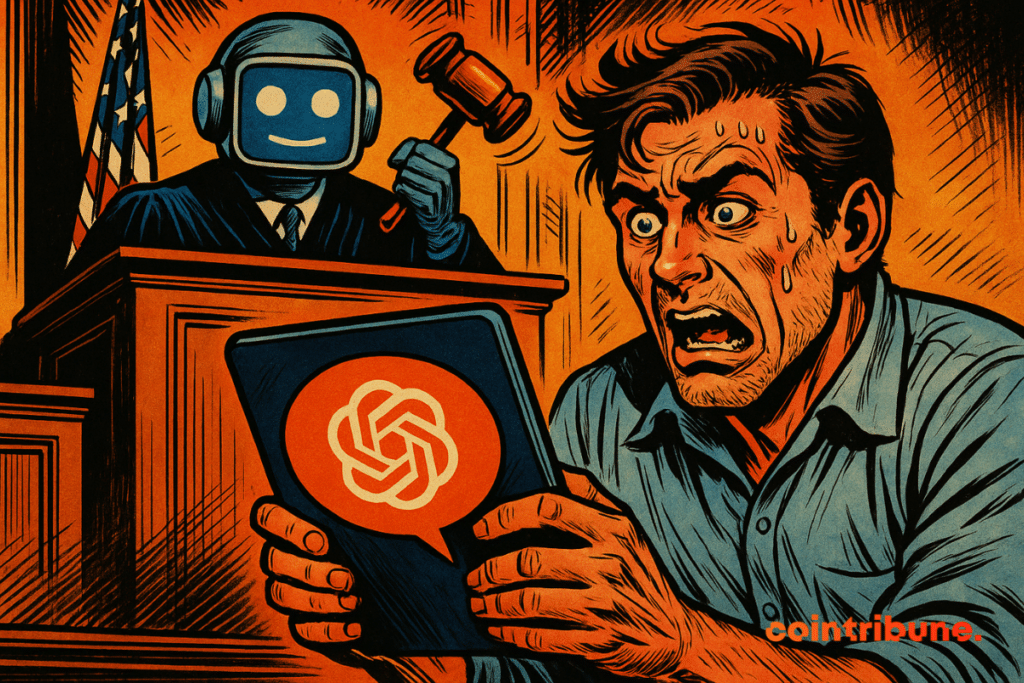
Think your AI chats are private? Think again. Courts are now eyeing chatbot logs as potential evidence—your casual queries might just become Exhibit A.
Legal gray zone meets digital breadcrumbs
From offhand remarks to sensitive disclosures, anything you type into ChatGPT could be subpoenaed. No ‘delete’ button strong enough to scrub a court order.
Tech giants’ data hoards become prosecutors’ goldmines
Every corporate chatbot platform sits on a treasure trove of user data—and law enforcement knows it. Suddenly that ‘harmless’ market speculation looks like insider trading.
Bonus finance dig: If bank records get subpoenaed, why wouldn’t AI logs? At least the blockchain is transparent by design.
In Brief
- Conversations with ChatGPT are not confidential and could be used as legal evidence.
- Unlike a professional, AI offers no legal protection for your personal information.
- Without a clear legal framework, talking to an AI is like exposing your private life to potential exploitation.
Talking to an AI is not the same as talking to a professional
Entrusting your thoughts to an AI leaves a trace. As long as the law does not protect this data as professional secrets, it can be turned against you.
Sam Altman himself admitted it: if you discuss your personal problems with AI and a lawsuit later arises, OpenAI could be compelled to provide that data. Altman has already demonstrated this stance by publicly distancing himself from Robinhood’s tokenized shares when they threatened the company’s image or principles.
This legal loophole is all the more concerning as AI is increasingly sought for psychological, medical, or financial advice.
For now, legislation remains unclear. No clear framework protects AI users, as is the case in the patient-doctor relationship. While awaiting regulation, caution remains your only defense, even with trading bots.
Surveillance advancing in disguise
Beyond the judicial risk, Altman raises another concern: the more AI spreads, the more states will want to monitor its use. The argument is security: to prevent these technologies from being abused for malicious purposes. But the price to pay is an increasingly fragile private life. And don’t forget that what you say to ChatGPT could one day be turned against you.
According to Altman, a compromise will need to be found between individual freedom and collective security. He says he is ready to sacrifice some confidentiality in the name of safety. A statement that says a lot about the direction major tech companies are taking.
Entrusting your thoughts to a rapidly evolving AI leaves a trace. And as long as the law does not protect this data as professional secrets, this trace can one day be used against you.
Maximize your Cointribune experience with our "Read to Earn" program! For every article you read, earn points and access exclusive rewards. Sign up now and start earning benefits.
