The Inevitable War Between Europe And Russia

The USA-Ukraine summit recently took place in Riyadh and led to more ambitious truce proposals than expected. “The ball is now in Russia’s court” has become the American talking point on this issue. Meanwhile, Europe seems to be accelerating its military reintegration in an increasingly tense geopolitical context.
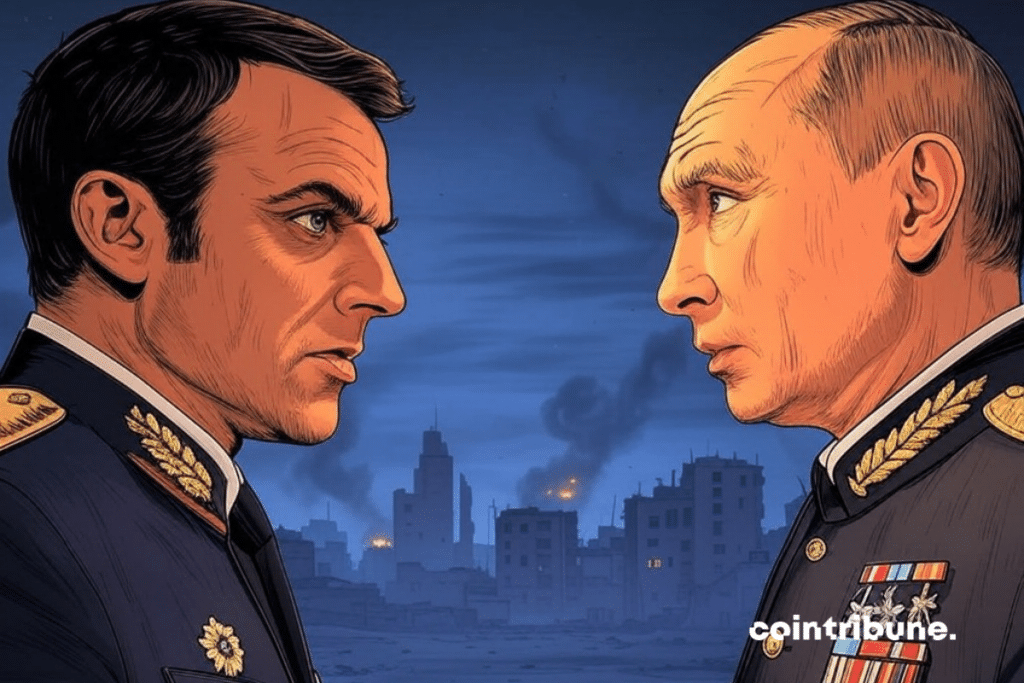
The truce between Russia and Ukraine on hold
The Riyadh summit, led by Marco Rubio, marked a turning point in the peace negotiations in Ukraine. Contrary to pessimistic expectations, the discussions have paved the way for a potential truce that would go, including not only airspace but also ground combat.
Vladimir Putin’s response was swift. Appearing in military uniform, he spoke of reclaiming the Kursk region while setting conditions for this truce that equate to awhich he has yet to achieve on the ground.
He essentially demands that all conditions leading to the war be removed, which would mean ceding the annexed oblasts to Russia that are not fully conquered,
This situation reveals that, contrary to some analyses,. Negotiations appear stalled on the territorial issue, with Americans seeming willing to leave Russia only what it already holds, without further concessions.
Europe, alone against Putin’s Russia
Meanwhile, Europe is not slowing down its military buildup. On the contrary, there is athat now extends beyond mere opposition to Russia, also encompassing a form of resistance to American ambitions in Greenland and Canada.
Analyses circulate about Europe’s overall military power, which, if unified, could potentially surpass that of the United States in ground forces. This dynamic is fueled by several factors:
- A growing mistrust towards Trump’s policies, particularly after his statements about the possible annexation of Greenland and Canada.
- The French strategic interest historically favoring a more independent Europe.
- The need for Emmanuel Macron to restore his image after his electoral difficulties.
This European “momentum” is not new. From the very first Trump presidency, a media campaign already presented three threatening “wolves”: China, Russia, and the United States. It marked the emergence of athat also defined itself against America.
The flaws of the European project
Despite this aspiration for strategic autonomy, Europe faces major. The situation in Romania is symptomatic: the ban on Calin Georgescu from running in the election, followed by a similar measure against his replacement, reveals a deep democratic crisis.
These measures, taken in the name of fighting Russian interference, risk paradoxicallythey claim to combat. As JD Vance highlighted, “if your democracy can be threatened by a small interference like buying a candidate, you have an internal problem of hatred towards your ruling class.”
This situation illustrates thethat could prove fatal in case of conflict: when a population prefers to see its country lose a war if it means getting rid of its elites, rather than patriotically supporting a victory that would keep those same elites in power.
Against Russia, towards a powerful Europe?
The idea of a powerful Europe, capable of rivaling the United States and Russia, is appealing. It would offer numerous advantages:
- A more favorable economic position, as superpowers attract talents and capital.
- A development of French innovation on a continental scale.
- Arms contracts returning more to France.
However, the emergence of such power seems unlikely without a profound transformation. Europe is already largely federal withand.
Heading for inevitable conflict?
The most troubling scenario would be a direct confrontation between Europe and Russia in Ukraine, especially if the United States decided to withdraw from the game. A defeat or even a costly war of attrition could thenin Europe.
Even more worryingly, even a European victory against Russia could lead to a, particularly around the question ofThe most likely outcome would then be a form of
The optimistic alternative of the emergence of a “two-headed Western power” where Europe and the United States would coexist as equal partners
The path towards a powerful and sovereign Europe exists, but it is fraught with pitfalls, the outcome of which could paradoxically be increased dependency on the United States rather than true emancipation. Especially since the United States are technologically distancing themselves from Europe, especially on the issue of bitcoin.
Maximize your Cointribune experience with our "Read to Earn" program! For every article you read, earn points and access exclusive rewards. Sign up now and start earning benefits.
