Iran’s Crypto Gambit: Advanced Weapons Sales Now Accept Digital Currency

Sanctions? What sanctions? Tehran just flipped the script on global finance.
The New Arms Bazaar
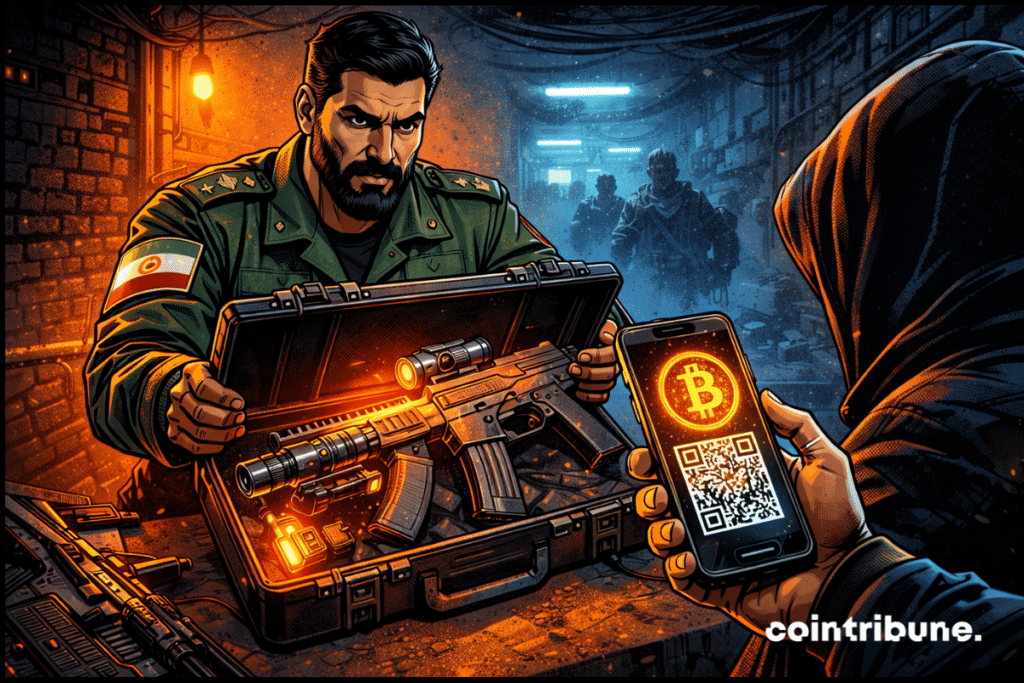
Forget wire transfers and traceable banking channels. Iran's latest maneuver cuts straight through the red tape—offering advanced military hardware with one simple payment condition: cryptocurrency. No intermediaries, no frozen accounts, just direct digital settlement that leaves traditional oversight scrambling.
Bypassing the Gatekeepers
This isn't about adopting trendy tech. It's a calculated end-run around decades of financial containment. By demanding crypto payments, Iran effectively neutralizes the primary enforcement tool of its adversaries—the global banking system. The message to other sanctioned states is unmistakable: there's now a playbook for operating outside the dollar-dominated order.
The Ripple Effect
Defense analysts are watching closely. If this model gains traction, it could trigger a seismic shift in how geopolitical transactions are conducted. Suddenly, the very features that make crypto attractive to retail investors—pseudonymity, borderless transfer, resistance to censorship—become strategic assets for state actors. A sobering reminder that code is neutral; its application defines its impact.
The Bottom Line
While Wall Street debates tokenized ETFs, real-world adoption is happening in the shadows. Iran's move proves crypto's utility extends far beyond speculative trading—it's becoming a tool of statecraft and survival. One hedge fund manager's 'digital gold' is another regime's financial lifeboat. The irony? The same technology promising to 'bank the unbanked' is now helping to arm the unsanctionable.
Welcome to the new frontier, where sovereignty isn't just claimed—it's cryptographically enforced.
 Read us on Google News
In brief
- Iran now offers to sell advanced weapons, including ballistic missiles, drones, and ships, with possible payment in cryptocurrencies.
- This option aims to bypass Western sanctions and banking blockades that limit its exports.
An assumed offer to bypass sanctions
Iran officially accepts cryptocurrency payments for its arms sales. This proposal comes from the export center of the Iranian Ministry of Defense, known as Mindex. This is not a leak or a rumor. Indeed, the payment option is displayed in promotional documents intended for foreign buyers.
Iran has faced a regime of severe sanctions imposed by the United States and its allies for years. Traditional banking channels are locked, and it is nearly impossible to make payments in dollars. Cryptos thus offer a functional, if imperfect, way out.
This choice is not ideological but pragmatic. Cryptos allow fast, cross-border transfers without relying on traditional financial infrastructures. For a pressured state, it is a tool for economic survival. And now, a diplomatic lever.
The systems offered are not marginal. Catalogs mention combat drones like the Shahed type, already used in several recent conflicts. Short- and medium-range ballistic missiles are also part of the offer. Naval vessels, including corvettes and armed patrol boats, complete the list.
These equipments mostly interest countries already isolated from the international financial system. States under sanctions, or wishing to avoid Western circuits. Iran does not target its direct adversaries. It addresses an already existing parallel market.
Crypto as a geopolitical tool
The use of cryptos by states is no longer marginal. Iran has been exploring it for several years, notably for its imports. The novelty lies in the assumed and public nature of this military offer. It is no longer about discreet operations. However, the message is sent openly.
This development worries Western authorities. Indeed, the U.S. Treasury has already sanctioned networks using cryptos to bypass embargoes. The blockchain leaves traces. But their exploitation remains complex, especially when transactions pass through intermediaries outside Western jurisdiction.
For Iran, the risk already exists and sanctions are in place. As such, the room for maneuver is limited. In this context, using cryptos does not fundamentally worsen the situation. Instead, it allows maintaining an essential strategic activity.
The fact that a state offers missiles against cryptos changes the overall perception of the sector. Cryptocurrency is no longer just an alternative financial tool. It is already used as an alternative for wealth transfer. It also becomes a sovereignty instrument for powers under constraints.
Maximize your Cointribune experience with our "Read to Earn" program! For every article you read, earn points and access exclusive rewards. Sign up now and start earning benefits.
