Bitcoin’s Latest Dip: Not Mass Selling, But Stablecoin Shorts and Market Mechanics at Play

Bitcoin's price just took another hit—but don't blame panic selling. The real culprits are hiding in plain sight.
The Short Game
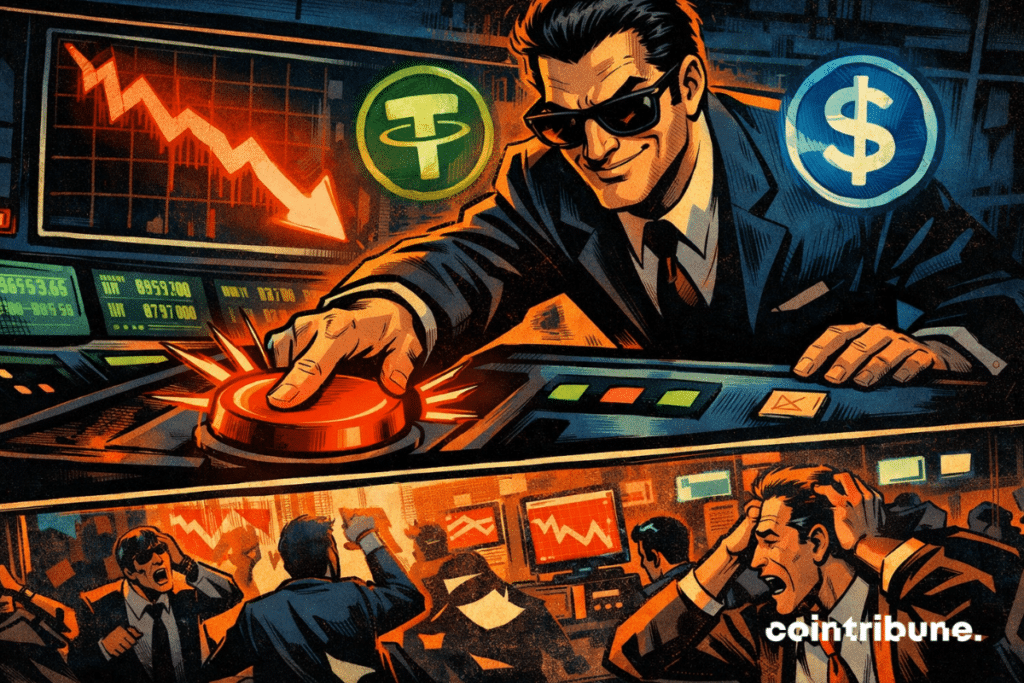
Forget the narrative of investors rushing for the exits. This dip stems from sophisticated plays in the stablecoin market. Traders aren't dumping their Bitcoin; they're using stablecoins to place aggressive short positions, betting on further downside and creating intense selling pressure without a single 'sell' order on a traditional exchange.
Liquidity's Double-Edged Sword
Market mechanics are amplifying the move. Thin order books and clustered liquidations in the derivatives market act like a wrecking ball on volatility. A small nudge triggers a cascade of automated sell-offs, pushing prices lower far faster than organic sentiment would suggest. It's less about fear and more about financial engineering—the kind that makes old-school traders mutter about 'paper assets.'
So, is this the big crash? Hardly. It's the sound of a complex, maturing market grinding its gears. The underlying asset hasn't changed; just the casino-style tactics swirling around it. Sometimes, the most bullish signal is when the dip has a perfectly technical explanation—and not a fundamental one.
 Read us on Google News
In Brief
- Recent Bitcoin pullbacks are largely driven by short positions opened using stablecoins, creating downward pressure without triggering large-scale selling from holders.
- About 300 billion dollars of dormant Bitcoin returned to circulation in 2025 through holder sales, OTC trades, and ETF activity.
Market Mechanics Behind Recent Bitcoin Pullbacks
Sweep, co-founder of GlydeGG, explained that stablecoin-denominated Leveraged shorts are the main force behind the recent dips. When these positions enter the market, market makers must respond by selling Bitcoin to manage exposure and maintain neutrality. This operational selling is not reflective of negative sentiment but is necessary to balance positions. Consequently, prices can decline without sparking widespread alarm, rushed selling, or spot sales from long-term holders.
The analyst further described how the U.S. dollar itself plays a role in this cycle, explaining that as it moves through the global system, it acts as leverage and exerts pressure on the market. Traders respond to this pressure by adjusting their positions through hedging, which affects spot Bitcoin prices and maintains the ongoing cycle.
Meanwhile, sell-offs remain subdued because most retail investors have already exited, leaving the market to operate within a system measured against a weakening currency. This setup contributes to rising volatility even when overall investor conviction stays steady, highlighting the market’s sensitivity to the dollar’s influence.
According to Sweep, this is less a traditional bear market and more a rebalancing of liquidity pools, allowing larger players to acquire bitcoin at lower prices without directly holding it.
Long-Term Holder Activity and Supply Changes
Additional insights come from crypto Miners, an ambassador at Wolfswapdotapp, who highlighted research from K33Research showing that approximately $300 billion of previously dormant Bitcoin re-entered circulation in 2025. This surge in supply was fueled by long-term holder sales, over-the-counter transactions, and ETF absorption, representing one of the largest increases in available Bitcoin supply in the network’s history.
According to on-chain metrics provided by CryptoQuant, long-term holders have been distributing Bitcoin at rates not seen in over five years, marking one of the most active periods of holder activity in recent history. Alongside this, the market is experiencing strong downward pressure that currently outweighs demand, intensified by negative ETF flows and reduced participation from retail investors.
However, K33Research suggests that the current Bitcoin distribution phase may be ending, with long-term holders expected to ease their releases sometime in the first half of next year. This could create an opportunity for fresh buying as institutional adjustments help stabilize supply.
They stated, “Markets remain sensitive, but structurally, this looks like a late cycle redistribution rather than panic selling.”
Bitcoin Flows and Key ETF Price Levels in Focus
In line with these movements, Julio Moreno, head of research at CryptoQuant, pointed out that significant Bitcoin inflows have occurred on Binance as the price fell below $85,000. At the same time, Bitcoin has moved back toward the average cost basis of U.S. spot ETFs, placing many ETF investors close to their initial investment value.
According to Glassnode, this zone is especially important, as future movements will depend on whether fresh buying enters the market or selling pressure increases while holders review their positions.
Maximize your Cointribune experience with our "Read to Earn" program! For every article you read, earn points and access exclusive rewards. Sign up now and start earning benefits.
