Crypto Trading Volumes Collapse as Market Stalls: JPMorgan Sounds Alarm on 2025’s Great Slowdown

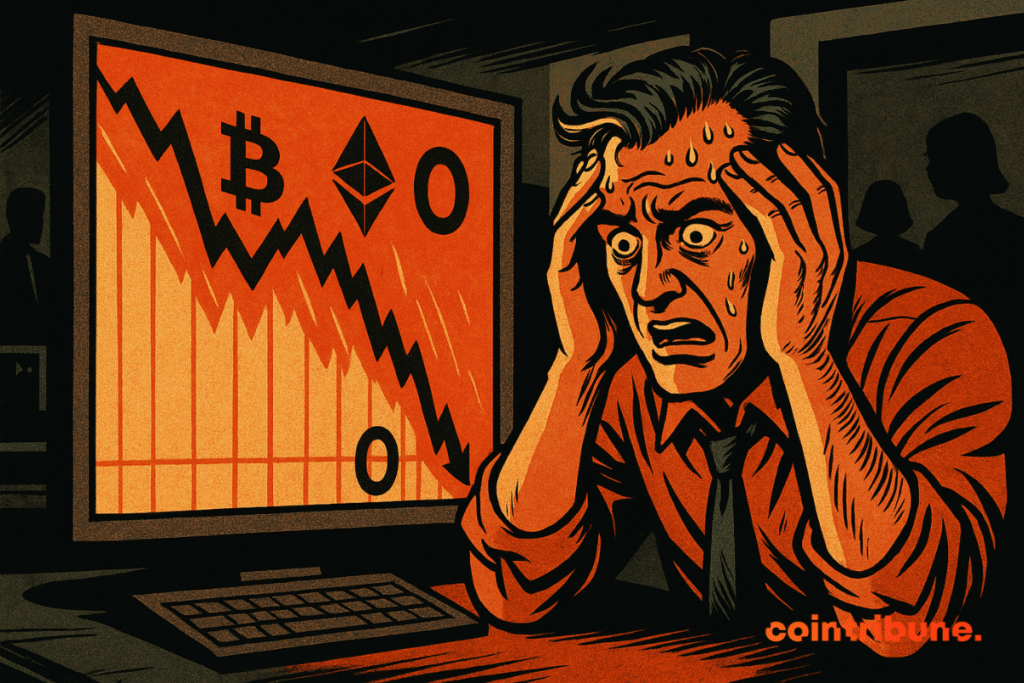
Crypto's engine just sputtered. Trading volumes are in freefall, and the market's stuck in neutral. JPMorgan's latest report paints a stark picture of a digital asset landscape hitting the brakes hard.
The Great Liquidity Drain
Forget the frenzy. The data shows a market-wide plunge in activity. The numbers don't lie—volume has cratered. It's a classic sign of investor retreat, a collective pause that leaves exchanges quieter than a bank vault on a Sunday.
Stalled Momentum, Searching for a Spark
What happened to the bull run? Momentum has flatlined. Without fresh capital or a major catalyst, the entire ecosystem is treading water. It's the financial equivalent of watching paint dry, only with more volatile assets.
A Pause or a Precursor?
Is this the calm before another storm, or has the music finally stopped? History says crypto winters thaw, but this chill is testing everyone's patience. The smart money is watching, waiting for a sign—any sign—of life returning to the order books.
One cynical take for the road: Wall Street analysts pointing out a liquidity crunch in decentralized finance? That's like a submarine captain warning about dampness. The real question isn't if volumes fell, but who's brave—or foolish—enough to be the first one back in the pool.
 Read us on Google News
In brief
- Crypto trading volumes contract sharply across the entire market, from spots to derivatives and stablecoins.
- Spot bitcoin ETFs and listed crypto products suffer massive outflows, indicating a clear disengagement of institutional investors.
- Between leverage, fears of a new crypto winter, and underperformance versus stocks, the market appears more fragile, although this phase could also serve as a purge before a new cycle.
A crypto market out of breath
After firmly denying that the closure of certain crypto accounts was a “political hunt” aimed at Donald Trump, JPMorgan brings the discussion back to the numbers. According to the bank, last month was marked by a sharp drop in transaction volumes across the entire market. Spot, derivatives, stablecoins: nothing escapes.
Spot crypto trading volumes reportedly fell by about 19%, while other indicators like TradingView report a similar decrease, close to 23%. In other words, fewer trades, less liquidity, and a structurally more fragile market.
The clearest signal comes from stablecoins. These tokens, meant to reflect the ecosystem’s firepower, see their average daily volume drop by 26% month-over-month. When stablecoins freeze, it often means traders prefer to step back rather than take risks in the market. Less rotation, less arbitrage, less leverage.
At the same time, decentralized finance (DeFi) and NFTs are not immune to the slowdown. Volumes in these segments are also contracting, confirming that it’s not just the bitcoin market that is breathing less but the entire crypto structure that is slowing down. Under these conditions, it’s hard to talk simply about a small technical consolidation.
Crypto ETFs, massive outflows, and institutional disenchantment
Beyond the spot market, the message from listed products is even more brutal. Spot bitcoin ETFs in the United States, long touted as the dream gateway between Wall Street and the crypto world, recorded nearly $3.4 billion in net outflows in November. In one month, October’s inflows were purely and simply erased.
For JPMorgan, exchange-traded crypto products (ETPs, ETFs, trusts…) experienced their worst month ever, with $1.4 billion in net redemptions. This is no longer just profit-taking; it’s a real withdrawal movement. Institutional investors, who had timidly begun to expose themselves again, are now scaling back once more.
This reversal of flows adds to the price drops. The total market capitalization of crypto fell by about 17%, falling back around $3.04 trillion. In detail, bitcoin’s value declines, ether’s market cap drops nearly 22% to fall toward $361 billion, and crypto-related company stocks plunge around 21%. The transmission chain between spot market, listed products, and stock values functions… but in the wrong direction.
The transition is clear: where some hoped for a new bullish leg fueled by ETFs, it is ultimately distrust that takes precedence. And this distrust doesn’t come from nowhere.
Leverage effect, fear of a new winter, and comparison with stocks
JPMorgan analysts point to several factors weighing simultaneously on valuations and crypto trading volumes. First, concerns about leverage. After several months of almost continuous rise, many derivative positions had accumulated. The slightest correction movement then triggers liquidations, which mechanically amplifies the price drop… and further chills traders.
Next, discussions about a possible “new crypto winter” resurface. Each volume contraction, each outflow from listed products, revives memories of 2018 or 2022. At this stage, we are not there yet, but the market seems fragile enough for the narrative to take hold. In crypto, narrative counts almost as much as numbers.
And while crypto stalls, traditional stock indexes hold up fairly well. The S&P 500 remains broadly stable, the Nasdaq 100 falls by only about 2% over the period. The comparison hurts: the asset supposed to be ultra-performing, meant to offer high beta, underperforms the “classic” markets this time. For some investors, the calculation is simple: why bear this level of volatility if performance doesn’t follow?
Sustained winter or simple pause? What investors should remember
Should we therefore see in the collapse of crypto trading volumes the beginning of a long bear cycle? Not necessarily. Historically, phases where volumes contract often follow periods of overactivity. They allow purging leverage, calming speculative excesses, and giving the market some oxygen before a new construction phase.
What is certain, however, is that this context forces investors to slightly change their posture. Less volume means sometimes emptier order books, therefore more violent price movements on simple orders. Risk management becomes central again: position sizing, measured use of leverage, choice of platforms, asset selectivity.
For long-term profiles, this phase may also be an opportunity to distinguish noise from fundamentals. Solid projects continue to progress even when volumes disappear. Others live only thanks to market euphoria. When crypto trading volumes dry up, the veneer cracks quickly.
Maximize your Cointribune experience with our "Read to Earn" program! For every article you read, earn points and access exclusive rewards. Sign up now and start earning benefits.
