Bitcoin’s Tumble Drags GameStop Stock Down With It—Here’s Why Markets Are Panicking

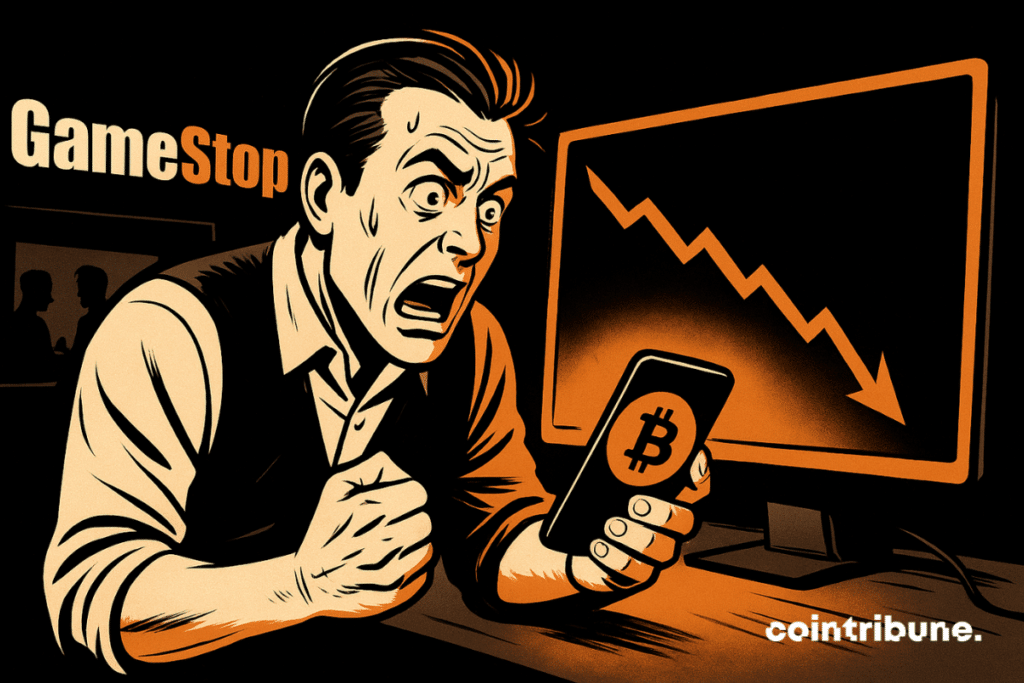
When Bitcoin sneezes, the rest of the speculative market catches a cold. The latest crypto sell-off just proved it again, sending shockwaves far beyond the digital asset space and straight into a Wall Street meme favorite.
The Domino Effect Hits Main Street
Forget isolated sectors—today's financial ecosystem is a tangled web of correlated risk. The same traders chasing parabolic gains in crypto are often the ones piling into volatile equities. When fear grips the crypto market, margin calls and portfolio rebalancing don't discriminate. Liquidity gets pulled from the riskiest assets first, whether they're digital tokens or brick-and-mortar nostalgia plays.
A Shared Psychology of Volatility
Both assets thrive on narrative, community momentum, and a deep distrust of traditional finance. They're bets against the old guard. So when confidence cracks in one high-beta arena, it inevitably shakes faith in the other. It's a reminder that in the age of social media trading, sentiment is the ultimate currency—and it's frighteningly contagious.
The New Rules of Risk Are Unwritten
This correlation exposes a fundamental truth: the old models are broken. Analysts scratching their heads over the link are missing the point. We're in a new regime where asset classes are defined by investor behavior, not just balance sheets or sector classifications. The market is now a mood ring, and right now, it's flashing red for anything that smells of speculative excess.
One cynical take? The same financiers who once scoffed at 'internet money' are now desperately modeling Bitcoin volatility to explain their own stock picks—a fitting irony for an industry that's always one step behind the next bubble. The connection is clear: when the tide of easy money recedes, it turns out everything buoyed by hype sinks together.
 Read us on Google News
In brief
- GameStop lost 9.2 million dollars on its 4,710 bitcoins during the third quarter of 2024.
- The company’s stock dropped 5.8% on Wednesday, falling below 24 dollars.
- The company plans to sell part of its bitcoins to limit losses.
- Corporate Bitcoin treasuries are taking a hard hit from the current crypto winter.
A risky bet that turns into a nightmare
GameStop had bet big last spring. Between May and June, the retailer acquired 4,710 bitcoins for 512 million dollars, financed by a 1.3 billion dollar bond issuance.
At the time, GameStop’s stock peaked at 35 dollars and Bitcoin seemed unstoppable. Six months later, the picture darkens seriously.
As of November 1st, the company’s bitcoin holdings were valued at 519.4 million dollars. An amount that still represents a gain of 19.4 million compared to the initial investment.
However, the trajectory is worrying. During the third quarter alone, the company incurred an unrealized loss of 9.2 million dollars. Bitcoin dropped from over 122,000 dollars to about 110,000 dollars in October before plunging to 90,000 dollars by mid-December.
If GameStop had sold at the historic high of 123,000 dollars, it WOULD have pocketed a 12% profit. Today, Bitcoin shows a decrease of 2.7% since the initial purchase on May 28.
The company finds itself trapped in an uncomfortable position: keep and hope for a rebound, or sell at a loss to limit the hemorrhage. In its latest financial report, GameStop hinted it might opt for the latter solution.
GME stock reflects this uncertainty. From 35 dollars in May, it plunged 30% to reach 23.35 dollars just before the earnings release. The drop even accelerated Wednesday with an additional 5.8% decline. Investors clearly punish the company’s Bitcoin strategy.
BTCUSDT chart by TradingViewMixed results in a cold crypto market
The third quarter report reveals a mixed picture. Net sales stood at 821 million dollars, far from the 987 million expected by analysts. That’s 4.6% less than a year earlier and a 16.8% gap from forecasts. Revenue disappoints, but other indicators offer some hope.
Net profit soared to 77.1 million dollars, compared to only 17.4 million a year earlier. EBITDA literally exploded with a 675% growth, reaching 64.4 million dollars.
Operating margin turned positive at 5%, whereas it was -2.9% the previous year. These operational performances show that GameStop is improving its efficiency, even if sales stagnate.
But these good news struggle to offset the concern around bitcoin. GameStop is not the only company affected by the “crypto winter.” Companies that have built Bitcoin treasuries are all weathering the same storm.
Metaplanet, the second-largest publicly traded Bitcoin treasury, went from 600 million of unrealized gains at the beginning of October to 530 million in losses by December 1st, according to Galaxy Research.
This cold wave follows the massive liquidation on October 10th, described as “maximum pain” in crypto history. In one day, 19 billion dollars of positions were liquidated. Bitcoin lost 21% in 90 days, falling from 115,500 to 90,131 dollars.
The uncertain future of corporate Bitcoin treasuries
GameStop is now at a crossroads. Liquidating its bitcoins now would crystallize losses but secure the treasury. Keeping could pay off if bitcoin rebounds during the traditional year-end rally. A risky bet in a market that remains bearish.
With a market cap of 10.46 billion dollars, GameStop will have to decide quickly on the fate of its bitcoins. The video game retailer now embodies the risks of the crypto bet: between promises of profits and ruthless volatility, the balance remains precarious. Investors are watching every MOVE closely.
Maximize your Cointribune experience with our "Read to Earn" program! For every article you read, earn points and access exclusive rewards. Sign up now and start earning benefits.
