CertiK Warns: US Stablecoin Regulations Are Splitting Global Liquidity

US stablecoin rules aren't just creating red tape—they're actively fracturing the global financial system. A new warning from blockchain security firm CertiK paints a stark picture of regulatory divergence forcing liquidity into isolated pools.
The Great Wall of Regulation
Forget a borderless financial future. The current US regulatory approach is building walls, not bridges. By imposing a distinct set of rules for dollar-pegged digital assets, American policymakers are inadvertently creating a 'US-only' liquidity zone. Projects and traders outside that zone are now forced to navigate a parallel, fragmented market. It's a classic case of domestic policy creating international friction—something Wall Street veterans know all too well from playing in different rulebooks across the Atlantic or Pacific.
Liquidity in Silos
The core function of a stablecoin—providing a reliable, liquid bridge between crypto and traditional finance—gets crippled when its usability stops at a jurisdictional line. This split doesn't just inconvenience international users; it fundamentally undermines the efficiency and resilience of the entire crypto economy. Liquidity fragments, arbitrage opportunities warp, and systemic risk increases when the market's foundational asset exists in multiple, non-fungible regulatory versions. It turns a unified tool for global finance into a collection of isolated instruments.
Innovation's New Headwind
This regulatory splintering acts as a direct brake on innovation. Developers now face a daunting choice: build for the US market and accept its regulatory overhead, or build for the rest of the world and lose access to a massive pool of capital and users. The result? Slower adoption, duplicated efforts, and a innovation pipeline that's increasingly bifurcated. The very agility that defines crypto is being hamstrung by compliance complexity.
The global race for crypto supremacy won't be won by who has the strictest rules, but by who builds the most usable, liquid, and integrated financial ecosystem. The US, by walling off its stablecoin garden, might just be pruning its own influence. After all, in finance, the money always flows to the path of least resistance—and right now, US regulations are building a very impressive dam. Some things never change: regulators build moats, while capital finds the bridge.
 Read us on Google News
In brief
- The GENIUS Act creates the first unified US stablecoin framework, tightening reserves and banning yield-bearing tokens.
- Europe’s MiCA rules diverge by requiring issuers to hold most reserves in EU banks, raising concentration-risk concerns.
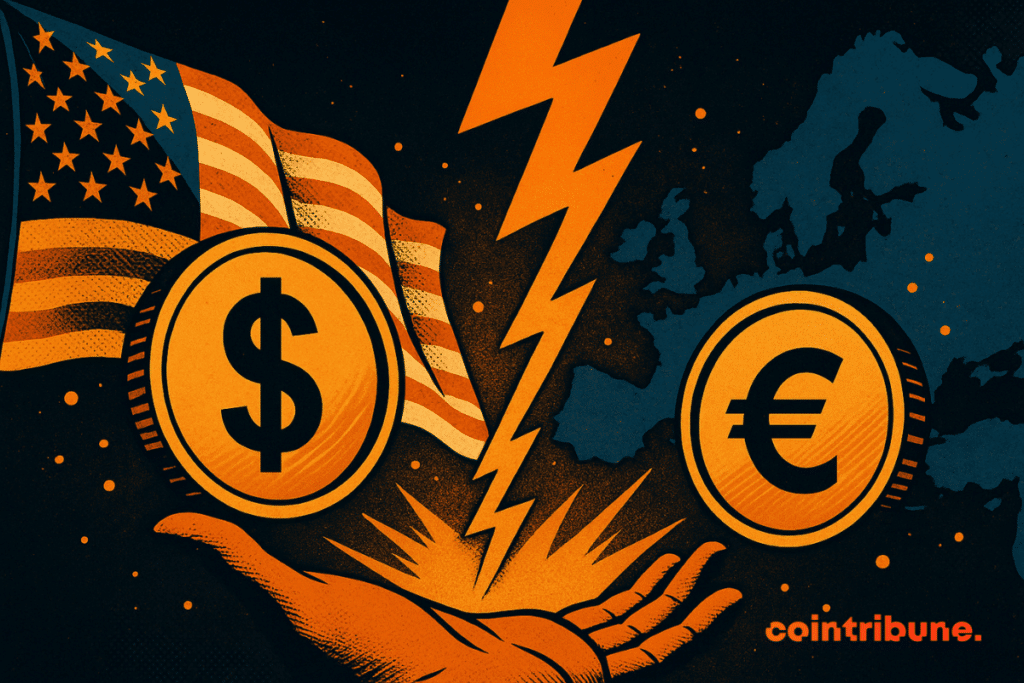
- CertiK warns that the two systems are splitting global stablecoin liquidity into separate US and EU pools.
GENIUS Act: Clear Rules, Fragmented Liquidity
The GENIUS Act, signed by President Donald TRUMP in July, establishes the first federal rulebook for payment stablecoins in the US. It enforces strict reserve requirements, bans yield-bearing stablecoins and integrates issuers more deeply into the US financial system.
According to CertiK, these rules bring clarity but also reshape liquidity flows. Instead of a unified global stablecoin market, the US is forming its own “distinct liquidity pool,” separate from the EU.
This shift marks the first major structural fragmentation of global stablecoin liquidity. CertiK warns that it could create cross-border frictions, slower settlement between regions and potential arbitrage opportunities between US and EU markets.
EU MiCA Rules Intensify the Divide
While the European Union’s MiCA regime shares some similarities with the GENIUS Act, such as full redemption at par and a ban on yield, it also introduces new constraints.
A key issue is MiCA’s requirement that issuers hold a majority of reserves in EU-based banks.
Tether CEO Paolo Ardoino has warned this could create “systemic risks,” as European banks use fractional-reserve practices.
Other industry figures argue that MiCA raises barriers for smaller issuers, making compliance and capital requirements harder to meet. This could accelerate consolidation in the European stablecoin sector.
Neither MiCA nor the GENIUS Act aims to maintain global fungibility. Instead, both focus on regulatory control and financial stability, with the US also pursuing strategic dollar dominance.
The Dollar Strategy Behind US Stablecoin Policy
US officials have been clear that stablecoins are now part of national financial strategy. Treasury Secretary Scott Bessent said earlier this year that the administration will use stablecoins to strengthen US dollar dominance.
This approach positions stablecoins as a tool of statecraft, turning regulatory clarity into geopolitical leverage. The result: a stablecoin system that is increasingly split along regional lines.
Conclusion: A Fragmented Future for Stablecoins
CertiK’s analysis shows a clear trend: global stablecoin markets are moving toward regional segmentation. The GENIUS Act and MiCA may stabilize their respective markets, but together they fracture global liquidity and introduce new friction points.
Whether this split becomes permanent will depend on how quickly cross-border frameworks adapt and whether issuers can navigate two very different regulatory worlds.
Maximize your Cointribune experience with our "Read to Earn" program! For every article you read, earn points and access exclusive rewards. Sign up now and start earning benefits.
