Cloudflare Outage Triggers Global Crypto Platform Meltdown - Major Web Services Paralyzed

Critical internet infrastructure fails spectacularly, taking down crypto exchanges and mainstream web services across continents.
The Domino Effect Hits Digital Finance
Trading platforms froze mid-transaction as Cloudflare's DNS services collapsed under mysterious circumstances. Users reported blank screens where million-dollar portfolios should have been - because nothing says 'decentralized future' like a single point of failure taking down the entire ecosystem.
Infrastructure Cracks Exposed
Major exchanges went dark simultaneously, proving once again that crypto's revolutionary technology still depends on the same old internet plumbing that fails when you need it most. Withdrawals stalled, deposits vanished into the void, and leverage traders watched their positions evaporate without access to liquidation controls.
Traditional Web Joins the Chaos
Beyond crypto, mainstream services including e-commerce platforms, media sites, and communication tools experienced widespread outages. The incident revealed just how many eggs we've all put in Cloudflare's basket - and what happens when that basket gets dropped.
Recovery Efforts Face Network Congestion
As services gradually came back online, traffic surges created secondary bottlenecks. The very infrastructure designed to handle spikes became its own worst enemy - a classic case of too many chickens trying to re-enter the coop simultaneously.
Another reminder that in both traditional and decentralized finance, someone else's technical debt eventually becomes everyone's problem.
 Read us on Google News
In brief
- Cloudflare’s network failure triggered 500 errors across crypto exchanges, explorers, and web platforms including X.
- Recovery efforts began after engineers identified the cause, but elevated error rates continued during remediation.
- Past outages involving Cloudflare, AWS, and CrowdStrike show ongoing risks tied to centralized infrastructure providers.
- Industry leaders warn firms to prepare for service failures and reduce reliance on single vendors to protect uptime.
Cloudflare Network Failure Hits Major Crypto Platforms and X Users
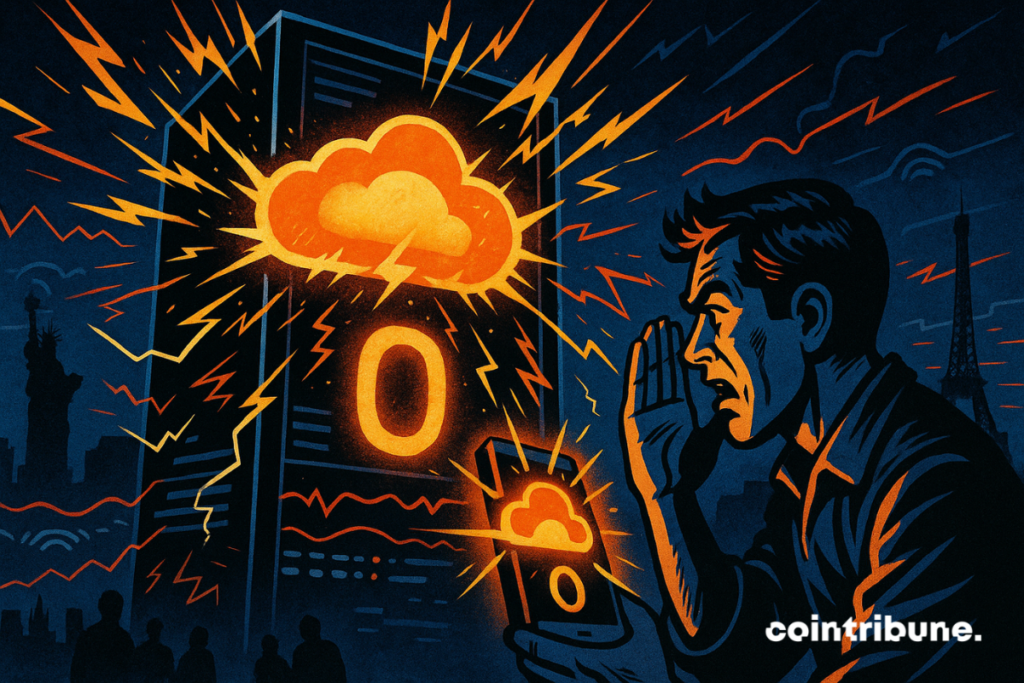
Cloudflare, which provides global network infrastructure for security and traffic routing, reported what it called an “internal service degradation” across parts of its network. Coinbase, Kraken, Etherscan, Aave, DeFiLlama, Toncoin, and Arbiscan were among the crypto services showing intermittent “500 Internal Server Error” pages.
Users on Elon Musk’s platform X also faced access issues, showing that the outage extended far beyond the crypto sector.
The company acknowledged the incident on its status page around 11:48 a.m. UTC and later said engineers had identified the cause and were rolling out a fix. Signs of recovery began to appear, although Cloudflare cautioned that elevated error rates could persist during remediation.
As per reports, the outage occurred while several of its data centers were undergoing scheduled maintenance. However, the company has not confirmed whether the two events are connected. crypto exchange BitMEX also reported that its own service disruption was linked to the broader Cloudflare problem.
Service Disruption Sends Shock Through Crypto Front-Ends
Cloudflare’s stock dropped 3.5% in pre-market trading following the news, reflecting swift market concern about the interruption. Service failures of this scale affect a wide range of users, including developers, traders, and institutions.
Key context for the outage includes :
- 500 errors indicate that a server is failing internally, blocking access to any page relying on it.
- Front-ends depend heavily on Cloudflare’s routing and security layers, making them especially vulnerable during network failures.
- Core blockchain activity remains unaffected, as interruptions impact websites rather than decentralized protocols.
- Many crypto services outsource infrastructure, concentrating risk around a small number of third-party providers.
- Maintenance windows sometimes coincide with unexpected failures, complicating incident response and delaying visibility into root causes.
Past incidents show that outages linked to infrastructure providers often Ripple through the crypto industry. Cloudflare faced similar events in 2019 and 2022 that temporarily shut down several exchanges and data platforms.
Crypto Firms Reevaluate Infrastructure Strategy Following Global Outage
Amazon Web Services outages in October disrupted Base, MetaMask, and major exchanges. In 2023, a faulty software update from cybersecurity firm CrowdStrike caused widespread crashes of Windows systems worldwide, again affecting some crypto front-ends. While none of these incidents affected underlying blockchains, they revealed how dependent most platforms are on centralized service layers.
Industry leaders continue to warn companies about the risks of relying too heavily on a single vendor for uptime. SovereignAI COO David Schwed said organizations must assume outages will occur and build infrastructure that can withstand failures rather than wait passively for a vendor fix.
Many firms are reviewing their setups in light of today’s event, as continued disruptions threaten user trust and market stability. Cloudflare reports that services are steadily recovering, though some platforms may still experience delays as work continues.
Maximize your Cointribune experience with our "Read to Earn" program! For every article you read, earn points and access exclusive rewards. Sign up now and start earning benefits.
