Stablecoins Overtake Bitcoin in Illicit Transactions – The New Shadow Economy Standard

Move over, Bitcoin—Tether and USDC are now the preferred tools for dark web deals.
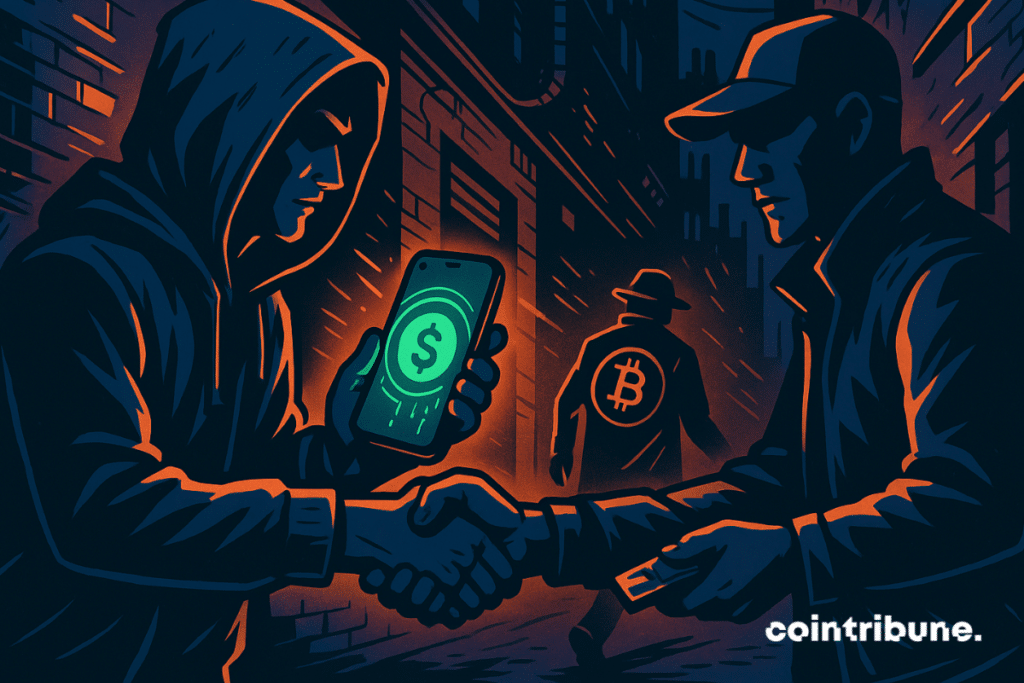
Blockchain analytics firms report a seismic shift: dollar-pegged tokens now dominate crypto crime flows. Transactions that once relied on Bitcoin's pseudo-anonymity now exploit stablecoins' liquidity and perceived legitimacy.
Law enforcement scrambles to adapt as criminals bypass traditional tracking methods. The very features that made stablecoins a safe haven during market volatility now serve underground markets.
Regulators who spent a decade fighting Bitcoin now face an ironic twist—their beloved 'stable' instruments became the ultimate money laundering vehicles. Just another case of financial innovation outpacing the suits.
 Read us on Google News
In Brief
- The Financial Action Task Force reported in June 2025 that the use of stablecoins by various illicit actors has continued to rise and most on-chain illegal activity now involves these assets.
- In 2024 stablecoins accounted for about 63% of illicit cryptocurrency activity, surpassing Bitcoin as the preferred option for criminal transactions.
- Criminal networks exploit stablecoins for cross-border transfers and scams, often using unregulated exchanges or over-the-counter markets to avoid scrutiny.
The Rising Role of Stablecoins in Illicit Transactions
An analysis by Chainalysis, a blockchain data firm, found that although Bitcoin previously accounted for most illicit cryptocurrency activity, stablecoins have now taken the lead. The firm noted that these assets made up about 63% of illegal crypto transactions in 2024, marking a significant shift in how digital currencies are being used for unlawful financial movements.
Criminal networks are increasingly turning to stablecoins because they allow funds to be moved quietly across borders without the logistical challenges and oversight common in traditional banking. These transactions often occur through unregulated foreign exchanges or private over-the-counter (OTC) markets where identity checks are minimal.
At the local level, stablecoins have also been exploited in scams. In Korea, they have been tied to a scheme known as “Oda Jangjip,” in which scammers create false listings on e-commerce and secondhand platforms to trick buyers and steal their funds.
Stablecoins in Global Financial Crime
International watchdogs have expressed growing concern about the rising misuse of stablecoins. In its June 2025 report, the Financial Action Task Force (FATF) stated that “the use of stablecoins by various illicit actors, including Democratic People’s Republic of Korea (DPRK) actors, terrorist financiers, and drug traffickers, has continued to increase since the 2024 Targeted Update, and most on-chain illicit activity now involves stablecoins.” The organization added that broader adoption of VIRTUAL assets could further amplify the risks of financial crime on a global scale.
Similarly, the United Nations Office on Drugs and Crime (UNODC) observed in January 2024 that the Tether (USDT) token on the TRON blockchain has become a favored instrument for Southeast Asian bad actors involved in online fraud and laundering operations, largely due to its reliability and ease of movement.
This widespread criminal use is facilitated by the underlying design of blockchain networks. While transactions are recorded on public ledgers, they are tied to anonymous digital addresses rather than real identities, making it difficult to identify who controls the funds.
The use of mixers or tumblers, which blend transactions from multiple users to obscure their origins, further complicates tracking. These pseudonymous and decentralized features significantly weaken the oversight mechanisms that traditional financial systems rely on.
Strengthening Protection and Oversight
To reduce exposure to these risks, Chainalysis has issued several recommendations for both individual users and institutions handling stablecoins
- Individual users should always verify token contracts through official channels before making any transfers, ensuring the funds are sent to legitimate addresses.
- Building on this, users are advised to strengthen wallet security by using hardware wallets for larger balances and enabling multi-factor authentication to protect against unauthorized access.
- It is also important for users to stay alert to phishing schemes that try to steal private keys or trick them into approving transactions, as these attacks exploit lapses in security.
- For organizations, effective risk management involves auditing smart contracts before adoption, monitoring transactions continuously for unusual activity, and maintaining systems that comply with anti–money-laundering standards, including real-time screening and identification of suspicious transfers.
Regulation and Market Outlook
Stablecoins are expanding rapidly across global markets, even as countries refine regulations to address digital asset activity. Their market capitalization has now surpassed $313 billion, reflecting strong and sustained demand.
U.S. Secretary of the Treasury Scott Bessent noted the sector’s significant growth potential, projecting that stablecoins could reach a total market value of $2 trillion within the next three years.
Maximize your Cointribune experience with our "Read to Earn" program! For every article you read, earn points and access exclusive rewards. Sign up now and start earning benefits.
