Bitcoin’s Genesis Document Hits 17-Year Milestone - The Blueprint That Shook Global Finance

Seventeen years after Satoshi's vision first emerged from the cryptographic shadows, Bitcoin's revolutionary framework continues to defy skeptics and reshape monetary systems worldwide.
The Unstoppable Protocol
What began as a nine-page technical manifesto now underpins a trillion-dollar asset class that traditional finance can't ignore—no matter how hard Wall Street tries to dismiss it as 'digital gold for anarchists.'
Decentralization's Enduring Legacy
While central bankers print currency like there's no tomorrow, Bitcoin's fixed supply and mathematical purity stand as permanent rebuke to monetary manipulation—proving that code can enforce scarcity better than any government promise.
Seventeen years later, the white paper reads less like technical documentation and more like a declaration of financial independence—one that's still making bankers nervous and technologists rich. Because nothing terrifies traditional finance quite like a system that doesn't need their permission to exist.
 Read us on Google News
In brief
- Seventeen years after the white paper, bitcoin has become a macro asset worth 2 trillion USD.
- October closes in red, first time since 2018, amid controlled deleveraging.
- Fundamentals and structural flows remain solid, suggesting a healthier recovery.
From PDF to planetary protocol
On October 31, 2008, Satoshi shared a nine-page document. Plain title: “Bitcoin: A Peer-to-Peer Electronic Cash System.” The promise fits into one sentence. Exchange value without an intermediary, while avoiding double spending thanks to proof-of-work. Simple on paper, revolutionary in its implications.
In 17 years, bitcoin has moved from the forum to the trading floor. From cypherpunks to institutional treasurers. From patched nodes to industrial data centers. The network has withstood forks, bans, cycles. It has gained liquidity, tools, and risk monitoring. In short, it has grown.
Today, the asset is held by funds, companies, sometimes states. It supports a whole industry: derivatives, custody, compliance, payment infrastructure. This framework changes the reading of cycles. Excesses remain, but shock absorbers exist. And this matters when the wind changes.
Red October for bitcoin: a cyclical hiccup, not a structural problem
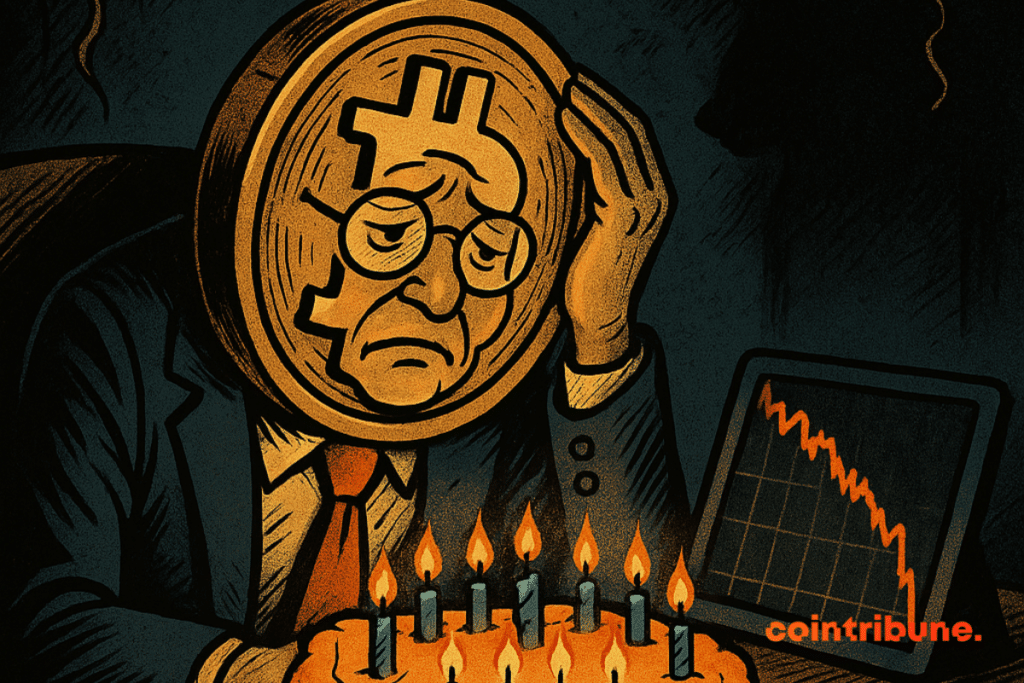
Historically, October has favored bitcoin. It’s called “Uptober” for a reason: on average, this month has offered solid returns. This year, no. The price falls more than 3% over the month. The positive streak ends. First negative October close in seven years.
Should it be seen as a trend reversal? Not so fast. The decline occurred amidst orderly deleveraging. Less leverage. Fewer fragile positions. The crypto markets experienced a rapid down leg, then cautious buybacks. The dominant narrative at desks is clear: “controlled deleveraging.” Painful short-term, healthy for what follows.
October closes down, yes. But bitcoin itself closes one chapter and opens another. The asset has survived much worse than the end of an “Uptober.” Maturity is measured by how the market absorbs shocks. And from this perspective, 2025 looks less like 2018 and more like a better equipped, more liquid, more professional version of the same game.
Maximize your Cointribune experience with our "Read to Earn" program! For every article you read, earn points and access exclusive rewards. Sign up now and start earning benefits.
