Citadel Demands SEC Crack Down on DeFi Platforms Trading Tokenized Stocks

Wall Street's biggest players are calling in the regulators. Citadel Securities has publicly urged the SEC to bring decentralized finance platforms offering tokenized stocks under its regulatory hammer.
The New Frontier—Or a Wild West?
DeFi protocols have been quietly building a parallel market. They mint digital tokens that mirror the price of traditional equities like Tesla or Apple, letting anyone with a crypto wallet gain exposure without a brokerage account. It's a direct challenge to the established order—and Citadel isn't having it.
The firm argues these platforms operate in a regulatory gray area, potentially sidestepping crucial investor protections and market integrity rules that govern traditional exchanges. It's a classic case of old finance demanding new finance play by its rules—or, more accurately, get forced to.
Regulatory Showdown Incoming
The SEC now faces a defining choice. Does it aggressively pursue these decentralized protocols, applying decades-old securities law to cutting-edge tech? Or does it seek a new framework that acknowledges the fundamental shift from centralized intermediaries to code-governed markets? The decision will either legitimize a burgeoning sector or attempt to strangle it in its crib.
One thing's for sure: when a trading giant like Citadel feels threatened enough to ask for help, you know the disruption is real. It's almost touching to see finance's old guard suddenly become such staunch advocates for 'protecting the little guy.'
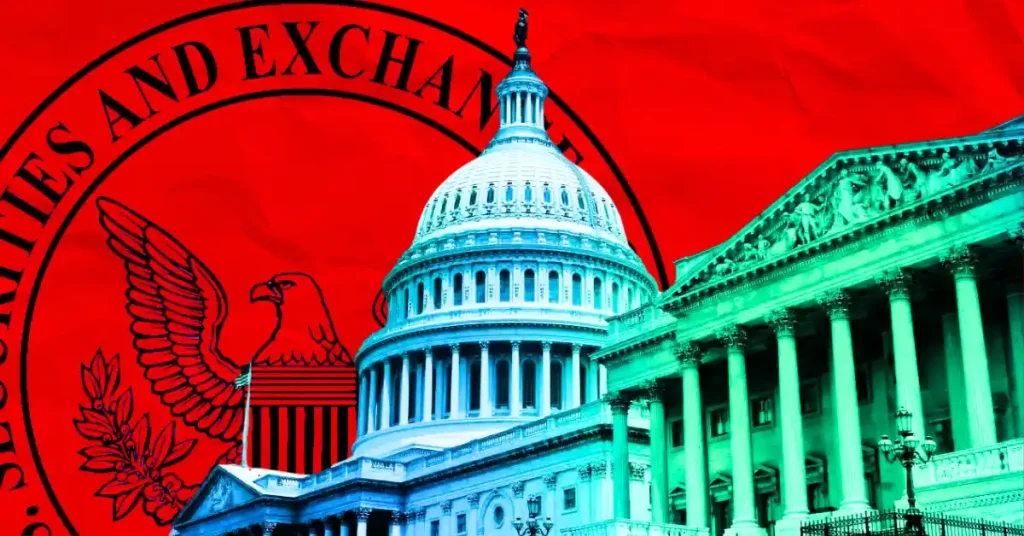
Citadel Securities has urged the U.S. SEC to tighten oversight on DeFi platforms that offer tokenized U.S. stocks. What began as a routine regulatory comment quickly escalated into a heated debate between traditional finance giants and crypto innovators—and the conversation is louder than ever.
DeFi Under the Regulatory Lens
Citadel argues that DeFi platforms, smart-contract developers, and even wallet providers are effectively acting like “exchanges” or “broker-dealers” when tokenized stocks are traded on their platforms. In Citadel’s view, these entities should follow the same securities laws that govern traditional markets, without any exemptions.
Citadel warns that giving DeFi regulatory relief could create a split system where the same assets operate under two different rulebooks. They say this WOULD undermine the principle of technology-neutral regulation in U.S. securities law.
Crypto Industry Pushback
The crypto community strongly disagrees. Industry voices have criticized Citadel’s push as an attempt to protect its dominance. The Blockchain Association warned that regulating software developers like financial intermediaries could push innovation overseas without improving investor safety.
Uniswap’s Hayden Adams also criticized Citadel and Ken Griffin, saying it’s ironic that Citadel claims DeFi cannot offer “fair access.” Adams points out that open-source, peer-to-peer technology lowers barriers to liquidity and challenges the dominance of traditional finance.
- Also Read :
- Crypto Regulation News: FDIC to Release Stablecoin Rules Under GENIUS Act This Week
- ,
Similarly, Artem Tolkachev said Citadel is trying to protect its monopoly by arguing that DeFi should be regulated like traditional exchanges. While some on-chain systems resemble intermediaries, Tolkachev noted that automated protocols are not the same as discretionary control.
He also emphasized that tokenization already works within regulated systems and that outdated rules cannot govern modern 24/7 programmable markets. He argued that regulation should adapt to new technology rather than force innovation into old frameworks.
Traditional Finance Unites
While the crypto industry pushes back, traditional finance groups like SIFMA and the World Federation of Exchanges support Citadel’s stance. They argue that tokenized securities must follow the same investor protections that have long governed U.S. markets—especially in light of recent crypto market turbulence.
Never Miss a Beat in the Crypto World!Stay ahead with breaking news, expert analysis, and real-time updates on the latest trends in Bitcoin, altcoins, DeFi, NFTs, and more.

