Crypto Enforcement Breakthrough: Senator Lummis Celebrates Historic Asset Seizure While Charting Congressional Priorities

Washington delivers a landmark blow against crypto crime—and lawmakers already eye bigger regulatory targets.
Legislative Lightning Strikes
The digital asset space just witnessed its most significant enforcement action to date, with federal authorities seizing millions in illicit cryptocurrency. Senator Cynthia Lummis, long-time Bitcoin advocate and crypto policy architect, calls the operation "a watershed moment for legitimate digital finance."
Two-Pronged Congressional Assault
While celebrating the enforcement win, Lummis immediately pivoted to Capitol Hill's unfinished business. Her dual priorities hit like a one-two punch: comprehensive regulatory clarity that separates legitimate projects from fraudulent schemes, and consumer protection frameworks that actually understand blockchain technology.
The Wyoming Republican argues current laws force innovation offshore while leaving investors vulnerable—a regulatory gap that "costs Americans jobs and security." Her proposed fix would establish clear rules of the road while maintaining US competitiveness in the digital asset race.
Wall Street's watching these developments with unusual interest—though whether they're planning adoption strategies or just calculating how to tokenize their own bureaucracy remains unclear. Because nothing says financial revolution like creating digital versions of the same old gatekeepers.
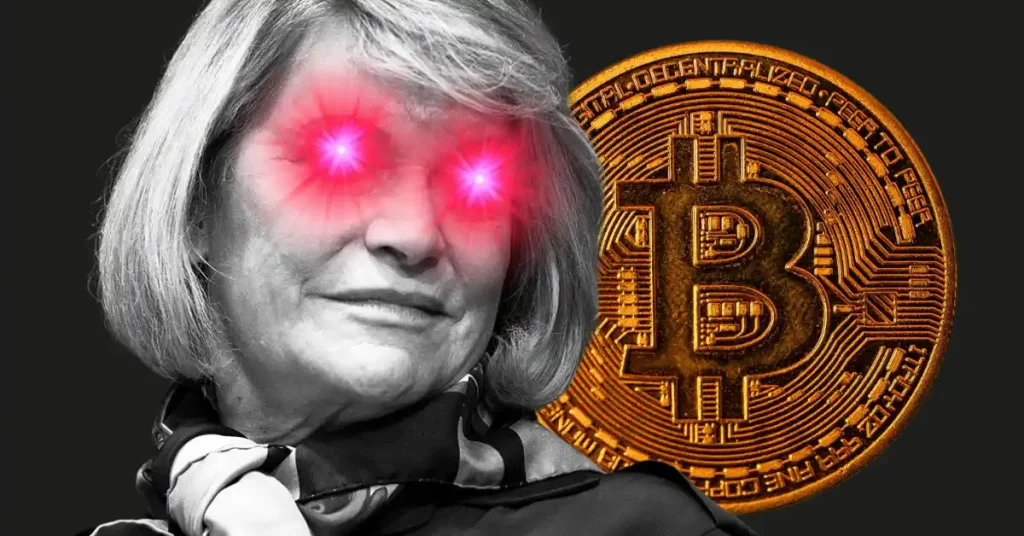
The U.S. government recently carried out the largest crypto forfeiture in its history, as it moved to seize 127,271 Bitcoin, worth nearly $15 billion. This massive haul is linked to Cambodia’s Prince Group, a criminal network accused of forced labor and global crypto fraud schemes that stole billions from victims worldwide.
The MOVE has drawn praise from lawmakers and has also sparked discussions on what should be the way forward.
Lummis Hails Historic Seizure
Senator Cynthia Lummis applauded the TRUMP administration for taking down the operation, calling it a win for human rights and financial integrity.
“This is a victory for human rights, financial integrity, and American leadership,” Lummis said.
This displayed America’s ability to dismantle large-scale criminal networks while setting a global example.
Top Priorities For Congress
Notably, Lummis highlighted two key priorities for the Congress after the record-breaking seizure. Firstly, she stressed the urgent need for clear digital asset market structure legislation. She noted that stronger rules in place WOULD allow the law enforcement act quickly against criminals while still supporting innovation in the digital space.
Secondly, she highlighted the importance of handling seized Bitcoin properly, making sure that it is stored safely, returned to victims, or used wisely for the future.
 The seizure of 127,000 bitcoin underscores two urgent priorities for Congress: first, passing clear digital asset market structure legislation to ensure law enforcement can act decisively against bad actors while protecting innovation.
Lummis also added that converting illicit crypto into assets that support America’s Strategic Bitcoin Reserve shows how “sound policy can turn wrongdoing into lasting national value.”
U.S. Eyes Expanding Strategic Bitcoin Reserve
After the seizure, the U.S. government is set to boost its strategic Bitcoin reserve (SBR) to 324,625 BTC, worth around $36.5 billion.
Treasury Secretary Scott Bessent has said that the government is looking at ways to add even more Bitcoin to the reserve without impacting the budget.
Meanwhile, Lummis has also suggested the idea of swapping some of the U.S.’s Gold reserves for Bitcoin and hinted that the reserve could be set up soon.
Crypto Market Bill Stalled
While momentum grows around Bitcoin’s place in the U.S. financial system, progress on the long-awaited crypto market structure bill has stalled.
The proposed bill aims to clarify which digital assets fall under the SEC or CFTC, and provide clear rules for the growing cryptocurrency and DeFi markets.
Negotiations between Senate Republicans and Democrats on crypto legislation have hit a roadblock after Democrats leaked a broad DeFi regulation draft, which sparked major industry backlash.
Adding to the challenges, the government shutdown is delaying progress and alignment, leaving lawmakers and investors unsure about the rules, especially with the 2026 midterm elections coming up.
A Defining Moment for U.S. Crypto Policy
Crypto regulation remains a top priority for Washington. Lummis’ call for the urgent need for clear crypto rules and responsible handling of seized digital assets highlights how the U.S. is stepping up its digital finance strategy.
The balance between innovation, regulation, and national interest is a delicate one but extremely important.
