LitVM LiteForge Testnet Ignites, Espresso Accelerates Litecoin’s Mainnet Launch

Litecoin's blockchain has fundamentally transformed. On April 15, 2026, the LitVM Layer-2 network activated its LiteForge testnet, marking a historic pivot from a pure payments network to a full-stack smart contract and DeFi platform. The market responded immediately, processing millions of testnet transactions within days, signaling strong demand for Litecoin's new Web3 capabilities as developers rush to build.
LitVM LiteForge Testnet is Live: How Does It Work?
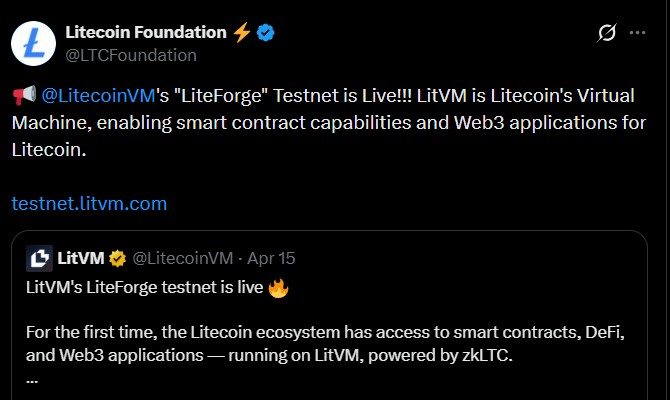
It is a Layer-2 rollup designed to bring programmability to the Litecoin network. It adds a smart contract layer on top of the Litecoin network market without changing the base chain. That matters because Litecoin users have waited years for broader use cases beyond fast, low-cost transfers.
LiteForge is the name of LitVM’s public testnet. It runs with zkLTC as the gas token, which users spend to process transactions. The goal is clear: give it its first real test ground for DeFi, token launches, NFT activity, and other on-chain apps.
Source: Official X
Key Features of LitVM Testnet
Its biggest feature is simple. It gives smart contract support for the first time. That opens the door to lending tools, exchanges, launchpads, and many other app types that were not native before the network
Another key point is EVM compatibility. Developers do not need to abandon existing workflows. They can connect wallets, deploy contracts, and test features with the same stack used across much of crypto.
zkLTC powers the network’s gas fees. That keeps activity moving inside the testnet. Early feedback also points to low fees and quick block production, which are both important for user experience.
The network is already attracting projects. Names such as OnmiFun, MidasHand, and Lester Labs have started building or testing on LiteForge. That early app activity adds weight to the launch.
Source: Twitter X
Early Success and Impressive Metrics
The first days of LiteForge gave LTC supporters plenty to talk about. Testnets often launch quietly. LitVM did not. It quickly drew users, developers, and community builders who wanted to see whether Litecoin could support more than payments.
The early traction matters because it shows real curiosity around next phase. It also suggests that some builders were waiting for a programmable layer before joining the LTC network side of crypto.
The first 24 hours produced a solid opening set of figures. LiteForge processed about 96,906 transactions and drew roughly 10,589 unique addresses. That is a strong start for a fresh testnet.
The network also posted near 0.4-second block times and gas fees below 0.1 Gwei. More than 1,000 tokens were minted early, showing that users were not just watching. They were testing.
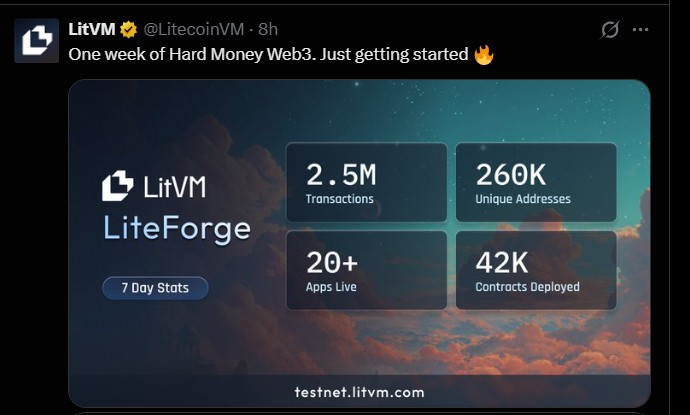
The pace did not stop after day one. In the following days, LitVM reported more than 230,000 transactions and over 41,000 connected wallets. Later updates pushed the total much higher, with LitVM citing more than 2.5 million transactions and around 260,000 unique addresses.
That growth suggests the launch was more than a one-day spike. It points to sustained testnet use across several apps and user groups.
Source: X
What’s Possible on the LitVM Testnet?
LiteForge already supports a range of early applications. Users can test token swaps through DEX platforms, explore prediction markets like MidasHand, join token launch activity through Lester Labs, and take part in NFT campaigns tied to OnmiFun. That mix is important. It shows that the new Layer-2 is not limited to one niche. It is trying to build a broader on-chain economy around the network.
Is Mainnet Rollout Next?
LitVM has outlined a phased mainnet rollout, starting with an EVM-compatible rollup powered by zkLTC and later moving toward Litecoin as the canonical settlement layer. As of April 23, 2026, no exact public mainnet launch date appears to be confirmed; the team says testnet results will guide that path
What Does This Mean for Future?
For years, Litecoin has been viewed as a reliable payment chain. LitVM changes that conversation. If the project keeps growing, it could start competing for developers and users who want smart contracts without giving up Litecoin’s long-standing brand and community. That could widen Litecoin's latest appeal. Users may get access to lending, trading, NFT activity, and other services that were not previously part of the Litecoin story.
Conclusion: Can LitVM Scale?
The excitement is real, though so is the challenge ahead. LiteForge is still a testnet. That means the bigger questions remain unanswered until the mainnet arrives.
LitVM now needs more apps, deeper liquidity, and a smooth path to launch. If it can keep builders engaged and convert early interest into lasting activity, it may have found its next growth story.
LiteForge testnet has given Litecoin something new: a chance to become more than a payments network. The launch has brought smart contracts, DeFi, and Web3 experimentation into a chain once seen as limited in scope. It is still early, but now LTC looks like a network entering a new phase rather than defending an old one.
Disclaimer: This article is for informational purposes only and does not constitute financial advice. Always conduct your own research before engaging with any crypto projects or testnets.

Log in to Reply
Log in to comment your thoughtsComments
Related Articles
|Square
Get the BTCC app to start your crypto journey
Get started today Scan to join our 100M+ users