CoinShares Bitcoin Volatility ETF Filing Could Reshape BTC Trading Landscape

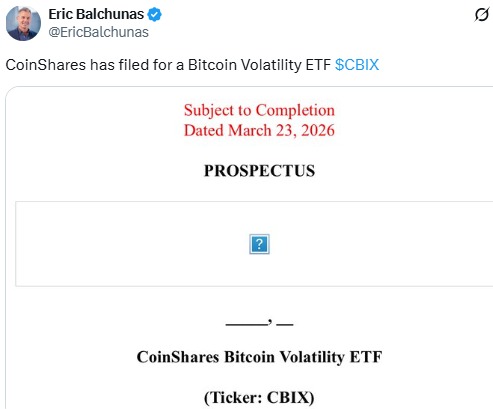
LONDON, March 24, 2026 – CoinShares has filed for a groundbreaking Bitcoin Volatility ETF, a move that could fundamentally transform how institutional and retail investors trade and hedge the world's largest cryptocurrency. The filing, confirmed by Bloomberg ETF analyst Eric Balchunas via social media on March 23, seeks to package Bitcoin's notorious price swings into a listed, exchange-traded fund—potentially unlocking billions in new capital while providing a critical risk-management tool for the maturing digital asset market.
Source: X (formerly Twitter)
CoinShares BTC Volatility ETF Filing Details
According to Balchunas, the firm submitted an application under the ticker CBIX. The screenshot attached to the post showed a prospectus labeled “Subject to Completion” and dated March 23, 2026. That matters because the proposed fund appears aimed at tracking Bitcoin’s price swings, giving traders another way to approach risk without holding the asset directly. For active market participants, that could create fresh hedging and short-term trading setups.
CoinShares Expands Its Product Line
The new update also adds to CoinShares’ earlier ETF activity. On July 27, 2025, it had changed its legal name from CoinShares Valkyrie Bitcoin Fund to CoinShares Bitcoin ETF. That update came through an amendment filed in Delaware, while the fund kept its Nasdaq ticker BRRR. The filing said there were no changes to structure, management, or operations beyond the name update. Taken together, the BRRR rename and the new CBIX filing show the organisation continuing to build out its BTC linked product range.
Traders React to the CBIX Structure
Market reaction was quick and sharp.
One response called the idea either the most honest Wall Street product yet or a sign that the market has stopped pretending BTC is digital gold.
Another response said CBIX may be more interesting than a spot fund because a volatility product could need regular exposure rolls, much like other volatility-based products.
That could create repeated buying in stressed periods and selling in calmer periods. One trader also noted that volatility sellers on Deribit likely noticed the filing right away. These are trader views, not confirmed mechanics of the fund.
Final Thoughts
The filing does not guarantee approval, but it shows crypto ETFs are moving beyond simple spot exposure. As issuers test products tied to price swings and risk control, the market is signaling stronger interest in tools built around BTC trading behavior, institutional access, and fast-changing sentiment.
This proposal stands out because it focuses on market movement itself, not only asset ownership. That makes CBIX a notable step in the broader evolution of crypto ETFs.
