Zetarium Airdrop and TGE Postponed to Q2 2026: Is ZET Token Price at Risk Now?

Zetarium's strategic delay of its TGE and airdrop to early Q2 2026 signals a controlled launch, but has sparked immediate market concern over potential price volatility. The project's ambitious roadmap now faces intense scrutiny as its community divides over execution risks, putting the ZET token's initial valuation under pressure.
Zetarium Airdrop and TGE Shifted to Q2: Smart Timing or Warning Signal?
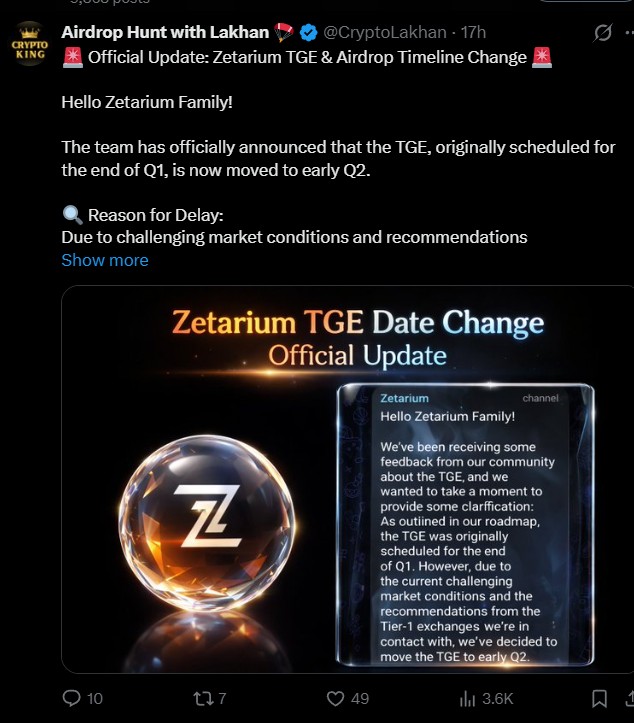
This project is an emergent Web3 project that is developing an ecosystem of perpetual decentralized DEX, has officially delayed its Token Generation Event (TGE) and airdrop to late Q1, early Q2 2026. It mentions unstable market conditions and advice by Tier-1 exchange partners in the announcement, making the delay a strategic move as opposed to a failure.
The staff stressed that it is not a cancellation, but a step to have greater execution, greater liquidity, and a more stable listing environment.
Will the Airdrop and TGE Still Deliver Value After the Delay?
The Zetarium airdrop and TGE will still exist but will be cast early in Q2; the date is not confirmed. The mood in the community is divided- some users are in favor of the move to have long-term stability, and there are also those who complain of long waiting times.
Zetarium airdrop TGE date works as a tool to acquire users and engage with them. Having 9% of the total supply dedicated to community rewards, even early participants will still be able to receive significant incentives, particularly with front-loaded unlock mechanisms that will encourage early participation.
Source: Official X
ZET Token Price & Valuation: Is the Entry Point Attractive?
The Zetarium presale price that was established by the project is $0.40, and the listing price will be $0.75, which is a reasonable upward adjustment that does not attempt to overprice aggressively. Having a market capitalization of approximately $20.65 million and a fully diluted valuation of approximately $73.25 million, it seems that it is putting itself into a sustainable range of valuation.
This type of pricing can be attractive at the time of Zeterium airdrop listing date to initial investors and also new entrants seeking decent upside without a lot of hype.
How Strong Are Zetarium’s Trading and Revenue Models?
It has a decentralized perpetual exchange (ZDEX) that has competitive trading fees with makers paying 0.02% and takers paying 0.05%. Its ecosystem utility is further widened with additional services such as token swaps and prediction markets.
A structured revenue distribution model is also incorporated in the platform, with 40% of the revenue going to stakers, 30% to treasury, 20% to buybacks, and 10% to an insurance fund. This strategy embraces sustainability as well as encouraging long-term involvement.
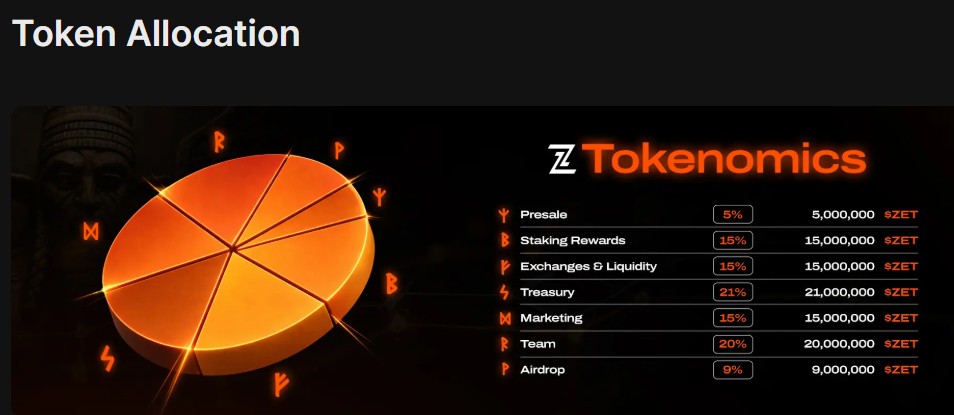
Zetarium Tokenomics Breakdown: Balanced or Risky Allocation?
The tokenomics are constructed such that it is growth sustainable and sustainable:
Team: 20% (12-month cliff + vesting)
Treasury: 21% (delayed unlock)
Rewards Stake: 15% (24-month emission)
Liquidity & Exchanges: 15%
Marketing: 15%
Community Rewards (Airdrop): 9%
Presale: 5%
Long-term commitment is reflected in the team vesting structure and delayed unlocks of treasury, which decrease the risks of early dumping.
Source: Website
Final Take
The crypto listing and TGE delay represent a wider trend in crypto, in which timing can be the key to success. The basics, such as tokenomics, revenue model, and roadmap, seem solid, but execution, transparency, and delivery are some of the issues that will determine investor confidence. Will this delay impact the Zetarium token price in the future?
Disclaimer: This is not financial advice. Please DYOR before investing. CoinGabbar is not responsible for any financial losses. Crypto assets are highly volatile, and you can lose your entire investment.
