US February PPI Inflation Skyrockets to 3.4%, Triggering Sharp Crypto Market Correction

A hotter-than-expected US Producer Price Index (PPI) reading for February has sent shockwaves through the crypto market, with analysts warning of a potential 10% correction. The 3.4% year-over-year surge, significantly above the 2.9% forecast, signals persistent inflationary pressures and has intensified fears of a more hawkish Federal Reserve stance, prompting a rapid sell-off across major digital assets.
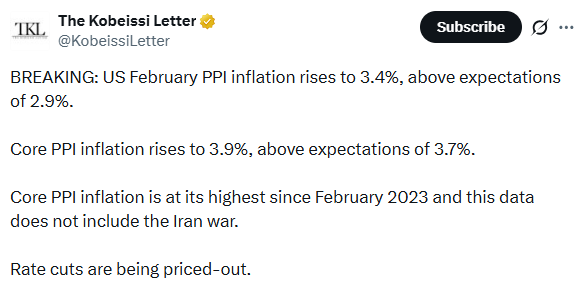
The "Core" version of this report, which leaves out unpredictable items like food and energy, was even more surprising. Core PPI rose to 3.9% year-over-year. This is the highest level we have seen for core wholesale prices since early 2023. Because these costs often get passed down to shoppers, this data suggests that overall inflation might stay "sticky" for a long time.
Market Reaction and Bitcoin Price Performance
The crypto market responded quickly to the hot inflation news. Bitcoin, which had been performing well recently, saw a sudden drop in value. As of today, March 19, 2026, Bitcoin is trading at approximately $70,904, marking a 4.72% decline over the last 24 hours. Despite this daily dip, the leading digital asset still shows a 1.87% gain over the past week, maintaining a massive market cap of $1.41 trillion. Traders are keeping a close eye on the $70,000 support level as volatility increases.
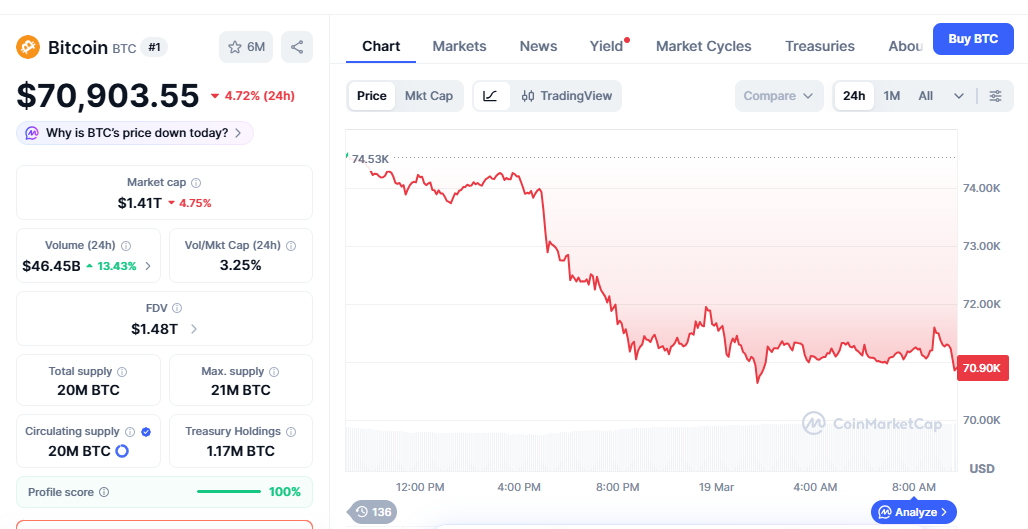
The broader crypto market fell by over 2% today. This decline was led by Bitcoin but felt across many other tokens. Investors are also worried about rising tensions in the Middle East. A recent attack on gas fields in Iran has caused oil prices to spike, which could lead to even higher inflation in next month's report.
The Fed Stance and Shifting Rate Cut Bets
Following the US February PPI inflation report, the Federal Reserve decided to keep interest rates exactly where they are. The benchmark rate currently sits at a range of 3.5% to 3.75%. Fed officials noted that they are worried about "renewed inflationary pressure" caused by high energy costs and global supply chain issues.
Because of this data, many traders have stopped betting on early interest rate cuts. Earlier this year, many hoped the Fed would lower rates by the summer. Now, the odds of zero rate cuts in 2026 have jumped to 25%. Most market participants now believe we will not see a lower rate until September at the very earliest.
Expert Analysis: Structural Inflation and the Path Ahead
Financial analysts are warning that this is "structural" inflation, meaning it is built into the economy and will not go away quickly. The rise in costs was driven mostly by service fees and rising prices for basic goods like vegetables and eggs. When businesses have to pay more for these things, they eventually have to raise prices for the people buying their products.
Future Outlook
Investors should expect more "ups and downs" in the crypto and stock markets. The Federal Reserve will likely keep a "hawkish" stance, which means they will keep rates high until inflation clearly moves back toward their 2% target. The next big thing to watch will be the PCE price index, which is the Fed's favourite way to measure how much prices are truly rising for American families.
This article provides economic and financial reporting for informational purposes only. Cryptocurrency investments and market trading involve significant risk of loss. Always consult with a certified financial advisor before making investment decisions based on readings or interest rate data.
