BlockFills Chapter 11 Bankruptcy Filing Sends Shockwaves Through Crypto Industry

CHICAGO, March 16, 2026 – Crypto trading and lending platform BlockFills has filed for Chapter 11 bankruptcy protection, triggering fresh concerns about financial stability within the digital asset sector. The Chicago-based firm's collapse follows weeks of operational turmoil and legal disputes, marking another high-profile casualty as the industry faces mounting pressure.
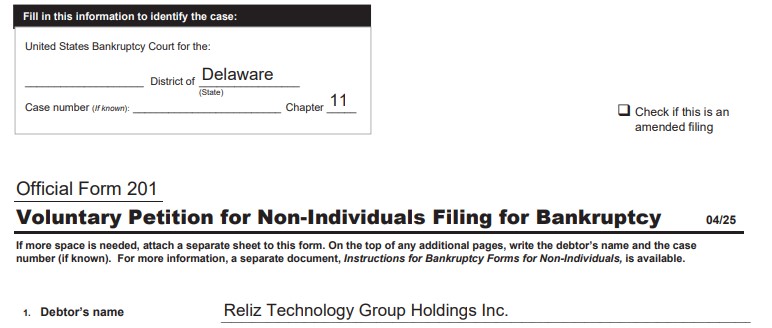
The filing was made by Reliz Ltd., the entity operating BlockFills, on March 15, 2026, in the U.S. Bankruptcy Court for the District of Delaware, along with three additional related entities.
Although BlockFills had built a strong presence in institutional crypto trading, recent liquidity problems forced the company to take this step. This also reflects a broader followed pattern in the cryptocurrency industry in recent times. So, is this finally the point signaling red flags – the deep impacts of continuous market stress.
What Led the Firm To File Chapter 11 Bankruptcy Protection
Chapter 11 bankruptcy filing is a legal process, in which instead of shutting down completely, a firm can restructure its debts, negotiate with creditors, and search new funding while continuing limited operations under court supervision.
BlockFills used this protection after weeks of uncertainty surrounding its financial health and operational stability. According to court documents, the company holds estimated assets between $50–$100 million, while its liabilities range from $100–$500 million. This large gap between assets and debts highlights the financial distress. Withdrawal suspension and legal disputes added further pressure.
In February 2026, the firm temporarily suspended client deposits and withdrawals, citing difficult market conditions and ongoing negotiations with stakeholders.
Shortly after, in March, a legal dispute with Dominion Capital emerged as another sabotage. Dominion Capital accused BlockFills of failing to return millions of dollars worth of digital assets stored on its platform. As a result, a U.S. federal judge issued a temporary restraining order, freezing certain assets linked to the platform.
These developments increased pressure on the firm and likely accelerated the decision to file for Chapter 11 protection.
The crypto-dealing firm said the filing represents the “most responsible path forward.” The process will help maintain transparency while it works to stabilize operations and explore new liquidity sources.
Why It’s Concerning: Traders and Investors Stayed on the Sidelines
The Bankruptcy filing highlights an important lesson for the cryptocurrency industry. BlockFills had built a strong reputation in the institutional crypto trading space. According to the 2025 performance review, it processed over $61 billion in transaction volume, representing a 28% increase compared with 2024.
The platform also served more than 2,000 institutional clients across 95 countries, including major investors such as Susquehanna Private Equity Investments and the venture arm of CME Group among its backers.
However, despite strong activity levels, reports indicate the company faced around $75 million in losses during 2025, partly due to market volatility.
This underscores how even companies processing billions of dollars in transactions can face financial trouble if liquidity risks and market volatility are not managed carefully.
More than a Filing: Broader Crypto Market Weakening
Since the October 2025 crash, the whole crypto market has shattered and since then continuously struggled to hold back. The crypto space lost nearly $1.80 trillion calculating around 42% decline from its peak before the crash. Bitcoin also lost 41.1% of its value from ATH of $124k to $73k today.
The effect of these major losses are not limited to the recent case. In previous years, firms such as Celsius Network and Voyager Digital faced similar crises after liquidity shortages and market downturns forced them into bankruptcy proceedings. This reflects broader risks within the crypto trading and lending sector.
However, many crypto supporters note that the market frequently experiences sharp volatility, which can put pressure on platforms that rely on lending and leverage. Yet historically, once conditions stabilize, recovery phases tend to restore much of the lost value.
