Strait of Hormuz Crisis Explodes: U.S. Airstrikes Hit Iran’s Kharg Island, Threatening Global Oil Flows

Global oil markets braced for a supply shock Friday after U.S. airstrikes targeted Iran's critical Kharg Island export terminal, escalating the Strait of Hormuz crisis and threatening a 10% price correction. The attack on the facility handling 90% of Iran's crude shipments marks a dangerous new phase in the U.S.-Israel conflict with Tehran, directly endangering the passage of 20% of the world's seaborne oil.
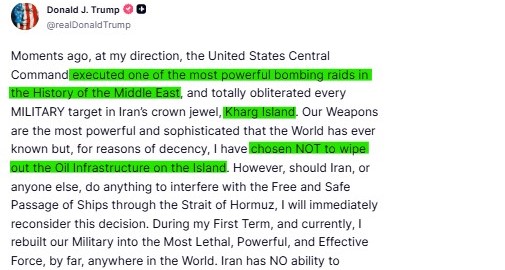
Reports indicate the strikes targeted military infrastructure around the island while deliberately sparing the oil export facilities themselves. Analysts say the move sends a strong signal to Tehran while avoiding immediate disruption to global energy supply.
Why Kharg Island Matters to Global Energy Supply?
Kharg Island processes about 2 million barrels of crude oil per day, accounting for roughly 2% of global oil supply. Because of this massive export capacity, any attack on the facility could send shockwaves across markets especially energy.
In the current Strait of Hormuz Crisis, the U.S. decision to avoid hitting fuel infrastructure appears aimed at preventing a sudden supply collapse. However, officials warned that energy facilities could become targets if shipping through the Strait of Hormuz continues to face disruption.
Iran has already threatened to maintain pressure on the region’s key shipping routes as leverage in the conflict. Since early March, tanker traffic through the region has dropped significantly. Shipping companies have diverted vessels or paused transit due to rising risks of missile strikes, drones, and naval confrontations.
Oil Prices Surge: Reaction of Tension
Energy markets responded immediately to the rising tensions. Crude oil is chasing $100 with current value of $98.71, while Brent crude has surged above $100 per barrel at $103.14, marking a sharp increase since the conflict escalated in late February.

The price jump reflects fears that prolonged disruption around the Strait of Hormuz could reduce global supply. Analysts warn that if the shipping route remains blocked or energy facilities are damaged, oil prices could climb toward $120–$150 per barrel.
Consumers are already feeling the impact. In the United States, gasoline prices have jumped around 50 cents per gallon in recent days as fuel market react to the crisis.
Reaction In Crypto Market: Bitcoin Holds Strong but Volatility Remains
While traditional markets have faced turbulence, the cryptocurrency market has shown surprising resilience. Bitcoin is trading around $70,000–$71,000, gaining roughly 6–10% since the conflict began.
Initially, crypto markets saw a sharp sell-off as geopolitical tensions rose. Bitcoin briefly dropped toward $63,000–$66,000 during the early panic. However, the asset quickly recovered as investors began treating it as a hedge against geopolitical uncertainty and rising inflation.
The ongoing Strait of Hormuz crisis has strengthened the narrative of Bitcoin as ‘digital gold,’ separating it from the wider perception that the asset closely follows traditional market trends.
However, the prices are still under observation as it is moving very frequently between ups and downs and raises uncertainty especially as higher oil prices raise inflation concerns globally.
If Bitcoin holds steady during this escalating Iran US tensions, the asset could eventually follow the surging rally again, breaking its 2025 crash downturns.
Global Markets Face Uncertainty
Beyond energy and crypto markets, the crisis is creating broader economic risks. Stock markets in Asia and Europe have experienced 1–2% declines, reflecting investor concerns about rising energy costs and potential supply disruptions.
Economists warn that prolonged instability around the Strait of Hormuz could increase inflation, disrupt supply chains, and slow global economic growth.
For now, markets remain highly sensitive to every development in the region. As the Strait of Hormuz Crisis continues to escalate, fuel prices, shipping routes, and global financial markets, including cryptocurrencies, are likely to remain volatile.
