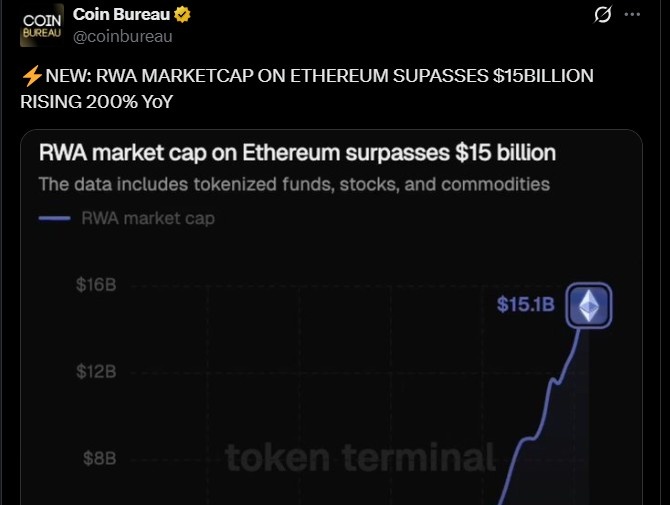
Ethereum RWA Smashes $15B Barrier With Explosive 200% Annual Surge

Forget whispers—this is a roar from the blockchain. Real-world assets are stampeding onto Ethereum, and the numbers are turning heads across both crypto and traditional finance.
The Tokenization Tidal Wave
It's not just niche experimentation anymore. The infrastructure—from compliant issuance platforms to on-chain custody solutions—has matured. Institutional players, once dipping a toe, are now diving in headfirst, seeking yield and liquidity that traditional paper trails can't match. They're tokenizing everything from treasury bonds to real estate, creating digital twins that trade 24/7.
Why Ethereum? Liquidity Beats Legacy
The network's deep liquidity pools and robust DeFi ecosystem act as a gravitational pull. An asset tokenized here isn't just digitized; it's instantly composable. It can serve as collateral in a lending protocol minutes after issuance or be bundled into a novel financial product—bypassing the slow, manual settlement processes that still plague Wall Street. It turns static capital into dynamic, working capital.
The Cynical Take
Let's be real: a chunk of this frenzy is traditional finance finally discovering the efficiency it could have built decades ago, now rebranded as 'innovation' to justify the pivot. The 200% growth screams less about sudden genius and more about catching up to the inevitable.
The $15 billion milestone isn't a ceiling; it's a new foundation. As regulatory clarity inches forward, this market isn't just growing—it's fundamentally rewiring how value is tracked, owned, and leveraged. The old guard is on notice: the infrastructure for the future of finance is being built in the open, and it's settling transactions in seconds, not days.
Source: X Official
Some datasets indicate the figure is closer to $17 billion, a sharp rise from about $4.1 billion recorded a year earlier. The surge signals strong investor interest in tokenized finance and shows how digital infrastructure is reshaping access to traditional asset classes.
Key Drivers Behind the 200% Growth
1. Institutional Adoption
One of the biggest factors behind the expansion of the Ethereum RWA sector is growing institutional participation. Major financial companies have started experimenting with tokenization to modernize capital markets.
Examples include:
BlackRock is launching tokenized treasury-based investment funds
JPMorgan is exploring tokenized money market products on Ethereum
Traditional banking institutions are testing digital securities infrastructure
These initiatives are effectively bringing Wall Street liquidity onto blockchain rails, signaling that tokenization may become a long-term component of global finance.
2. Attractive On-Chain Yield
Tokenized U.S. Treasury products alone account for more than $11 billion within the broader RWA ecosystem. Investors are drawn to these assets because they combine traditional financial stability with blockchain efficiency.
Key advantages include:
3–5% annual yield
Fast blockchain settlement
24/7 trading availability
This blend of traditional income and decentralized accessibility has made treasury-backed tokens one of the fastest-growing categories in digital finance.
3. DeFi and TradFi Integration
Another major growth catalyst is the increasing overlap between decentralized finance and conventional markets.
Tokenized assets allow DeFi platforms to use real-world collateral, enabling new financial strategies such as:
Borrowing against tokenized government bonds
Generating yield from treasury-backed tokens
Creating fully on-chain investment funds
This hybrid model is gradually merging traditional financial infrastructure with decentralized applications.
Market Position and Future Outlook
Data suggests that the Solana blockchain currently hosts slightly more RWA holders, yet Ethereum continues to dominate in terms of capital, holding approximately eight times more value within token assets.
Looking ahead, analysts believe the sector could expand dramatically. Standard Chartered has projected that the global RWA tokenization market may reach $2 trillion by 2028. While forecasts vary, the prediction appears practical given rising institutional experimentation, regulatory interest, and demand for efficient settlement systems.
However, despite rapid expansion, several obstacles remain:
Regulatory compliance requirements
Custody of underlying assets
Limited liquidity in some token markets
KYC restrictions for investors
These challenges make the ecosystem more centralized than many traditional crypto systems and may slow adoption until clearer legal frameworks emerge.
Conclusion
The rapid rise of the Ethereum RWA ecosystem signals a major shift in financial infrastructure. As institutions explore tokenization and DeFi continues integrating real-world assets, blockchain networks could reshape global capital markets despite regulatory, custody, and liquidity challenges ahead.
