PayPal Not In Talks With Stripe: What The Sale Speculation Really Means For Fintech

Rumors swirled, markets buzzed, and then—silence. The supposed PayPal-Stripe merger talks? Pure fiction, according to sources close to both companies. This isn't just a denied deal; it's a spotlight on the frantic repositioning happening across digital payments.
The Speculation Playbook
Why does a non-story generate so much noise? In fintech, speculation often acts as a pressure valve—or a strategic probe. A whisper of a sale can flush out rival bids, test investor sentiment, or simply distract from quarterly headwinds. This episode reveals less about a specific deal and more about the sector's underlying tremors.
Consolidation Is Coming (Just Not This One)
Don't mistake the denial for stability. The payments landscape is overcrowded. Giants like PayPal face dual threats: nimble, crypto-native platforms slicing into transaction fees, and embedded finance making the checkout button itself obsolete. Everyone's portfolio is being scrutinized. Non-core assets? They're on the block. Core divisions? Fortified. It's a classic case of corporate musical chairs, and the music from the last bull market stopped playing a while ago.
Forget M&A—Watch the Tech Stack
The real battle isn't about buying competitors; it's about owning the financial pipeline. The focus has shifted from growth-at-all-costs to margin defense and tech integration. Who controls identity verification, cross-border settlement, and smart contract execution? That's where the next decade of value gets captured. Legacy players are racing to bolt on blockchain rails before newer players build entirely new tracks.
A Cynical Footnote
Let's be honest—sometimes a 'strategic review' is just finance-speak for 'we need the stock to stop falling.'
The takeaway? Treat merger rumors as market weathervanes. They show you which way the wind is blowing, even if the predicted storm never arrives. For PayPal, Stripe, and their peers, the pressure to innovate, acquire, or get acquired hasn't diminished. The denial of talks today simply sets the stage for the real move tomorrow. In this climate, standing still is the riskiest move of all.
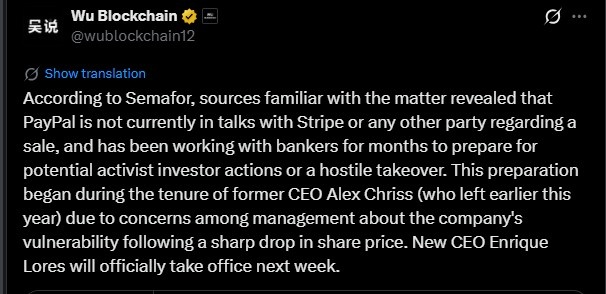
Source: X Official
This defensive planning started during former CEO Alex Chriss’s tenure after management grew concerned about vulnerability following a sharp decline in share value. Meanwhile, leadership transition is underway, with Enrique Lores set to officially step into the top role next week.
What Is Actually Happening
Despite viral speculation, the situation is more about preparation than a confirmed deal. The firm is strengthening its internal strategy rather than negotiating a transaction.
Bankers were engaged to evaluate risks from activist investors
Defensive planning began due to market weakness and falling valuation
The news gained traction after Bloomberg reported that Stripe had shown interest in buying some or all of PayPal Holdings, including its flagship payment platform and services such as Venmo. Stripe declined to comment, which further fueled speculation across fintech news platforms.
Why The Firm Looks Vulnerable
Several circumstances contributed to growing concerns about vulnerability.
Share value decline reduced market confidence and increased takeover risk.
Competition from digital payment rivals and margin pressure impacted sentiment.
Following the takeover headlines, the stock slipped to $44.61, down 5.74%. The sudden drop reflects uncertainty rather than confirmed acquisition progress. Investors typically react quickly to leadership shifts, activist investor risk, and strategic rumors, which explains the volatility.
Alex Chriss’s exit earlier this year also played a role in perception. He had been working with financial advisors on defensive measures before leaving. Leadership change often signals a strategic reset, which markets interpret cautiously.
Why Enrique Lores Was Appointed As The Ceo
The appointment of Enrique Lores suggests a focus on operational discipline and long-term strategy execution rather than aggressive expansion.
Expected to stabilize growth and rebuild investor confidence
Focus likely on payments innovation, cost efficiency, and partnerships
Management appears to be prioritizing execution, product improvement, and competitive positioning. Investors expect clearer direction, improved margins, and more consistent performance under the new leadership.
Why This Matters For Crypto Industry
Takeover chatter and leadership shifts influence digital asset sentiment because payment giants play a key role in crypto adoption.
If the strategy shifts toward innovation, crypto payment integration could expand
Uncertainty may slow partnerships and token payment initiatives in the short term
Market participants watch large payment companies closely since they act as bridges between traditional finance and blockchain usage. Any structural change can impact merchant adoption, stablecoin payments, and retail crypto accessibility.
In the NEAR term, uncertainty tends to reduce risk appetite. However, long-term strategy clarity could support crypto payment growth if leadership prioritizes digital asset rails.
Conclusion:
Rumors continue, but PayPal Not In Talks remains the confirmed position as the leadership transition unfolds. Investors are watching strategy direction closely, as stability, innovation, and execution will decide whether takeover fears fade or market confidence returns.
