Missouri’s Bold Crypto Bill: State Pushes Bitcoin Reserves & Mass Adoption

Missouri just fired a shot across the bow of traditional finance. A new legislative push aims to vault the state into the crypto vanguard—by exploring Bitcoin for its treasury and tearing down barriers to everyday use.
The Bitcoin Reserve Play
Forget bonds and bullion. The bill's most audacious clause directs the state to study adding Bitcoin to its balance sheet. It's a move that would make a Wall Street treasurer's head spin—treating digital scarcity as a strategic asset class. Imagine state coffers backed by cryptographic proof instead of political promises.
Clearing the Regulatory Jungle
Lawmakers aren't stopping at the treasury. The proposal systematically dismantles hurdles for businesses and citizens wanting to transact in crypto. It targets licensing red tape and clarifies tax treatment, effectively rolling out a welcome mat for blockchain enterprises while giving residents clearer rights to pay, hold, and invest digitally.
Why This Cuts Through the Noise
While D.C. debates, states are moving. Missouri's maneuver isn't happening in a vacuum; it's part of a growing state-level rebellion against regulatory ambiguity. This bill provides a concrete blueprint for integrating crypto into public finance and commercial law—a potential template for others watching from the sidelines.
The closing argument? A state hedging against monetary debasement with a decentralized asset might just be the ultimate critique of modern central banking. It’s fiscal policy with a hint of anarchy—and perhaps the most pragmatic investment thesis in the room, especially when compared to the alchemy of perpetual debt. The race for crypto relevance isn't just among nations anymore; it's heating up in America's heartland.
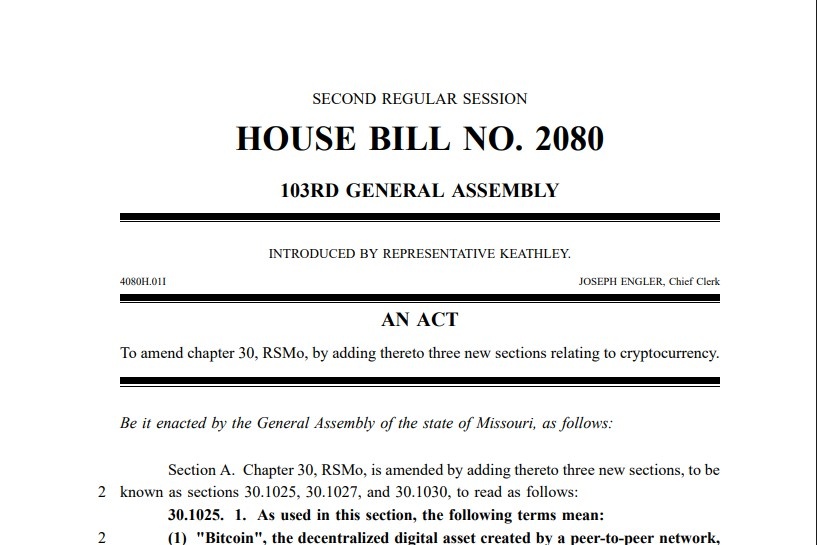
Official Details of the Missouri Crypto Bill
Creation of a dedicated Bitcoin Strategic Reserve Fund managed by the state treasurer
Bitcoin can be accepted through donations, gifts, bequests, and government transfers
The proposal requires virtual assets collected by the treasury to be stored securely using cold storage and advanced custodial technologies. Holdings must remain locked for a minimum five-year period before any sale, transfer, or conversion is permitted. The treasury must also conduct audits, publish biennial reports covering value, growth, transactions, and risks, and restrict participation from foreign or illegal actors. Authorities can work with US-based crypto firms for security and operational support while implementing a simple donation system with public recognition for contributors.
Source: Missouri House Bill Official
Market Impact and Institutional Signal
Bitcoin reserve strategy strengthens long-term store-of-value narrative
State-level adoption supports institutional confidence and regulatory clarity
The Missouri Crypto Bill highlights a shift where governments explore digital assets as reserve instruments similar to gold. Such initiatives may encourage capital inflows, improve policy certainty, and accelerate institutional participation. By allowing treasury investment and enabling virtual payments for taxes, fees, and penalties, the proposal expands real-world utility and strengthens market legitimacy. Analysts view state accumulation frameworks as bullish structural demand that can influence long-term price stability.
Link to US Stablecoin Regulation and Haircut Shift
White House meetings between banks and crypto firms aim to formalize stablecoin usage
Capital rule update reduces stablecoin haircut from 100% to 2%
Recent US policy discussions show regulators and financial institutions working toward stablecoin market structure legislation, reflecting attempts to integrate digital payment tokens within traditional finance. Meanwhile, SEC guidance allowing broker-dealers to apply only a 2% haircut to qualifying payment stablecoins — compared with the previous 100% treatment — significantly improves balance sheet usability and liquidity. This regulatory easing signals growing acceptance of tokenized dollars and aligns with reserve initiatives like the Missouri House Bill.
Industry Growth and Global Adoption Trend
Stablecoin infrastructure approvals and trust bank charters accelerate integration
Regulatory frameworks drive mainstream digital asset adoption
Recent approvals enabling crypto firms to establish regulated trust banks for custody and stablecoin operations demonstrate expanding institutional infrastructure. Broader policy moves, including federal frameworks such as stablecoin legislation, indicate a transition from experimentation toward operational financial integration. Together with reserve strategies at the state level, these developments reinforce the narrative of virtual assets as Core financial infrastructure rather than a speculative sector.
Conclusion:
The Missouri Crypto Bill reflects accelerating government adoption of digital assets alongside evolving US stablecoin regulation. Combined with capital rule changes and institutional infrastructure expansion, the Bill strengthens long-term digital market legitimacy, supporting broader adoption and structural market growth.
