Ripple’s Custody Overhaul Just Made Bank-Grade Crypto Adoption Inevitable

Forget the hype—this is the plumbing that makes crypto boring enough for Wall Street. Ripple's latest custody upgrade isn't about moon shots; it's about moving the decimal points that institutional money cares about.
The Institutional-Grade Lockbox
Ripple just cut the red tape for financial giants. The upgrade bypasses legacy security headaches, wrapping digital assets in compliance armor that traditional auditors actually understand. It’s the kind of backend overhaul that makes risk officers sleep at night—even if it puts a few crypto purists to sleep in the process.
Why Banks Are Finally Paying Attention
The system slashes settlement times from days to seconds, a move that doesn't just improve efficiency—it rewrites the cost structure for cross-border transactions. Suddenly, holding crypto isn't a speculative gamble for institutions; it's a strategic liquidity tool. One cynical take? It's the financial equivalent of putting seatbelts in a race car—Wall Street only embraces innovation once you've added enough safety features to slow it down.
The adoption wave isn't coming from retail traders this time. It's building in corporate treasuries and asset management divisions, where the real money has been waiting for someone to build the guardrails. Ripple just poured concrete.

The recent rapid developments and this latest MOVE signal that the network is moving deeper into real-world finance, not just crypto speculation.
What the Ripple Custody Upgrade Brings
The latest Ripple Custody upgrade integrates Securosys Hardware Security Modules (HSMs), a security standard widely used and trusted by traditional banks and institutions. These tools securely generate, store, and manage private keys–the most critical part of holding digital assets.
Institutions can now choose between
Securosys’ on-site CyberVault system: a physical device installed inside their own data centers, or
A cloud-based option: for faster and more flexible deployment
This gives banks a faster, cheaper, and easier way to set up strong digital security, without long delays or complicated purchasing processes.
Along with that, the network also added:
The platform now supports staking for ethereum and Solana through Figment. Institutions can earn staking rewards while Figment handles validator operations, uptime, and technical maintenance. This removes the need for in-house blockchain teams or complex node infrastructure.
Chainalysis tools are built into the custody platform, enabling real-time transaction monitoring, risk scoring, and regulatory reporting. This helps institutions meet AML and KYC obligations while operating in public blockchain environments.
Ripple’s earlier acquisition of Palisade strengthens the custody stack with scalable wallet technology designed for institutions managing large volumes of assets, users, and transactions across multiple networks.
Taken together, the security, staking, compliance, and wallet layers turn Ripple custody into a full institutional package. Banks and financial firms can enter crypto management quickly, securely, and in a regulator-friendly way, without building everything internally.
XRP Price Reaction and Market Context
Following the announcement, XRP showed steady price behavior rather than sharp volatility. The coin surged 2.75% to $1.41 in the last 24-hours, reflecting growing confidence rather than hype-driven trading.
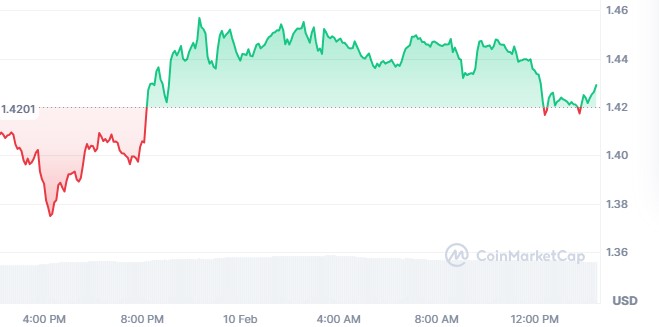
Although the prices are low from its $2–3 level, analysts see the upgrade as a long-term positive rather than short-term price catalyst.
The Network That Building Heights in Every Step: Ripple
Ripple has continued to stack major milestones, reinforcing its focus on building a strong, compliant, and scalable blockchain network for institutions. Some of the recent milestones includes:
Activated the Token Escrow Amendment on XRPL in February 2026, expanding escrow beyond XRP to RLUSD, trustline tokens, and Multi-Purpose Tokens.
Secured a full EU Electronic Money Institution (EMI) license in Luxembourg, enabling regulated crypto payments across Europe.
Partnership with UAE-based Zand Bank to support AEDZ and RLUSD liquidity for regional and cross-border payments.
Together, these developments highlight Ripple’s steady shift toward institutional-grade blockchain infrastructure. By combining regulation, security, and real transaction use, Ripple continues to prepare XRPL for long-term growth and deeper integration with the global financial system.
