US-Iran Tensions: Is This the Foundation for a 2026 Market Meltdown?

Geopolitical fault lines are cracking open. As the US and Iran escalate their decades-long shadow war into something hotter, a chilling question echoes through trading desks: are we watching the slow-motion setup for a 2026 financial crisis?
The Powder Keg Portfolio
Forget predictable earnings reports. The real market movers are now ballistic missile tests, drone strikes in oil fields, and whispered threats in the Strait of Hormuz. Each incident doesn't just spike oil prices—it sends shockwaves through global supply chains, sovereign debt markets, and the fragile confidence propping up equities. Investors are left holding a powder keg portfolio, where 20% of its value hinges on the temper of generals 7,000 miles away.
From Conflict to Crash
The path from geopolitical flare-up to full-blown crash is a well-trodden one. It starts with a panic-induced liquidity scramble. Institutions yank capital from emerging markets, triggering currency collapses. Supply chain ruptures from blocked shipping lanes then gut corporate profits, leading to cascading earnings downgrades. Finally, soaring energy costs ignite inflation, forcing central banks into a brutal choice: crush demand with rate hikes or let the currency bleed out. Either choice hammers asset prices. It's a script written in the ashes of past crises, and the actors are back on stage.
The 2026 Countdown
Why 2026? It's the convergence point. That's when current fiscal bandaids expire, debt refinancing walls loom largest, and the structural cracks papered over by a decade of easy money can no longer be ignored. A major geopolitical shock doesn't create these vulnerabilities—it simply lights the fuse on a pre-existing bomb. The smart money isn't just watching headlines; it's calculating how many quarters of stress the system can absorb before a critical support level gives way. Spoiler: the margin of safety is thinner than a Wall Street analyst's excuse for a missed target.
The ultimate irony? The very 'defense' stocks that rally on war fears could be the ones leading the downturn when pension funds, desperate for cash, start liquidating their 'safe' industrial holdings to cover losses elsewhere. In modern finance, there are no bunkers—only different types of shrapnel.
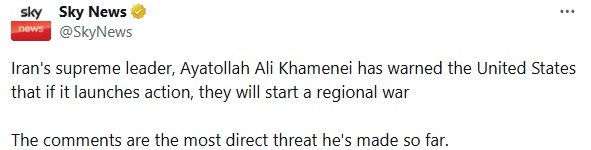
The warning came as the United States increased its naval presence in the Middle East, signaling higher military readiness in the area following the long-running US-Iran conflict. The combination of strong language and visible military movement unsettled investors across global markets including both traditional and crypto.
US-Iran Conflict: Why War Tensions Are Rising Again
The current situation is based on the long-running disputes between the United States and Iran, including sanctions, alliances with opposite nations, regional influence, and nuclear concerns. Recent U.S. naval deployments and diplomatic pressure have raised fears of direct confrontation.
Iran’s higher authorities framed the situation as a warning against escalation, while international media sources described the moment as one of the most sensitive geopolitical flashpoints in years.
Although this is not a direct conflict, the risk of escalation alone was enough to MOVE markets. While stock markets often fall in these scenarios, crypto markets are likely to take gain from this as traders move toward options that are out of any specific region’s control.
However, looking at some of the previous cases, the narrative seems to change in the growing global connectivity.
How Geopolitical Fear Has Affected Crypto in the Past
The biggest example is the October 2025 crypto market crash, when the Trump-led U.S. government threatened to impose 100% tariffs on Chinese imports. This led to Bitcoin and altcoin’s falling alongside stocks, panic selling which caused billions in liquidations, and turned the whole market into red immediately.
This happened as the US and China are both major economies of the world and any trading tension between them directly affects the millions of the traders investing in them globally.
Current Market Situation: Already Fragile
This weekend the crypto market is already facing sharp downturns with major currencies like Bitcoin (-0.95%), ethereum (-4.5%), XRP (-1.04%), Solana (-0.96%) facing value losses. The whole market is 1.36% down with the total cap standing around $2.62 trillion as per CoinMarketCap Data.
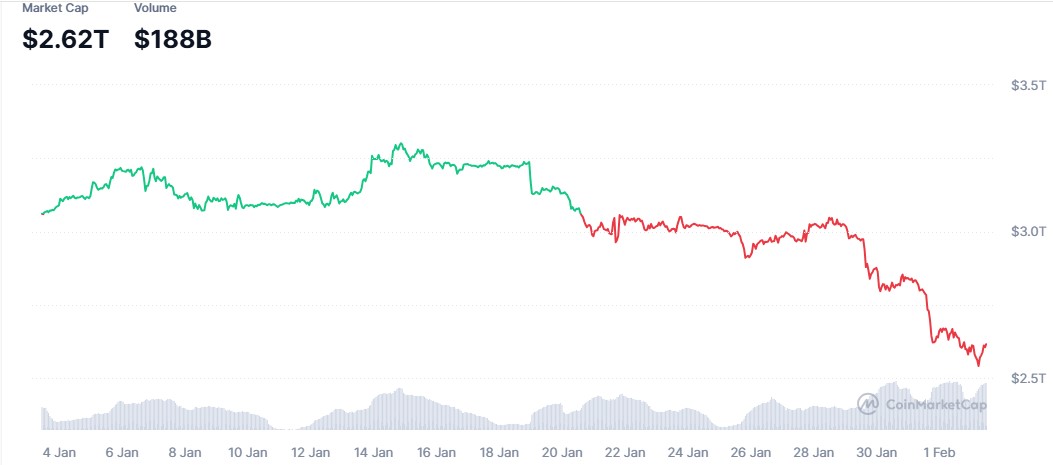
While the current situation is influenced by other factors also including dollar liquidity tightness, rumors and controversies on social media, any serious stretch in US-Iran conflict can lead to another market crash in 2026 as per analysts.
Looking Ahead: Could War Tensions Influence a 2026 Crypto Crash?
At this stage, it is too early to call this a full 2026 crypto market crash, as it already shows rebound from earlier day’s situation. Similar events in the past show that geopolitical shocks often cause short-term sell-offs, followed by stabilization once uncertainty clears.
However, continuous risk can act as a trigger, especially when markets are already fragile due to high leverage, tight global liquidity and weak risk appetite.
This article is for informational purposes only and does not constitute financial advice. Cryptocurrencies are highly volatile and influenced by global events.
