Satoshi Nakamoto in Epstein Files: Unraveling the Truth Behind Explosive Bitcoin Claims

Newly surfaced documents from the Epstein case have ignited a firestorm across crypto forums—tying the pseudonymous creator of Bitcoin to the disgraced financier's inner circle. The allegations cut straight to the heart of crypto's founding mythos.
Connecting the Dots—or Creating Them?
Speculation runs wild, but concrete evidence remains elusive. The core claim hinges on a few cryptic entries and flight logs, leaving analysts to parse shadows. It's a classic conspiracy fuel: a mysterious figure, powerful associates, and a trillion-dollar asset born from the ashes of the 2008 financial crisis—a crisis that enriched the very elites Bitcoin sought to bypass.
Why This Narrative Gains Traction
The timing is impeccable for headline writers. As Bitcoin flirts with new all-time highs, any story linking its origin to scandal generates clicks. It plays into a cynical, yet persistent, finance-sector view that every disruptive technology eventually gets co-opted by the old guard—or was secretly theirs all along.
Separating Signal from Noise
Forensic blockchain analysts point out the technical and philosophical inconsistencies in the theory. The Bitcoin network's design screams of ideological purity, a direct rebuttal to the opaque, trust-based systems Epstein allegedly manipulated. The math doesn't lie, even if people do.
A Legacy Untarnished by Association?
Ultimately, the protocol speaks for itself. Bitcoin's value proposition—decentralization, verifiable scarcity, censorship resistance—stands independent of its creator's identity. This episode highlights crypto's enduring paradox: a community built on distrust of institutions remains obsessed with the pedigree of its founders. Maybe the real scandal is how easily the market gets distracted from fundamentals by a salacious headline.
Source: X (formerly Twitter)
What the DOJ Actually Released?
The DOJ released the final batch of records under the Epstein Files Transparency Act, signed in late 2025. These documents include court files, emails, flight logs, and investigative material linked to Jeffrey Epstein and Ghislaine Maxwell.
Importantly, the DOJ made it clear that the release does not include new charges or arrests. Sensitive information was removed to protect victims, and many of the documents had already been referenced or reported in earlier investigations.
Viral Emails: Why They Are Not Real
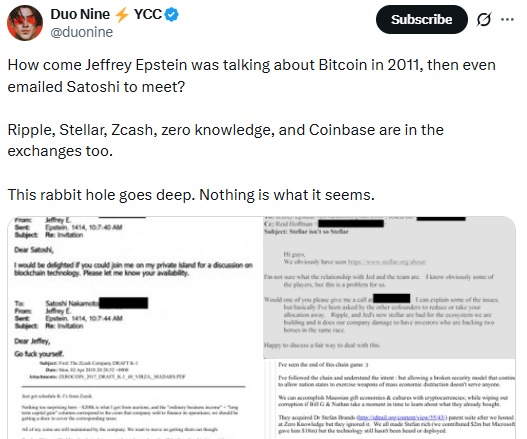
Several viral images claim to show emails in which the file discusses BTC, funding, or even the identity of “Satoshi.” These screenshots have spread widely on X and Threads.
However, fact checks quickly found major problems. Some images show two “To:” lines, which is not how real emails are formatted. Others include fake addresses, such as [email protected], that do not appear anywhere in official DOJ records. Searches of the DOJ archive also show no results for phrases like “little digital gold mine.”
In short, there is no verified email showing this fact
Why Satoshi’s Name Appears at All?
This is where much of the confusion begins.
A small number of real DOJ documents mention the name “Satoshi Nakamoto,” but only in a contextual way. These references appear in discussions about Bitcoin, blockchain research, or early crypto funding debates, not as evidence of a real-world identity.
Was Nakamoto
Helped create BTC
Had access to Satoshi’s wallets
Controlled BTC’s development
This key detail is often ignored in viral posts about Satoshi Nakamoto in the DOJ Files.
Crypto Names, Funding, and Early Tensions
Some documents show Jeffrey had limited financial or social proximity to early crypto research circles, including academic and investor networks. This included exposure to debates around Ripple and Stellar, which competed with BTC in the early years.
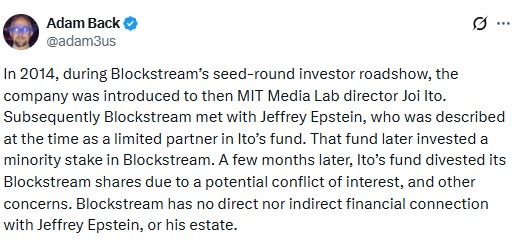
After these claims spread, Adam Back, CEO of Blockstream and a well-known early cryoto figure, publicly denied any direct or indirect financial ties to Epstein. Back explained that Jeffrey was briefly introduced during a 2014 MIT Media Lab-related roadshow, but any associated fund later exited due to concerns.
Source: X (formerly Twitter)
This reflects awareness, not control. Knowing about crypto projects is very different from running them.
Market Reaction and Fear Factor
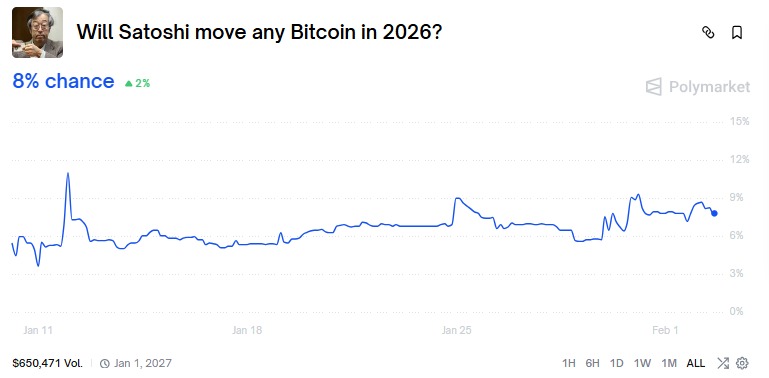
Even false claims can affect sentiment. On Polymarket, traders briefly repriced bets on whether Satoshi’s BTC wallets might MOVE in 2026. The probability rose to around 8%, driven by fear rather than evidence.
Source: PolyMarket
This shows how quickly misinformation can influence markets.
Around the same time, Bitcoin’s price fell to about $76,900, down roughly 2% in 24 hours. Some linked this drop to Epstein-related rumors, but market data tells a different story.
It's market cap remains NEAR $1.5 trillion, with daily trading volume around $72 billion. Moves like this are common and usually driven by profit-taking, global market caution, or derivatives liquidations. There is no on-chain evidence of panic selling tied to these rumors.
Claims About Bitcoin’s Origin Statements like “BTC means Buy the Children” or calling bitcoin a “pedocoin” have no factual basis. “BTC” is simply a ticker symbol, like USD or EUR. The Coin’s code, whitepaper, and early mining history are public and have been reviewed for years by developers and researchers worldwide. No credible investigation has ever linked Epstein to BTC’s creation.
Conclusion
There is no proof that Jeffrey Epstein created Bitcoin or was Satoshi Nakamoto. The Epstein Files do not reveal secret control over the cryptocurrency or confirm any hidden identity.
