Chicago Banking Crisis: Polymarket Odds Skyrocket to 100% on US Bank Failure

Chicago's financial landscape just got a seismic shock—and prediction markets are screaming certainty.
The Ticking Clock
Polymarket, the decentralized betting platform, has traders placing absolute conviction on a major US bank collapse hitting the Windy City. Odds didn't just climb—they slammed into 100%. That's not speculation; it's a market verdict.
Decentralized Oracles Don't Lie
When traditional analysts hedge, crypto-native prediction markets go all-in. This surge signals a massive loss of faith in a cornerstone institution, with Chicago's economy directly in the crosshairs. It's a real-time stress test, bypassing Wall Street's polished PR spin.
The Ripple Effect
Bank failures aren't isolated events. They cut liquidity, freeze credit lines, and send businesses scrambling. In a city built on commerce and derivatives, the contagion risk is palpable. Suddenly, those 'too big to fail' mantras sound like nostalgic whispers.
A Cynical Footnote
Funny how the same regulators who miss these collapses are always first in line to lecture crypto about 'systemic risk.' The irony is almost as solid as those 100% odds.
Chicago's financial fortress has a crack. The markets have called it. Now we wait for the official press release—probably drafted by the same consultants who missed the warning signs.
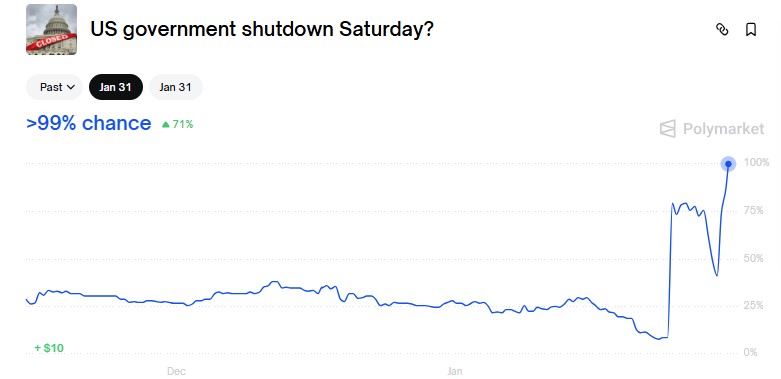
Within hours, Polymarket odds for a US Bank failure by January 31 surged above 100%, triggering intense discussion about whether this was an isolated event, or the first crack in a fragile system.
What Exactly Happened: Is This Really Leading Towards A Full Shutdown?
On January 30, the FDIC shut down Metropolitan Capital Banks & Trust, a small regional bank in Chicago, after finding unsafe financial conditions and weak capital. The bank held around $261 million in assets and $212 million in deposits.
To prevent any customer losses, regulators quickly transferred most deposits and assets to First Independence Bank of Detroit. The shut down will cost the FDIC insurance funds about $19.7 million.
The incident is the first US bank failure of 2026, despite the fact that the crisis is not as major as previous ones. Still, people strongly believe that it could lead to major losses as the US government shutdown has already been started partially even after the approval of a long-stretched funding bill by the Senate.
Why This Closure is Triggering Fears in Investors
Unlike major banking crises, this failure was not caused by a system-wide fault like interest-rate shocks, crypto exposure, or mass withdrawals. Instead, the closure points to bank-specific problems – poor loan quality, capital shortfalls.
However, the market reacted strongly because of the timing. The closure came during a period of high financial sensitivity and frequent changes in assets prices.
It happened on the day gold and silver prices crashed sharply after performing their all time bests:
Gold dropped 8–11% from record highs of $5,500-$5,600 to around $4,700.
Silver fell 17–31%, from above $120 to $78–$95, marking the worst single-day crash since 1980.
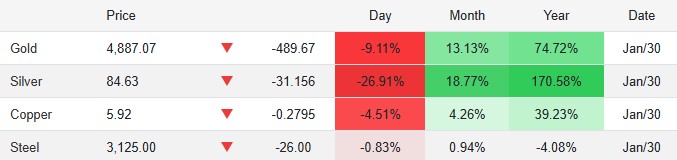
Earlier that day, some analysts warned of a sharp metals crash tied to an undisclosed bank’s insolvency, however, no official confirmation links the banking institute directly to metals losses.
U.S. stocks also ended Friday in the red, with the S&P 500 and Dow Jones slipping 0.4% while the Nasdaq slid a sharper 1.3%.
People are betting on the government shutdown for being stretched to over 3 days.
How It Mean For Crypto: Calculating From Previous Ones
Banking stress events like this one, have generally shown mixed impacts on crypto markets, especially Bitcoin.
In March 2023, during the Silicon Valley Bank collapse, Bitcoin dropped around 11% from above $22,000 to $19,670, while the whole crypto market showed a slight change.
On the other hand, in a crisis like Europe’s debt turmoil (2010-2012), Cyprus in 2013, and Greece in 2015 , bitcoin price surged in the context of safe alternative assets rather than decline. In SVM crises too, after experiencing the dip, BTC rebounded 30–40% within weeks after regulators stepped in.
From this scenario, we can say that banking crises often result in the favor of crypto coins for their ability to operate outside the traditional financial systems.
But the question still wonders, if it is a good signal for crypto, why are investors still panicking? The answer is simple with the current nature of the broader market.
Current Market Conditions: A Good Or Bad Impact?
After the 2025 crash the market’s nature became more volatile and sensitive to every news. Bitcoin price hovering at $83,822, still struggling to hold above the $100K mark after its 126K ATH of Oct, 2025. ethereum and other altcoins are also experiencing the same.
While with the news, which is generally seen as a positive sign, short term swings are expected, rising in demand is anticipated by many of the market watchers. However, any further shocks could trigger renewed selling before a potential rebound.
For now, the data suggests containment, not contagion, however, additional small banks failure, ongoing volatility in metals and macro markets can shift sentiments.
The article is for informational purposes only; It does not constitute any financial or legal advice.
