UAE Launches USDU Stablecoin: Central Bank-Registered USD Token Shakes Up Digital Finance

The UAE just dropped a regulatory bombshell—and traditional banks might want to check their foundations.
Central Bank-Backed Digital Dollar
Forget speculative meme coins. The USDU stablecoin arrives with something crypto often lacks: a central bank registration. This isn't a startup's moonshot; it's a state-sanctioned digital dollar, fully backed by USD reserves held in the UAE. It cuts through the usual regulatory fog, offering institutions a clear, compliant on-ramp.
Institutional-Grade Bridge
The play is obvious. USDU creates a seamless pipeline between the Emirati financial system and global digital asset markets. It bypasses legacy cross-border friction, positioning the UAE as a nexus for tokenized finance. Think instant settlements, programmable treasury management, and a direct challenge to correspondent banking's slow, expensive dance.
A New Class of Digital Asset
This moves stablecoins from the crypto wild west into the regulated mainstream. It signals a future where national monetary policy could interact directly with blockchain rails. The token isn't just a payment tool; it's a strategic asset in the geopolitical race for financial infrastructure dominance.
The launch redefines the game. It’s a sovereign-grade entry that sidelines the algorithmic stablecoin drama and offers a boring, reliable, and powerful alternative—which, in finance, is often the most revolutionary thing of all. Just ask any banker clinging to a 3-day settlement cycle.
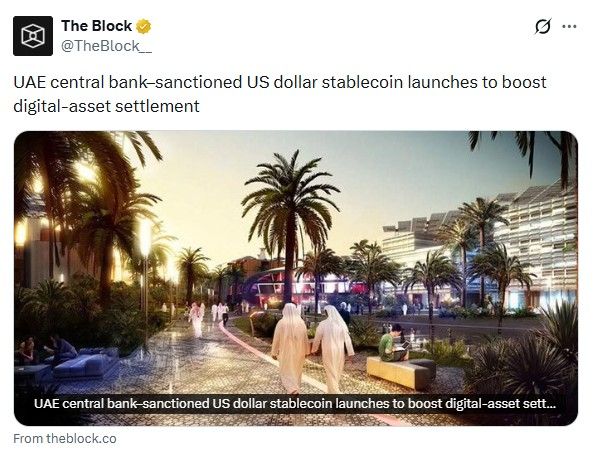
Source: TheBlock Xofficial
Issuer, Regulatory Status, and What “Central Bank Registered” Really Means
USDU is issued by Universal Digital Intl Limited, a company operating within the UAE’s regulated financial environment. The virtual asset is registered under the CBUAE Payment Token Services Regulation as a Foreign Payment Token.
This is very important to understand clearly:
USDU is not issued by the country’s central bank. It is only registered and approved under the central bank’s regulatory framework. That means the central bank allows it to operate legally, but it does not control or issue the coin itself.
USDU is also positioned within Abu Dhabi Global Market (ADGM), which is known for strong digital asset regulation. This gives the dollar-backed token a dual LAYER of compliance, making it suitable for institutional use.
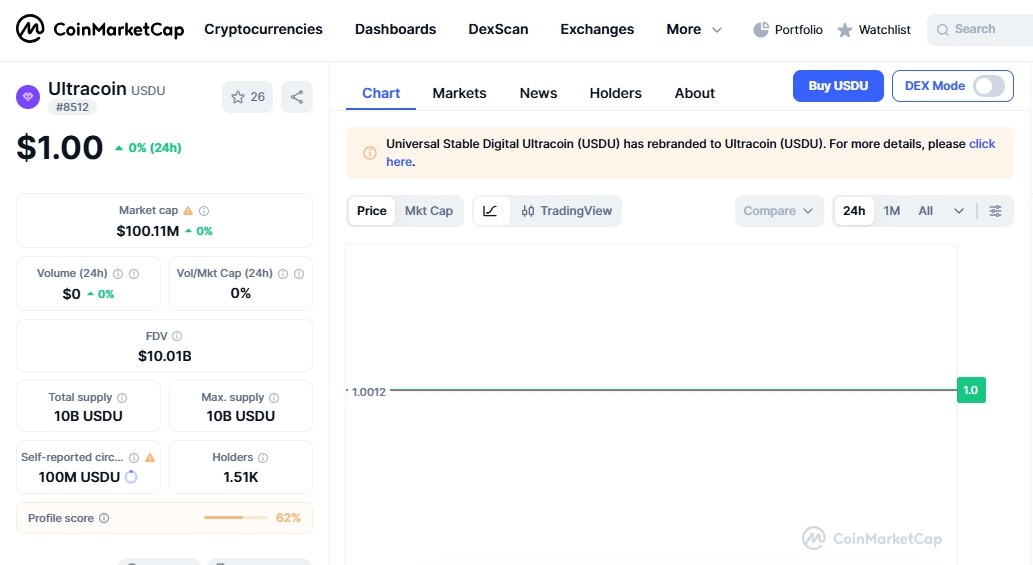
Source: CoinMarketCap official
What is the dollar-backed token’s real purpose, and how it works
UAE USDU stablecoin is launched as an institutional-grade settlement rail, not a payment coin for the general public. Retail investors and everyday users are not its target. It is meant for professional trading desks, brokers, digital asset platforms, and financial institutions that need a regulated USD-based settlement token.
The virtual asset is:
Fully backed 1:1 by US dollars
Reserves are held in regulated bank accounts
Designed for transparency and compliance
Used for secure digital asset settlement
This makes USDU different from global retail digital dollar tokens like USDT or USDC. Its focus is not mass adoption but financial infrastructure reliability.
Impact on the Nation’s Crypto Market, Stablecoin Space, and Global Economy
The UAE USDU stablecoin strengthens the country’s position as a serious global crypto hub built on regulation, not speculation. A central bank-registered virtual asset improves confidence for international institutions looking to operate in the region. It also encourages exchanges and brokers to follow stricter compliance standards.
In terms of stablecoin market share:
Inside the country, the dollar-backed token can gain adoption in institutional settlement activity
Globally, it will not immediately challenge USDT or USDC
Its role is specialized, not mass-market
For the global crypto market, this sends a strong message. It shows that stablecoins are evolving from trading tools into real financial infrastructure. Governments and regulators are now shaping how virtual dollar tokens can operate safely within national economies.
In the long run, this step can:
Improve trust in the regulated virtual dollar token
Support tokenized finance and digital settlements
Strengthen the nation’s financial innovation image
Attract institutional capital into the region
