Bitwise Registers Uniswap ETF: The DeFi Tipping Point Wall Street Can’t Ignore

Wall Street just blinked. Bitwise Asset Management's move to register a spot Uniswap ETF isn't just another filing—it's a direct shot across the bow of traditional finance.
Why This ETF Is Different
Forget Bitcoin. This targets the engine room of decentralized finance. An ETF tracking UNI, the governance token of the largest decentralized exchange, gives institutional investors a pure-play on automated market makers—the tech that bypasses Wall Street's middlemen entirely.
The Regulatory Gauntlet
The SEC's approval isn't guaranteed. They've spent years viewing most crypto assets as securities. A green light here would signal a seismic shift, acknowledging that protocol governance has tangible, tradable value. The usual finance skeptics are already sharpening their pencils, ready to call it a glorified bet on software downloads.
What's Really at Stake
This isn't about adding another crypto ticker to a brokerage account. It's about legitimizing the entire DeFi stack. If it passes, capital floods into a system built on transparency and code, not opaque balance sheets and banker bonuses. It forces every major asset manager to ask: are we building bridges to this new system, or watching it build around us?
One cynical fund manager probably muttered over his third espresso: 'Great, now my clients can lose money on a decentralized exchange instead of a centralized one.' But behind the jab lies the real fear—this could cut their slice of the pie for good.
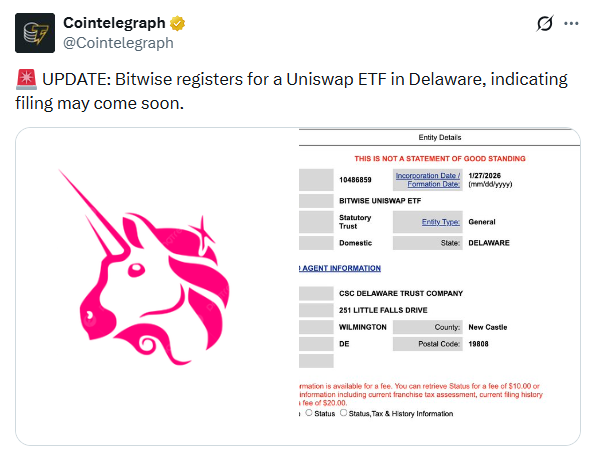
Source: X official
Why It Matters
This development shows how Bitwise registers uniswap to bridge decentralized finance with traditional funding systems.
The significance is two-fold:
It bridges DeFi with traditional finance, making it easier for mainstream investors to access decentralized protocols without holding tokens directly.
It reflects a trend of DeFi assets becoming part of regulated investment products, expanding crypto beyond Bitcoin and Ethereum.
Why Bitwise Is Taking This Step
The asset management firm has a history of launching crypto investment products, including:
Bitcoin and Ethereum spot Exchange-traded funds.
Several other strategy ETF filings covering a wide range of crypto assets like AAVE and UNI were previously in a group of 11 filings last year.
By registering the UNI ecosystem ETF trust, the asset manager signals it intends to get ahead of regulatory processes and position itself for future approval if market and legal conditions allow.
Experts view this as a strategic and methodical move, not a rushed decision. It shows Bitwise is preparing before a formal SEC submission — a typical approach in financial product development.
Does this statement have any relevance to Uniswap’s price?
The token price is up today mainly because the news about Bitwise registering a Uniswap ETF trust in Delaware increased investor confidence and created strong buying interest. This news signals possible institutional adoption, which usually boosts sentiment. However, this move is still an early step, so the surge is likely short-term, driven by hype. Long-term growth will depend on real SEC progress and broader market strength, so investors should stay cautious and avoid chasing sudden pumps.
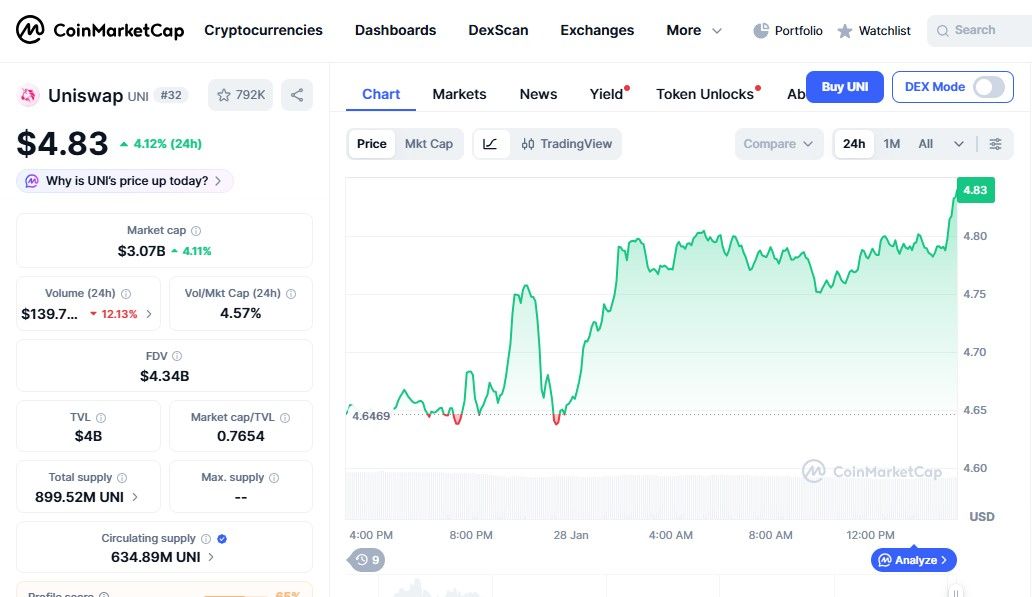
Source: CoinMarketCap official
What This Means for the Future
At this stage:
There’s no formal SEC application yet
No specific launch date
No guarantee of approval
But the registration:
Unlocks the possibility of the UNI protocol ETF in the future
Signals serious interest from traditional finance managers in DeFi protocols
Strengthens the narrative that decentralized assets may enter mainstream regulated funding products
If approved, a Uniswap Investment fund could:
Make Uni exposure easier for large investors
Boost liquidity and Professional investors' confidence
Attract new capital to DeFi-related investments
The way Bitwise registers uniswap could set a model for future DeFi-based exchange-traded products.
Overall, this is an early but important signal that crypto may continue blending into traditional markets via regulated investment vehicles.
