Bitcoin Hashrate Plunges 8% as Xinjiang Mining Farms Go Dark

The Bitcoin network just took a major hit. Its global hashrate—the total computational power securing the blockchain—has dropped a sharp 8%. The culprit? A widespread shutdown of mining operations in China's Xinjiang region.
The Great Power-Down
Xinjiang has long been a cornerstone of Bitcoin mining, prized for its cheap electricity. When those massive farms disconnect, the entire network feels the tremor. This isn't just a minor blip; it's a significant recalibration of the world's most secure computer network.
Network Resilience Tested
Hashrate is Bitcoin's heartbeat. A sudden drop can temporarily slow transaction processing and, in theory, make the network slightly more vulnerable. But here's the bullish twist: the protocol is designed for this. The upcoming difficulty adjustment will automatically re-calibrate, making it easier for the remaining miners to find blocks and keeping the system humming. It's a brutal, automated display of anti-fragility.
The Miner Migration Continues
This event is another chapter in the great geographic mining migration. Power shifts from one region to another, chasing stable energy and friendly regulations. Each disruption proves a key point: no single country can shut Bitcoin down. The hash rate just moves, like water finding a new path.
A Temporary Setback or a Buying Signal?
While headlines scream about a network 'weakening,' seasoned players see a different picture. Short-term hashrate volatility often creates long-term buying opportunities. The network adapts, miners relocate, and life goes on—much to the chagrin of traditional finance pundits who still think a regional power issue can kill a global, decentralized asset. After all, Wall Street gets nervous when a single data center has a hiccup; Bitcoin just survived a major regional blackout without missing a beat.
Bitcoin Hashrate Drops 8% in a Single Day
The 8% drop after large-scale mining shutdowns in Xinjiang, China. According to blockchain analysts and Nano Labs founder Kong Jianping, the total network hash rate fell by around 100 EH/s in just 24 hours. As of December 15, 2025, BTC’s total hashrate stands close to 1,200 EH/s.
This sudden decline means a massive amount of computing power has gone offline. Reports suggest that at least 400,000 machines stopped working almost at the same time. Most of these rigs were operating in farms located in Xinjiang, a region known for low-cost power.
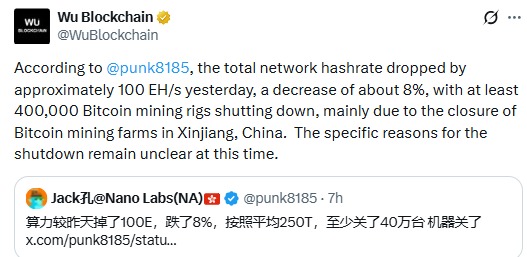
Source: X (formerly Twitter)
Why Xinjiang Bitcoin Mining Farms Shutdown
The event is linked to a new directive issued by authorities in Xinjiang on December 5. The notice ordered an immediate shutdown of all VIRTUAL currency operations of miners. While China banned crypto mining nationwide in 2021, some miners continued operating quietly using cheap electricity.
Now, those power sources are reportedly being redirected to AI data centers and industrial use. The exact trigger behind the sudden enforcement remains unclear, but the result is clear: this shutdowns are once again reshaping the global hashrate.
Older Machines Hit the Hardest
Kong Jianping explained that with an average hashrate of 250 terahashes per machine, the shutdown of 400,000 rigs matches the scale of the Hash-rate Drops seen this week. Data from F2Pool shows that many older mining machines are now running below their shutdown price.
High network difficulty has made outdated hardware unprofitable. As electricity prices go up and rewards dwindle, miners operating with outdated hardware have no choice but to shut down, which further presses the bitcoin mining community.
Impact on Network and Bitcoin Price Today
Although this event have negative implications for security, analysts assert that everything is in order in this respect. BTC has withstood far more dramatic occurrences in the past, such as a Chinese ban in 2021. Moreover, this network is self-regulating because of difficulty levels, which will soon make it easier to mine.
As of writing, the Bitcoin price is $89,873 with no major change in price in the last 24 hours. The RSI and MACD indicators are neutral in momentum, based on crypto live charts.
What Comes Next
In the past, when Bitcoin Hashrate Drops, capacity to mine shifts to other parts of the world. The United States, Kazakhstan, and Russia have already become major hubs for mining. A future difficulty adjustment may boost miners' returns and promote a balanced network.
For now, what is most evident in the latest BTC news is how regulation, energy, and technology affect crypto in today’s environment. While short-term loss is evident, coin’s resilience in the long term is against another reality check.
This article is for informational purposes only, kindly do your own research before investing.
