SEC Crypto ETF Rule Creates Sudden Roadblock for 3x–5x ETF Filings

Regulators just slammed the brakes on Wall Street's crypto leverage dreams.
The SEC's latest move throws a massive wrench into plans for 3x and 5x leveraged crypto ETFs. It's a classic case of the gatekeepers changing the locks just as the party was getting started.
What the Rule Actually Does
Forget complex legalese—this is a simple roadblock. The new guidance effectively says 'not so fast' to any fund looking to amplify crypto exposure through traditional, regulated leverage. It targets the structural mechanics these proposed ETFs would use, creating a compliance maze that could take years to navigate, if it's even possible.
Why This Hurts More Than a 20% Dip
This isn't about banning Bitcoin. It's about stifling innovation in the wrapper where mainstream and institutional money lives. These leveraged products were poised to be the gateway for a new wave of capital—the kind that craves familiar structures but wants crypto's upside. Now, that pipeline is clogged.
The fund managers pushing these filings aren't just disappointed; their entire product roadmap just hit a regulatory brick wall. The timing feels intentional—just as crypto integration into traditional finance seemed inevitable.
Where Do We Go From Here?
The path forward is murky. Legal challenges are almost guaranteed, arguing the SEC is overstepping. Meanwhile, the 'smart money' will simply find another way, likely in less regulated jurisdictions or through different financial instruments. The demand for leveraged crypto exposure doesn't vanish because of a rule—it just gets more creative.
In the end, it's another reminder that in traditional finance, innovation moves at the speed of bureaucracy. The suits in Washington still control the on-ramps, even if the destination is decentralized.
SEC Raises Red Flags Over Leveraged Crypto ETF Filings
The U.S. Securities and Exchange Commission has formally raised concerns about multiple filings seeking approval for high-leveraged crypto ETFs.
These products were designed to give traders amplified exposure to Bitcoin, Ethereum, Solana, and several major tech stocks.
In a letter dated December 2, 2025, the commission informed Direxion Shares exchange traded fundTrust that any fund offering more than 200% leverage WOULD not move forward until strict issues are addressed.
This limit is defined under the SEC Crypto ETF Rule, officially known as Rule 18f-4 under the Investment Company Act of 1940.
According to the letter, they asked issuers to revise their investment objectives or withdraw the filings entirely.
What Rule 18f-4 Says
Under the SEC Crypto ETF Rule, a Leveraged fund cannot exceed 200% of the Value-at-Risk (VaR) of its reference portfolio.
This essentially means:
2x leverage = allowed
3x leverage = not allowed
5x leverage = far outside the limit
This rule prevents extreme leverage, which increases both gains and losses. The SEC notes that such products can expose retail traders to unexpected “termination events,” especially during volatile digital currency swings.
Bloomberg Analysts Weigh In
Bloomberg ETF analyst Eric Balchunas reacted strongly to the commission’s pushback.
He posted on his social media (formerly Twitter):
“Looks like the SEC is pushing back on all the 3x and 5x filings. They were trying to use a loophole to get around the 200% VaR. Honestly, it’s for the best. I’m as libertarian as they come, but 2x is plenty of heat.”
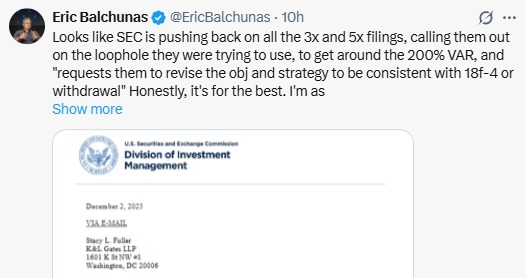
Source: Eric Balchuna (formerly Twitter)
Balchunas argued that anything above 2 times would cause constant liquidation risks and distract both traders and issuers.
ETF expert James Seyffart also noted earlier that “3x isn’t really allowed” under existing ETP rules. Some issuers were trying to use options to bypass these limits.
A Flood of Filings, Then a Sudden Halt
The past few months saw unusually aggressive Exchange Traded Fund filings:
October Updates
Defiance ETFs submitted 6 new leveraged digital currency funds, including 3 times long and short products for Bitcoin, Ethereum, and Solana.
REX Shares and Osprey Funds filed for 21 digital currency ETFs in a single day.
Volatility Shares attempted to launch 5 times leveraged Funds, which would have been the first of their kind.
The SEC Crypto ETF Rule now blocks all such filings pending revisions.
Why Traders Wanted High-Leveraged ETFs
High-risk traders were excited about the possibility of amplified returns. With the crypto market recovering, many saw leverage as a fast way to multiply gains.
Delivered 3 to 5 times daily performance
Used futures, swaps, and options
Targeted major assets like BTC, ETH, SOL, NVDA, TSLA, and COIN
However, they also carried extreme risks such as volatility decay and amplified losses.
What Happens Next?
As of now, issuers must either:
Refile their applications with 2 times leverage,
orWithdraw the filings completely.
This article is for informational purposes only and does not constitute a financial advice, kindly do your own research before investing.
