24/7 Settlement Revolution: How Instant Liquidity Is Shattering Traditional Finance’s 9-to-5 Shackles

Wall Street's bankers still clock out at 4 PM—meanwhile, digital assets never sleep.
Trading without borders or bankers' hours
Traditional settlement takes days. Crypto settles in seconds. That gap isn't just inconvenient—it's a multi-trillion dollar inefficiency that blockchain technology just made obsolete. While legacy systems wrestle with time zones and holidays, decentralized networks process transactions 24/7/365.
The death of waiting
Instant settlement means capital never sits idle. No more waiting for wires to clear or for some middle-office analyst to finish their coffee. Funds move at internet speed—because apparently in 2025, some institutions still think 'business days' exclude weekends and holidays like it's 1985.
Liquidity on demand
Market makers can rebalance portfolios in real-time. Arbitrage opportunities get captured instead of expiring. The entire financial ecosystem operates at the speed of code rather than the speed of paperwork. It's almost like efficiency matters more than maintaining banking traditions that primarily exist to justify fat fees.
The new normal doesn't wait for market open—it's already here.
Stablecoins as the catalyst
The advent of stablecoins proved that money could move at the speed of the internet. Today, trillions of dollars’ worth of transactions settle instantly on blockchain rails, with stablecoins providing the dollar liquidity that powers crypto markets, payments and remittances. But stablecoins themselves only solve half the problem.
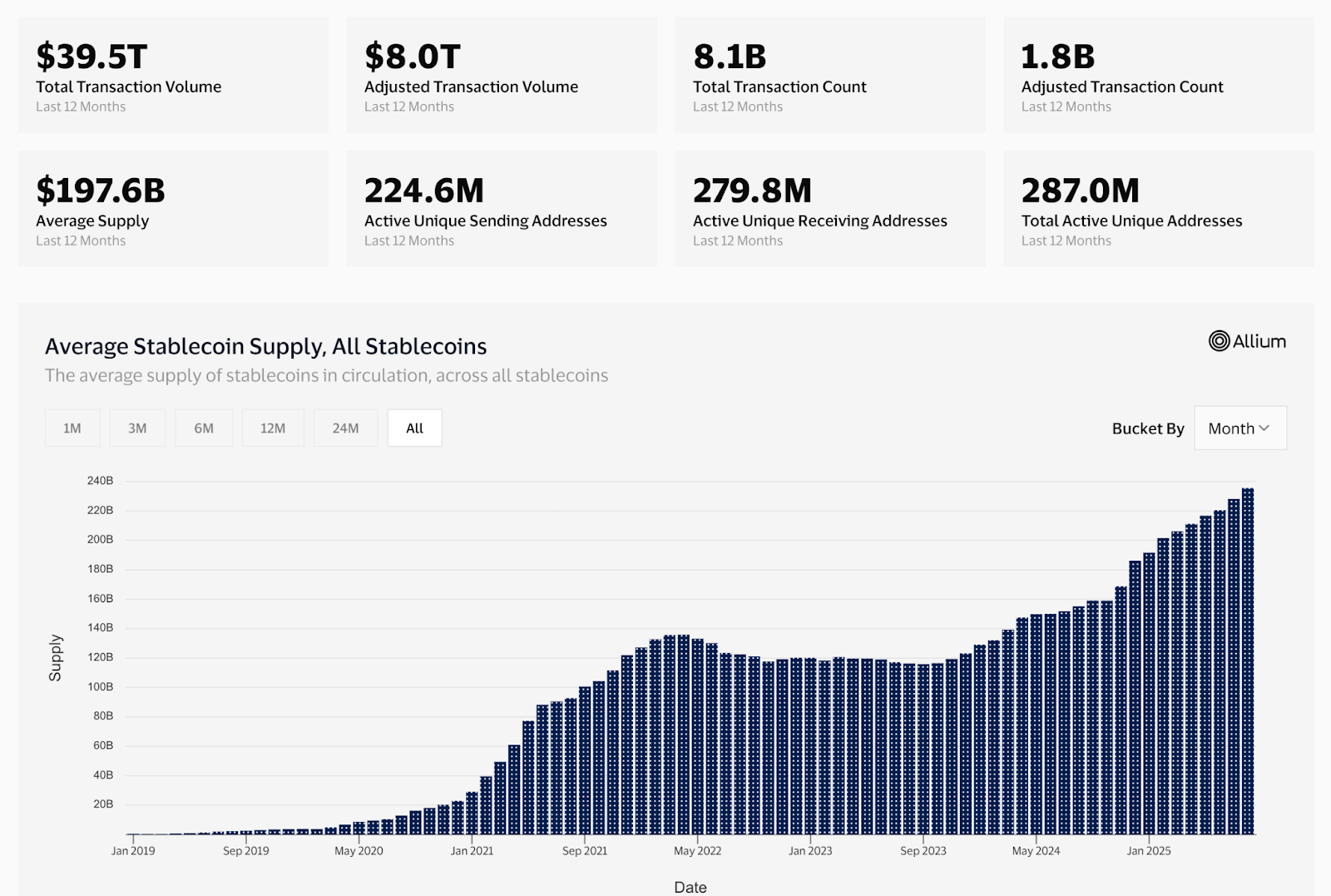
Source: https://visaonchainanalytics.com/
They provide speed, not yield. Stablecoin balances, in aggregate hundreds of billions of dollars, typically earn nothing. Contrast that with tokenized treasuryassets and money market funds, which are low-risk, yield-bearing instruments that pay the risk-free rate. The challenge is that subscriptions and redemptions into and out of these products still run on asynchronous, often T+2 timelines locking out investable capital needed in the immediate term.
Convergence and composability
The industry now stands on the cusp of convergence. The world’s leading asset managers now offer tokenized money market funds, with BlackRock’s BUIDL for example topping $2 billion in assets under management.
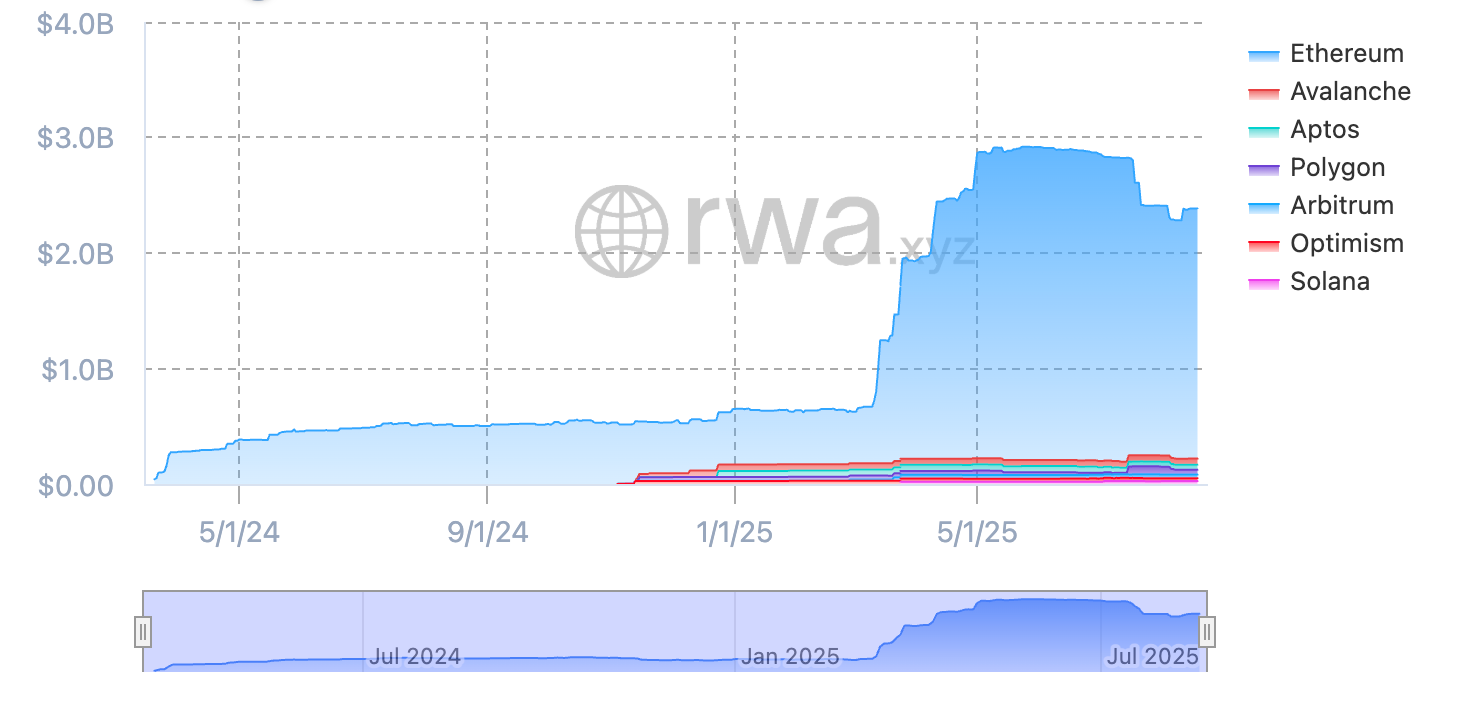
Source: https://app.rwa.xyz/assets/BUIDL
These tokenized funds can transfer and settle instantly, including atomically, against other tokenized instruments like stablecoins. As stablecoin activity increases, so do cash and treasury management needs for which tokenizedtreasuries are the optimal solution.
What’s missing is the connective tissue. Without neutral infrastructure to enable atomic, 24/7 swaps between stablecoins and tokenized treasurieswe are only digitizing old constraints. The true breakthrough comes when institutions can hold risk-free assets and instantly convert them to cash at any hour, without intermediaries, delays or price slippage.
The stakes
The stakes are enormous. In the U.S. alone, non-interest-bearing bank deposits total nearly $4.0 trillion. If even a fraction were swept into tokenized treasuries and made instantly convertible to stablecoins, it WOULD unlock hundreds of billions of dollars in yield while preserving full liquidity. That is not a marginal efficiency — it is a structural shift in global finance.
Critically, this future requires open, neutral and compliant infrastructure. Proprietary walled gardens may deliver efficiency for one institution, but systemic benefits only emerge when incentives align across issuers, asset managers, custodians and investors. Just as global payment networks required interoperable standards, tokenized markets need shared rails for liquidity.
The path forward
The liquidity gap is not a technical inevitability. The tools exist: tokenized risk-free assets, programmable money and smart contracts capable of enforcing trustless, instant settlement. What is needed now is urgency — by institutions, technologists and policymakers — to bridge the gap.
The future of finance is not merely faster payments. It is a world where capital is never idle, where the trade-off between liquidity and yield disappears and where the foundations of financial markets are rebuilt for an always-on, global economy.
That future is closer than most realize. Those who embrace it will define the next era of financial markets; those who hesitate will be left behind.
