BTC at Critical Juncture: Market Activity Hints at Major Move

Bitcoin isn't just moving—it's holding its breath. The entire crypto market watches as the flagship asset teeters on the edge of a decisive breakout or breakdown. This isn't about daily noise; it's about the structural pressure building beneath the surface.
The Setup
Volume patterns are shifting. Liquidity is pooling at key levels, creating a classic springboard scenario. When an asset consolidates this tightly, the eventual move tends to be violent. Forget the minor fluctuations; the critical movement is about the underlying market mechanics snapping into a new trend.
What's Really Happening
It's a battle of narratives. On one side, you have the accumulation thesis, where patient capital builds positions. On the other, the fear of a macro-induced flushout. The market activity unfolding now—the order book depth, the derivatives positioning—tells a clearer story than any analyst's tweet. The data suggests a coiled spring, not a dormant asset.
The cynical take? Half the 'critical analysis' is just people repositioning their own bags. The other half might actually matter.
The Bottom Line
Prepare for volatility. Critical movements rarely announce themselves politely. When the dam breaks, it won't be a trickle—it'll be a wave that redefines the short-term landscape for every other digital asset in its wake. The only question left is direction.

Summarize the content using AI

ChatGPT

Grok
The price of Bitcoin (BTC) $90,610 continues to hover around $90,000 as the opening of the U.S. market is less than two hours away. Yesterday, we explained why cryptocurrencies fell within an hour after the U.S. market opened. Today, we will examine a potential bottom scenario by looking at different metrics and details.
Bitcoin’s Potential Bottom Target
Yesterday, there was a $60 million outflow from BTC ETF products, and December has overall seen net outflows. The sell-off on December 4th and its continuation as of yesterday indicate that investors prefer to remain on the sidelines as the Federal Reserve’s interest rate decision approaches.
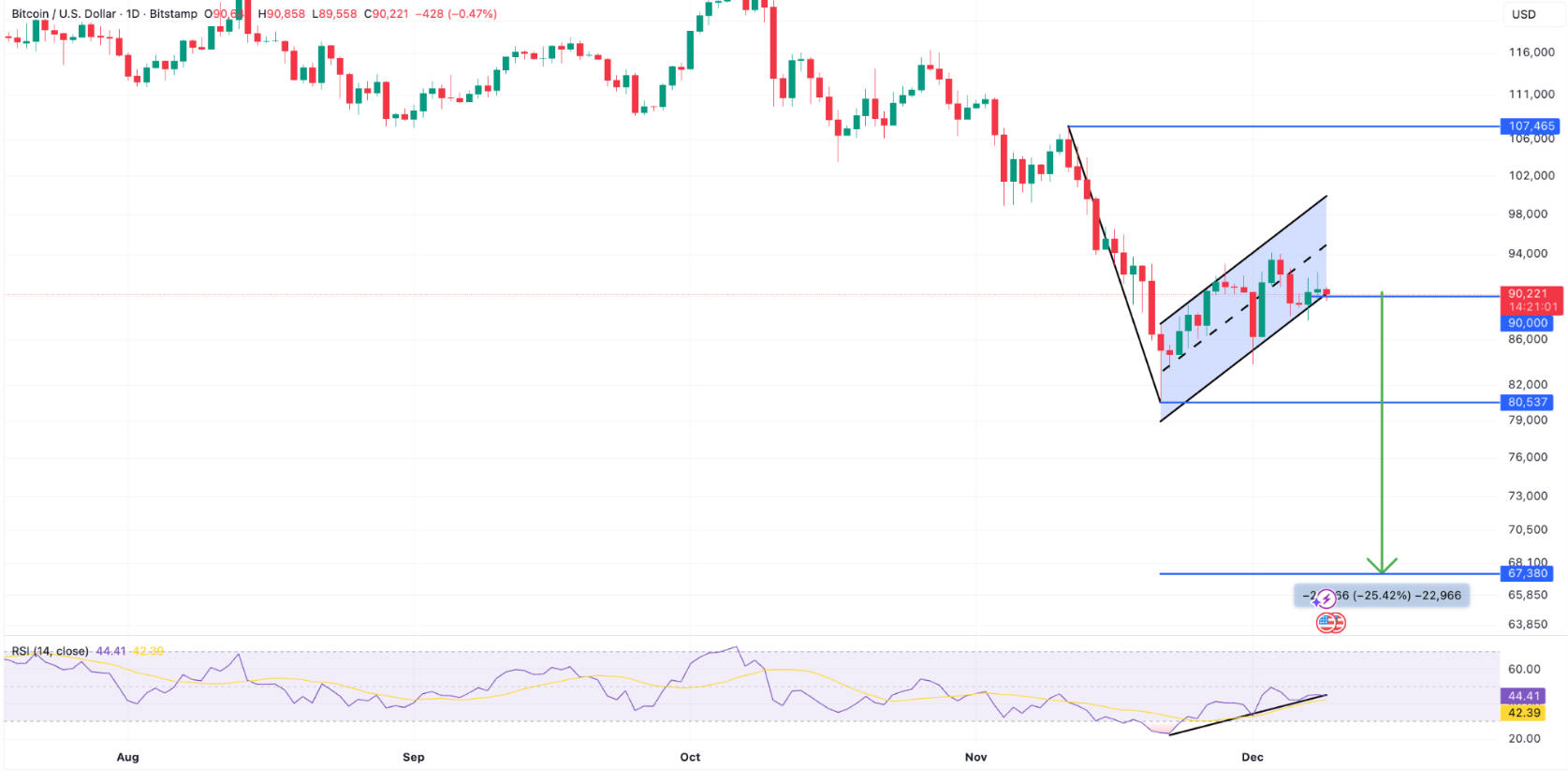
Furthermore, due to the bear flag it has formed on the daily chart, Bitcoin (BTC) is targeting $67,380. This technical formation began to form during the drop from $107,000 on November 11th and suggests that we could see a further 25% decline. Additionally, as Roman Trading’s MACD and RSI MOVE out of the oversold area during the ongoing consolidation process, they believe that there is room for a bigger drop.
Aaron Dishner’s Bitcoin Forecast
Cryptocurrency analyst Aaron Dishner suggests that there might be a test of $98,000 before the ongoing downward trend leads to painful results. Many analysts anticipate this before a deeper bottom, with some, like the popular bear Roman Trading, predicting that this false peak could extend to $104,000.

Dishner shared the following by including The Graph below;
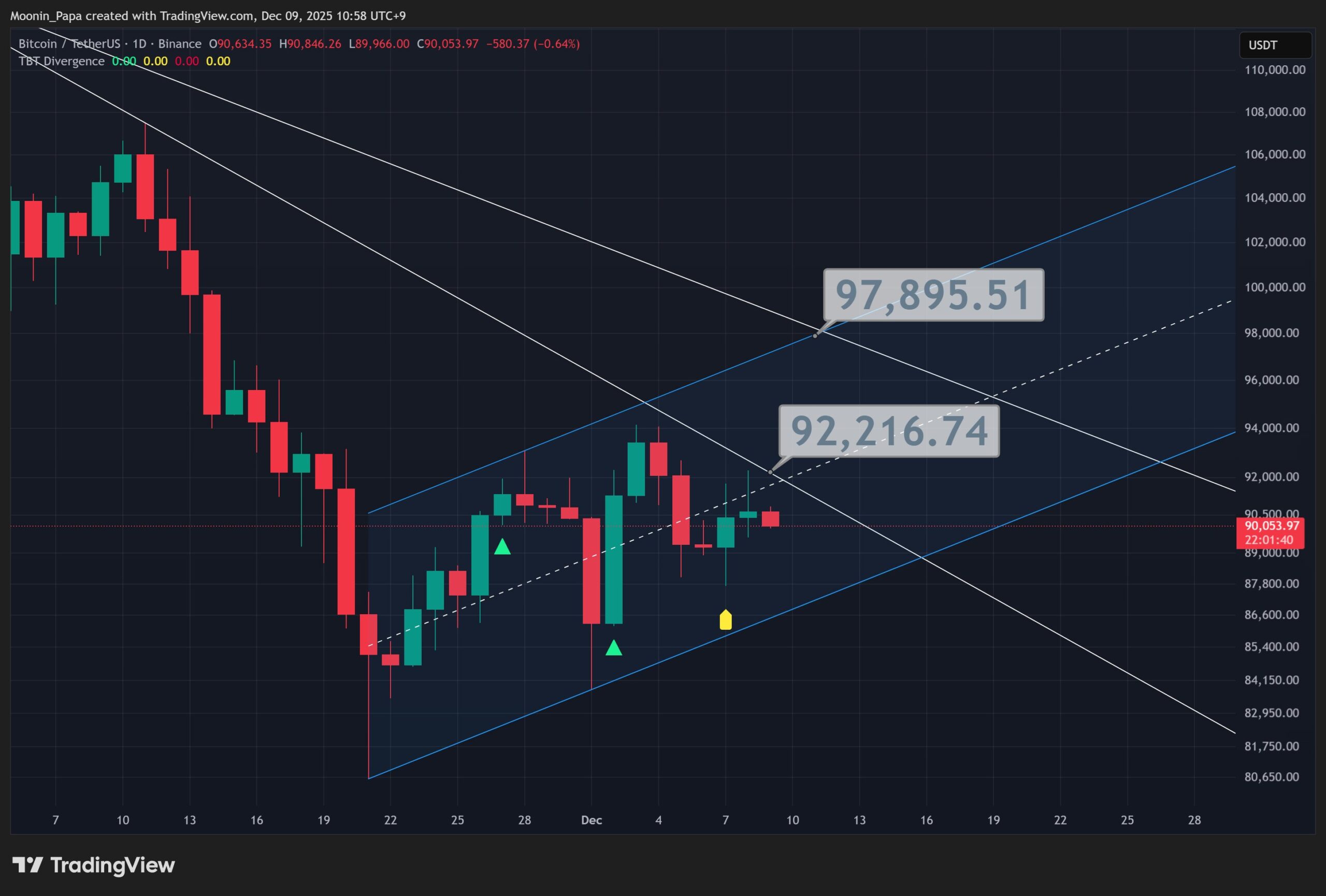
“Bitcoin nearly tested the first resistance zone level yesterday. It continues to remain within the bear flag and is likely to revisit support around $86,000-$87,000. If Bitcoin rises, it will face resistance at $92,216, followed by resistance below the upper bear flag line around $98,000.
Volume remains too weak to reach higher peaks.
A sideways trend is expected over the next few weeks.”
On the other hand, while CVD, which monitors the volume difference between buying and selling, has seen net spot purchases recovering, they remain in the negative territory, signaling warnings. This reading suggests that the continuation of aggressive selling confirms that the downward trend remains dominant in the short term. All these indicate that December might be unfavorable for cryptocurrencies, although the tone of Fed Chair Powell’s statements tomorrow evening could be decisive.
You can follow our news on Telegram, Facebook, Twitter & Coinmarketcap Disclaimer: The information contained in this article does not constitute investment advice. Investors should be aware that cryptocurrencies carry high volatility and therefore risk, and should conduct their own research.