Rift Is Fixing Cross-Chain Bitcoin Swaps—Finally

Bitcoin's liquidity is legendary—until you try moving it across chains. Then it’s a clunky, expensive mess. Rift says it’s slashing the friction.
The Problem: Bridging Sucks
Want to swap BTC to Ethereum or Solana? Prepare for wrapped tokens, sketchy custodians, and fees that’d make a Wall Street broker blush. Rift’s protocol claims to bypass the worst of it with atomic swaps—no intermediaries, no IOUs.
Why It Matters
DeFi’s cross-chain future hinges on moving value seamlessly. If Rift delivers, it could unlock billions in dormant Bitcoin liquidity. (And let’s be real—after the tenth ‘wBTC depeg’ scare, we need alternatives.)
The Catch
Atomic swaps aren’t new. But scaling them? That’s the holy grail. Rift’s testnet stats look promising, though—zero failed swaps in 50K transactions. Now for the real test: surviving a crypto bull run’s gas wars.
Bottom Line
If this works, it’s a win for degens and institutions alike. If not? Well, at least the ‘bridge hack’ post-mortems will be entertaining.
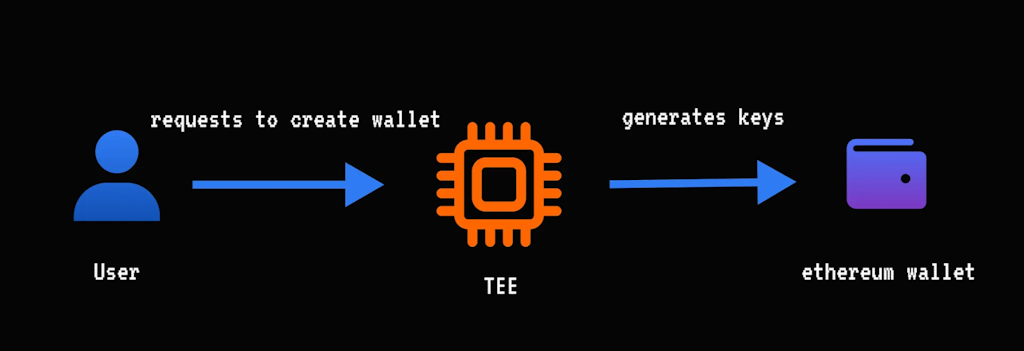
That shifts the Core trust model, compared to what’s available today. There are no multisigs or distinct proof-of-stake chains involved, or the need to mint a synthetic BTC somewhere. Just native bitcoin, held in a hardware enclave, for a time-boxed window while the other leg of the trade settles.
Yes, that window is a risk. “If the machine blows up, then anything in those 20 minutes is potentially lost,” Siddiqui admitted. But that’s the design tradeoff: minimal trust and minimal attack surface for a minimal duration.
Why do this? To make swaps faster, cheaper and less reliant on staked capital.
“Most people don’t honestly care that much about security,” Siddiqui said. (That’s a pity, but clearly true.) “The pitch is actually [that] this is the most capital-efficient solution,” he said.
The fee math backs that up: Rift charges 10 bps taker, 0 Maker fees. That’s a big drop from the 40-60 bps you’ll find on Coinbase, of course. But it’s also cheaper than THORChain’s RUNE-bonded AMM model and avoids the economic security game theory with no governance token overhead.
Instead, market makers provide the liquidity and handle their own rebalancing — often using CBBTC as the ETH-side routing asset. That’s for “liquidity efficiency” at the get-go, Siddiqui said, but noted that USDT and other pairs are coming.
It’s not the first time someone’s tried to make BTC↔ETH swaps trustless. RenBTC had its moment (until it didn’t). Threshold Network is still going strong. Aside from THORChain, there’s also NEAR Intents as an option.
Rift tried other paths first, including a zero-knowledge BTC light client. “But we ended up going with [TEEs] because it’s a lot more flexible,” Siddiqui said. He also pointed out zk stack complexity: “Auditing that a zero-knowledge proof is correct is actually much more difficult than auditing a TEE is correct.”
The go-to market isn’t consumer-first — it’s API-first. Rift wants to plug into wallets and swap interfaces that already have volume. The more flows they can sit behind, the stickier they get. Think DEX aggregators, not a dedicated frontend.
The bet is that onchain Bitcoin trading doesn’t need a new L1 or a wrapped token. It just needs a swap protocol with the right capital efficiency, UX and trust profile.
In Siddiqui’s mind: “If we don’t have DEXs flip CEXs, then the entire space, basically, is a failure.”
- The Breakdown: Decoding crypto and the markets. Daily.
- 0xResearch: Alpha in your inbox. Think like an analyst.
