Bitcoin Community Demands JP Morgan Boycott Over MSCI Snub - Crypto Fights Back Against Traditional Finance Exclusion

Crypto warriors mobilize against banking giant's exclusionary tactics
THE BACKLASH BEGINS
Bitcoin maximalists and crypto advocates unleash coordinated campaign targeting JP Morgan's global operations. The movement gains momentum as MSCI's planned exclusion of Bitcoin from key indices sparks digital asset community fury.TRADITIONAL FINANCE PUSHES BACK
Wall Street's old guard circles wagons against crypto integration. Banking institutions deploy classic exclusion strategies - the same playbook used for decades to maintain financial gatekeeping. Yet this time, the response differs dramatically.COMMUNITY POWER FLEXES
Decentralized networks demonstrate coordination capabilities that surprise traditional analysts. Social media platforms erupt with boycott calls while crypto exchanges report increased withdrawal activity from JP Morgan-affiliated accounts.THE NUMBERS DON'T LIE
Market data reveals institutional hesitation despite growing retail adoption. The disconnect between traditional finance and digital asset ecosystems widens - another case of bankers missing the technological forest for the regulatory trees. Another day, another attempt by legacy finance to pretend decentralized money doesn't exist while quietly building their own blockchain projects behind closed doors.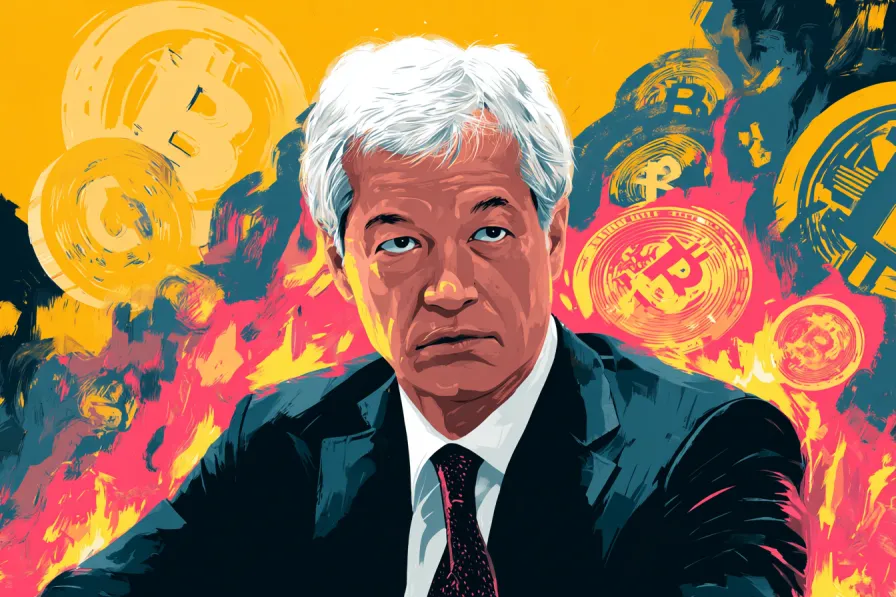
Bitcoin supporters and Strategy shareholders are mounting a boycott campaign against JP Morgan after the investment bank highlighted plans by index provider MSCI to exclude crypto treasury companies from major market indexes starting January 2026.
$MSTR - JPM says MicroStrategy "at risk of exclusion from major equity indices as the January MSCI decision approaches."
"With MSCI now considering removing MicroStrategy and other digital asset treasury companies from its equity indices...outflows could amount to $2.8bn if… pic.twitter.com/gMqlYtcZII
The backlash intensified over the weekend after JP Morgan flagged the potential exclusion in a research note. MSCI, a global provider of financial market indices that drives billions in institutional investments, reportedly plans to remove companies with more than 50% of their balance sheets in cryptocurrency from its indexes.
The proposed policy change could force funds and asset managers tracking MSCI indexes to automatically sell shares of affected companies, including Strategy, the largest corporate holder of Bitcoin. JP Morgan estimates potential outflows could reach $2.8 billion for Strategy alone, rising to $8.8 billion if additional index providers follow suit.
Simply Bitcoin reported on X that JP Morgan dumped 25% of its MSTR position right before MSCI announced Bitcoin companies can’t enter major indexes.
Real estate investor and bitcoin advocate Grant Cardone claimed he withdrew $20 million from JP Morgan Chase, vowing to file a lawsuit against the firm over credit card issues. Bitcoin advocate Max Keiser urged supporters to close JP Morgan accounts and invest in Strategy and Bitcoin, with unconfirmed reports circulating that JP Morgan holds a short position in MSTR.
I cancelled my JPM account and moved entire account to Wells. Also, don’t use chase credit card if you’re worried about fraud. More to come. pic.twitter.com/wi645YqdII
— Grant Cardone (@GrantCardone) November 23, 2025Michael Saylor, executive chairman and founder of Strategy, defended his company's classification, arguing it is "not a fund, a trust, or a holding firm but a Bitcoin-backed structured finance company." Saylor explained that "funds and trusts simply hold onto assets. Holding companies keep investments. We create, design, issue, and run our operations."
The controversy carries significant implications for crypto treasury companies. Strategy was added to the Nasdaq 100 in December 2024, enabling the company to benefit from passive capital flows from funds tracking the index. Exclusion from MSCI indexes could eliminate similar benefits and trigger automated sell-offs.
MSCI is one of the world's most influential index providers, with inclusion often attracting passive investment from mutual funds, ETFs, and pension funds. Exclusion can trigger reduced liquidity and selling pressure as index-tracking funds rebalance portfolios.
Forced selling by crypto treasury companies reacting to index exclusions could pressure digital asset prices. Companies facing exclusion WOULD need to either reduce crypto holdings below 50% of balance sheets to maintain index status or accept loss of passive capital flows from institutional investors.
The boycott movement has gained traction on social media, with supporters calling for account closures and fund withdrawals. The campaign coincides with renewed scrutiny of JP Morgan following Senate Finance Committee Ranking Member RON Wyden's analysis of the bank's reporting on Jeffrey Epstein's suspicious transactions, though the two issues are unrelated.
The proposed MSCI policy change is scheduled for implementation in January 2026, giving affected companies over a year to adjust strategies.
➢ Stay ahead of the curve. Join Blockhead on Telegram today for all the latest in crypto.+ Follow Blockhead on Google News