Bitcoin & Tech Stocks: NYDIG Shatters the Correlation Myth

For years, the narrative was gospel: Bitcoin moved in lockstep with tech stocks. A rising Nasdaq lifted crypto; a correction dragged it down. Portfolio managers built entire strategies around this supposed symbiosis.
The Data Doesn't Lie (But Your Portfolio Might)
NYDIG's latest deep dive cuts through the noise. Their analysis reveals the correlation is far weaker and more sporadic than conventional wisdom suggests. While short-term panic can create temporary parallels—every asset looks risky when traders hit the 'sell everything' button—the long-term charts tell a different story.
Bitcoin's value drivers—monetary policy dissent, institutional adoption cycles, network hash rate—operate on a fundamentally different frequency than the earnings reports and Fed guidance that swing tech equities. Conflating the two is a convenient, but flawed, heuristic.
Decoupling Is Already Here
Look at the recent tape. Tech wobbles on valuation concerns? Bitcoin charges ahead, fueled by its own catalyst pipeline. It's not an anti-correlation; it's a non-correlation. Treating crypto as a mere tech-sector satellite asset misses its core proposition as an alternative monetary network.
This isn't just academic. It reshapes risk models and allocation mandates. The old playbook of using tech ETFs as a crypto proxy? Officially obsolete.
The New Calculus for Capital
The implication is profound. If the link is broken or was never truly there, then Bitcoin stands alone as a distinct macro asset. Its volatility isn't Nasdaq volatility—it's native volatility. That means it deserves its own allocation, its own thesis, and its own set of triggers.
For the traditional finance crowd who've spent years trying to fit the crypto peg into a legacy market hole, this is an inconvenient truth. It's almost as if inventing a new financial system doesn't neatly track the old one. Who could have predicted?
The takeaway is blunt. The lazy correlation narrative is a crutch for analysts who won't do the homework. Bitcoin isn't trading tech stocks. It's trading Bitcoin. Anything else is just noise—and in finance, confusing noise for signal is the quickest way to turn alpha into a management fee for someone else.
A Shared Macro Trigger, Not A Common Identity
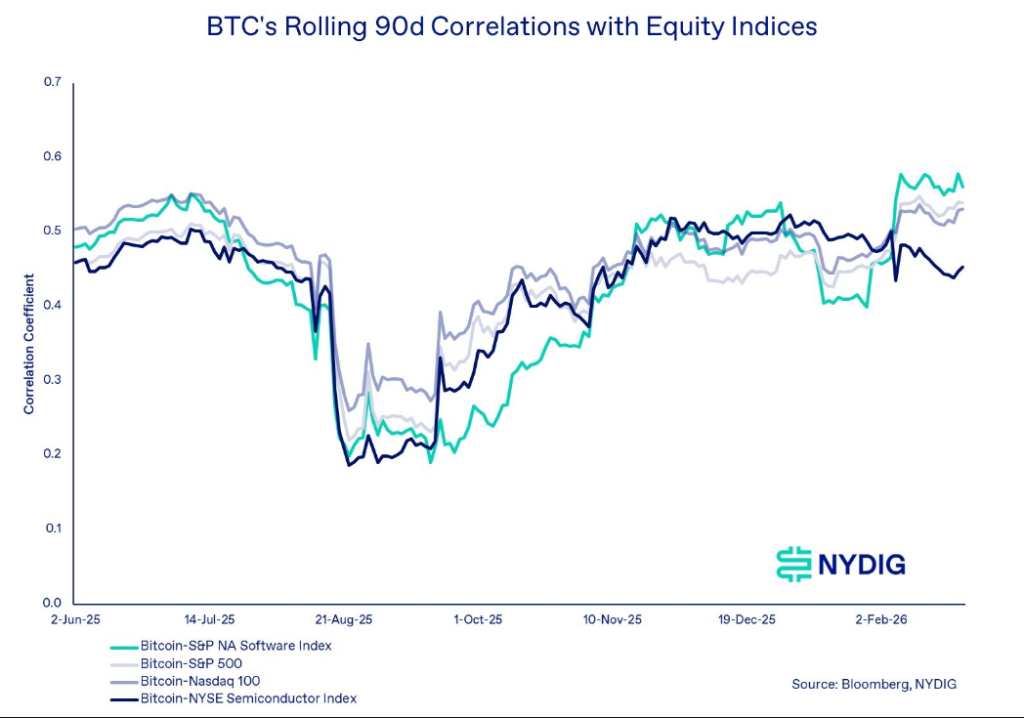
Bitcoin’s 90-day rolling correlation with software stocks has climbed since the cryptocurrency hit a record above $126,000 in early October. But Cipolaro pointed out that its correlations with the S&P 500 and Nasdaq have risen at the same time.
Liquidity Sensitive Assets
That pattern suggests the shift is not specific to software stocks — it is a wider phenomenon tied to investor appetite for risk.
Data shows that both the alpha crypto and software equities are being treated as long-duration, liquidity-sensitive assets. When macro conditions favor risk-taking, both go up. When they don’t, both get hit.
That shared sensitivity to monetary conditions is what has been driving the parallel movement, not any deeper connection between the two.

The “Bitcoin is a tech stock” narrative has circulated before. It tends to resurface during periods when correlations tick higher and the assets appear to move in lockstep. Cipolaro’s note pushes back on that framing directly.
Crypto’s Distinct Drivers Keep It In A Category Of Its OwnDespite the elevated correlations, NYDIG argues that Bitcoin has a market structure that sets it apart. Network activity, adoption trends, and policy developments all shape its price in ways that do not apply to software companies.
Those factors, Cipolaro said, support Bitcoin’s role as a portfolio diversifier even when cross-asset correlations are climbing.
One tension the note acknowledges is Bitcoin’s failure to trade like gold. It has long been called “digital gold,” but reports indicate it is not being bought as a hedge against economic instability.
Traders appear to be allocating to it along a risk curve rather than out of any distinct monetary conviction.
Correlations with equities are elevated right now. But based on NYDIG’s analysis, they are far from the full story of what moves Bitcoin’s price — and far from enough to call it a software stock.
Featured image from ION, chart from TradingView
