Crypto Plunges into Extreme Fear Zone: Global Trade Wars & Policy Shifts Crush Prices

Crypto markets hit panic mode—again. The Fear & Greed Index nosedives into 'Extreme Fear' territory as global trade tensions and sudden policy shifts trigger a massive sell-off. Forget the usual volatility—this feels different.
Trade Wars Bite Digital Assets
New tariffs and supply chain threats aren't just hammering traditional markets. They're draining liquidity from crypto, fast. Investors are fleeing to perceived safe havens, abandoning risk-on digital assets. The correlation nobody wanted is here: when global trade sputters, crypto bleeds.
Policy Whiplash from Regulators
Central banks and financial watchdogs are moving the goalposts overnight. Hawkish statements on digital asset regulation—mixed with whispers of outright bans in some corridors of power—are creating a fog of uncertainty. It's the old playbook: threaten regulation, watch markets tumble, then step in to 'provide clarity.' Classic.
Market Psychology Shatters
The 'buy the dip' mantra has gone silent. Social sentiment charts look like cliff faces. Leveraged positions are getting liquidated en masse, creating a cascade of selling pressure. This isn't just fear; it's capitulation.
Where's the Bottom?
History says Extreme Fear zones can be contrarian buy signals. But with macro winds this fierce, catching a falling knife seems reckless. The real test? Whether blockchain's foundational value—decentralization and borderless transactions—can outlast short-term political theater and the herd mentality of traders who still think in red and green candles. Sometimes, the market's greatest fear isn't the crash itself, but realizing the 'smart money' was just guessing all along.
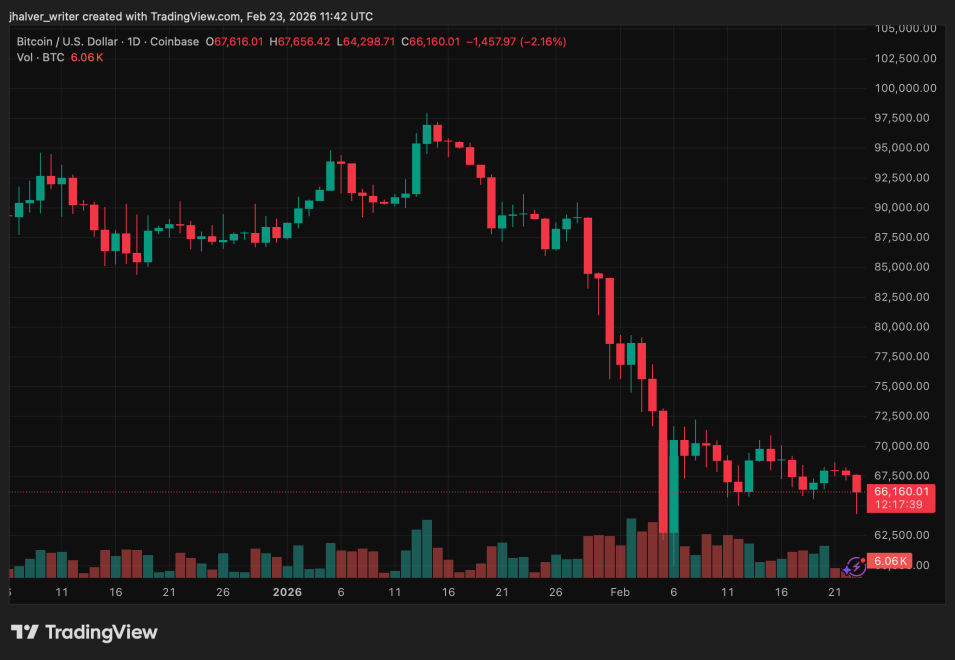
Trade Tensions and Macro Risks Drive Sell-Off
Market volatility intensified after the Supreme Court of the United States ruled that parts of earlier tariff programs exceeded presidential authority. Shortly after, TRUMP introduced new global tariffs of up to 15% under separate trade powers, raising concerns about slower global growth and persistent inflation.
Escalating tensions between the United States and Iran added another LAYER of uncertainty, pushing investors toward traditional safe-haven assets such as gold. Crypto assets, which had previously benefited from a “digital gold” narrative, instead behaved more like high-risk investments during the latest market stress.
Large-holder selling also contributed to downside pressure, with increased transfers from whale wallets to exchanges signaling potential liquidation activity. Analysts noted that thin liquidity and weak conviction among buyers amplified price swings.
Economic Data And Policy Decisions in Focus
Investors are now watching upcoming economic indicators closely. Consumer confidence data, jobless claims, and producer price inflation figures are expected to shape expectations around interest rates. Recent inflation readings above forecasts have reduced hopes for near-term monetary easing by the Federal Reserve.
Meanwhile, the central bank is scheduled to inject roughly $14.6 billion into financial markets, a MOVE some analysts believe could provide temporary support for speculative assets, though not equivalent to full stimulus measures.
Technology earnings are also on the radar, particularly results from Nvidia, whose performance often influences sentiment across both tech equities and crypto markets.
Liquidations Rise as Fear Dominates SentimentMarket data shows more than $460 million in Leveraged positions were wiped out during the latest decline, with long traders accounting for the majority of losses. Institutional flows have weakened as well, with exchange-traded crypto funds recording notable outflows.
Additional supply pressure emerged after mining firm Bitdeer sold its entire weekly production, while public commentary from industry figures, including Michael Saylor, suggested long-term Optimism remains despite short-term weakness.
The Crypto Fear and Greed Index has dropped into extreme fear territory, reflecting cautious positioning across the market. Until macroeconomic clarity improves, analysts expect volatility to remain elevated as traders weigh policy risks against longer-term adoption trends.
Cover image from ChatGPT, BTCUSD chart from Tradingview
