Missouri’s Bold Bitcoin Bet: Heartland State Advances Strategic Reserve Bill

Forget gold in Fort Knox. Missouri is making a play for the digital age.
The Heartland Goes Hard on Hodling
A new legislative push is turning heads far beyond the Ozarks. Lawmakers are advancing a bill that would position Bitcoin as a strategic state reserve asset—a move that cuts through traditional finance's red tape and plants a flag for crypto sovereignty in America's middle.
Bypassing the Old Guard
The proposal isn't just symbolic. It outlines a framework for the state treasury to acquire, secure, and manage Bitcoin holdings, effectively creating a public-sector cold wallet. It bypasses the usual Wall Street intermediaries, betting directly on the network's long-term value proposition over the shaky promises of fiat. After all, why trust a central bank's balance sheet when you can trust a cryptographic one?
The Policy Ripple Effect
This isn't happening in a vacuum. It signals a growing, pragmatic adoption of digital assets at the state level, where pension fund managers are starting to look a lot more like crypto fund managers. Other states are watching—this could trigger a domino effect, forcing a national conversation on monetary reserve strategy that hasn't been this urgent since we went off the gold standard.
A Provocative New Normal
Missouri's maneuver reframes the entire debate. It's no longer about speculative trading or internet money; it's about fiscal strategy, treasury management, and sovereign balance sheets in the 21st century. The bill treats Bitcoin not as a risky bet, but as a foundational layer for a new financial system—one that operates 24/7 and doesn't take a cut for the privilege of moving your own money. It’s the ultimate hedge against monetary policy, served with a side of Midwest pragmatism. Just don't tell the bond traders—they might have to find a new narrative to sell.
Missouri Moves To Create A Bitcoin Reserve
According to reports, House Bill 2080 was advanced to the House Commerce Committee for further hearings and possible votes.
The MOVE means lawmakers will get a chance to ask experts, hear public testimony, and amend the plan before it reaches a full vote. Time is limited in the session, but the committee stage gives the measure a clearer path forward.
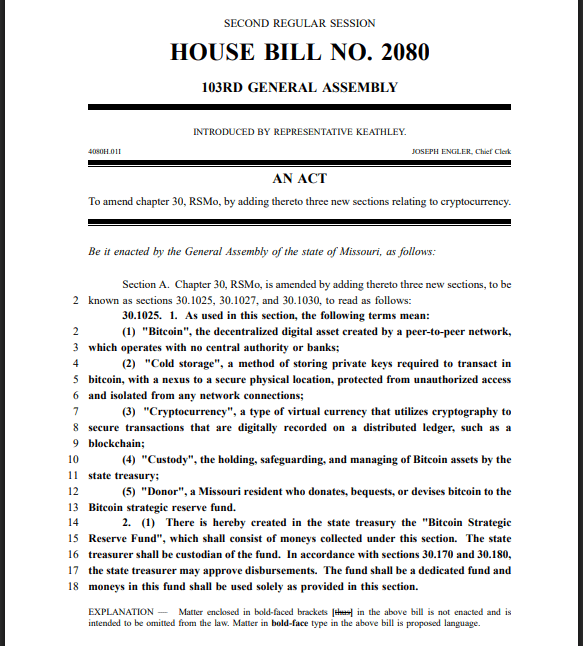
The Bill’s Main Points
Reports say the measure would create a “Bitcoin Strategic Reserve Fund” that the state treasurer could manage. The fund could accept Bitcoin given as gifts, grants, donations, bequests, or devises from eligible Missouri residents or certain government entities.
Holdings placed into the fund WOULD face a minimum five-year hold before they could be converted, moved, or sold.
 LATEST: MISSOURI REVIVES BITCOIN RESERVE PLAN AFTER LAST YEAR’S FAILURE
Missouri lawmakers have moved House Bill 2080 to the State House Commerce Committee.
The proposal would create a Bitcoin $BTC Strategic Reserve Fund inside the state treasury.
Holdings must be kept for… pic.twitter.com/PPww8sP3tP
— BSCN (@BSCNews) February 23, 2026
How The Fund Would WorkBased on reports in the official bill text, the treasurer must follow custody safeguards meant to protect the assets, including cold-storage protocols and restrictions on dealing with foreign actors or entities linked to illegal activity.
Third-party custodial contracts are allowed to secure the holdings. The treasurer would also publish a biennial report detailing what’s in the fund and how it has been handled.
Reports note the bill was introduced by Ben Keathley and supporters argue it offers a way for the state to accept crypto gifts without exposing general funds to uncontrolled risk.
Critics warn about price swings and the political risk of putting public assets into a single volatile asset. The debate will likely focus on how strict the safeguards must be and whether the state really needs exposure to Bitcoin at all.
The plan includes specific transparency rules. The treasurer must post a report before December 31 of each even-numbered year that explains holdings, transactions, and safeguards used.
Transactions with persons or groups outside the state and known to engage in illegal acts would be barred. These clauses aim to limit legal and reputational exposure while keeping a paper trail for public oversight.
Featured image from Unsplash, chart from TradingView
