CLARITY Act On Track For April Passage, Senator Says - Regulatory Breakthrough Incoming

Get ready for a regulatory shake-up. The CLARITY Act just got its official green light timeline—and the crypto industry might finally get the rulebook it's been begging for.
The April Countdown Begins
A senior senator just dropped the date. April. That's when the landmark legislation designed to untangle the digital asset regulatory mess is expected to clear its final hurdle. No more vague guidance or enforcement-by-surprise. This is about drawing lines in the code.
What Clarity Actually Means
Think jurisdictional clarity between agencies. Definitions that don't feel like they were written in 1995. A path for exchanges, custodians, and token issuers to operate without looking over their shoulder. It's the framework that could unlock institutional capital that's been parked on the sidelines, waiting for the all-clear.
The Market's Waiting Game
Legislation moves at the speed of bureaucracy, but markets price in the future. The mere confirmation of a timeline sends a signal. It tells builders that the U.S. might stop trying to innovate through lawsuits and start building a real, competitive market structure. Of course, Wall Street will find a way to add layers of complexity and fees—some things never change.
The clock is ticking. By April, we'll know if Washington can finally deliver something besides confusion.
Lawmakers And Industry At Odds Over Clarity Act
Reports note that the biggest fight left on the table is stablecoin yields. Coinbase CEO Brian Armstrong said industry talks are more hopeful now, but he had pulled his group’s backing earlier because the bill WOULD ban interest-bearing stablecoins and put the SEC front and center as the lead regulator.
That tug-of-war matters. Banks worry that easy yield on crypto tokens could pull deposits and weaken their model. Crypto firms counter that such products are useful and in demand. Both sides also want clear rules so firms can plan ahead.
Policymakers Have Momentum
Based on reports, the WHITE House reacted strongly when one major exchange stepped back from support. The executive office signaled surprise and urged quicker agreement.
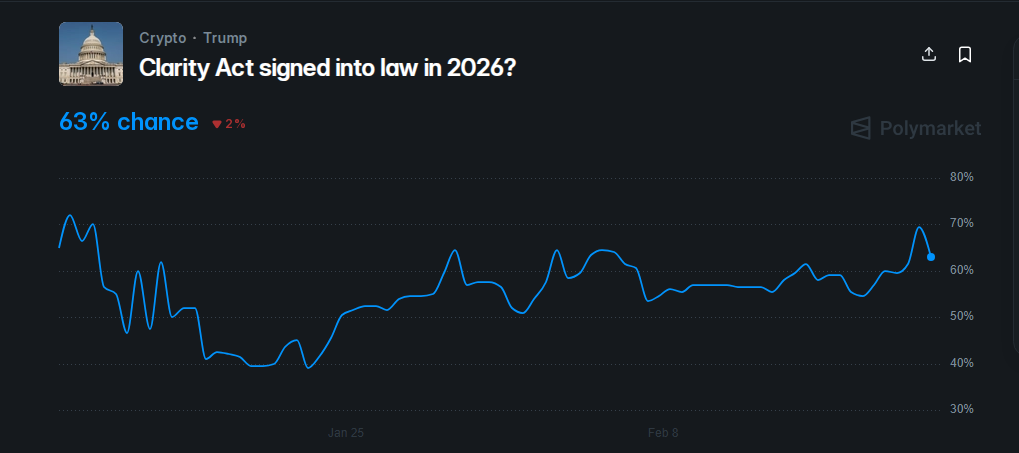
Markets noticed. Prediction markets moved, with odds on passage swinging dramatically in response to the media interview.
Polymarket showed a sharp uptick in probability that the bill would pass — then a pullback once details were questioned.
Trump has pushed a pro-crypto message, and that helps gathering momentum among allies in Congress. But partisan lines remain.
If members tie the bill too closely to a single political brand, bipartisan support could fray. Also, banks and regulators are not uniform: some large institutions want stricter rules; others prefer limited, clearer guardrails that let certain products exist under oversight.
Why Fast Passage Is UncertainReports say industry players want clarity asap, while some regulators want broader authority. That difference explains the public sparring.
Negotiators can and do move quickly when leadership prioritizes a measure, yet complex financial bills often require many rounds of drafting and amendment. Even so, lawmakers and execs at industry meetings appear to be pushing hard for a resolution soon.
If the bill clears, it could bring clearer rules for exchanges, banks, and stablecoin issuers. For investors, clarity is usually good. For firms, the shape of the final text will determine whether new products live or die.
Featured image from Wallpapers.com, chart from TradingView
