Japan’s ’Takaichi Trade’ Looms Over Crypto Markets: Post-Election Rally Faces Regulatory Pressure

Just when crypto traders thought the post-election dust had settled, Japan's political machinery is cranking up a new pressure campaign. The so-called 'Takaichi Trade'—a cocktail of regulatory posturing and fiscal maneuvering named for its political architect—is casting a long shadow over digital assets.
The Regulatory Squeeze Play
Forget gentle nudges. Japan's Financial Services Agency is sharpening its tools, eyeing tighter controls on everything from exchange operations to cross-border capital flows. It's not a ban—it's a calculated constriction designed to herd volatility into manageable pens. The message to crypto whales and retail punters alike: play by our rules, or don't play in our yard.
Liquidity in the Crosshairs
The real kicker? This isn't just about compliance paperwork. The proposed measures could pinch market liquidity at the exact moment global capital typically goes hunting for post-election bargains. Think of it as turning off the tap just as the party gets started—a classic bureaucratic move that somehow always manages to surprise the 'smart money' (who presumably spend too much on chart subscriptions and not enough on political risk analysis).
The Bull Case on Borrowed Time
Yes, the rebound was real. Trading volumes spiked, institutional wallets twitched back to life, and the usual suspects declared a new dawn for crypto in Asia. But structural pressure changes everything. When regulators start moving chess pieces, even the most elegant technical setups can crumble overnight.
Markets hate uncertainty more than they hate bad news—and right now, Japan is serving a heaping plate of ambiguity with a side of enforcement threats. The 'Takaichi Trade' might just become shorthand for how political winds can capsize even the sturdiest-looking market recoveries. After all, nothing makes a trader sweat like the sound of a government printer—except maybe the sound of that printer being used for new regulations instead of stimulus checks.
Portfolio Rebalancing and Liquidity Tightening
According to analysis from CryptoQuant contributor XWIN Research Japan, the main risk does not stem from capital fleeing the United States outright. Instead, global investors are rebalancing portfolios as Japanese government bonds regain appeal after years of ultra-low yields.
Expectations of higher spending and reflation have pushed yields up, drawing capital back into domestic Japanese assets. This rotation has coincided with a pullback in U.S. equities.
Over the past week, major indices, including the Nasdaq and S&P 500, slipped into correction territory, reflecting tighter financial conditions and a reassessment of risk. As inflows into U.S. equity ETFs slow, marginal liquidity across global markets has declined, amplifying volatility.
Currency dynamics add another layer of pressure. Yen weakness, persistent U.S.–Japan rate differentials, and steady demand for dollars have increased funding costs for Leveraged trades. Historically, such conditions tend to push investors to de-risk across multiple asset classes simultaneously.
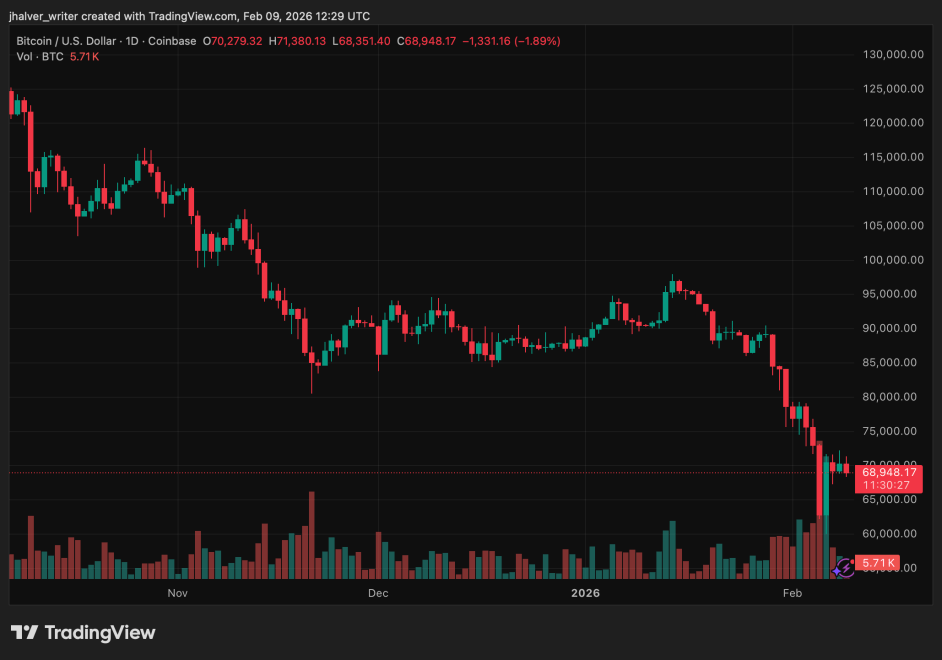
Equity Weakness Spills Into BitcoinBitcoin’s recent pullback fits this pattern. Despite briefly reclaiming levels above $70,000 after the election, analysts note that crypto markets remain closely linked to U.S. equities during risk-off phases. When stocks weaken, portfolio managers often trim crypto exposure simultaneously to manage overall volatility.
CryptoQuant data suggests the current softness in Bitcoin prices is driven less by on-chain deterioration and more by futures unwinds and leverage reduction. Open interest has declined, and forced liquidations earlier in the month cleared out crowded long positions, leaving traders more cautious about chasing rebounds.
From a longer-term perspective, Japan’s political stability could still support digital asset adoption. Takaichi’s supermajority gives her administration room to advance tax reforms, stablecoin regulations, and Web3 initiatives later in 2026.
Related Reading: Crypto Alert: 2 Victims Lose Over $60M In Address Poisoning Scam
For now, however, the market remains vulnerable to global risk cycles. As capital continues to adjust to Japan’s fiscal pivot and U.S. equities stay under pressure, short-term downside risks are likely to persist despite the post-election bounce.
Cover image from ChatGPT, BTCUSD chart from Tradingview
