BitRiver CEO Faces Tax Evasion Allegations: Russia’s Largest Crypto Mining Firm Under Fire

Russia's crypto mining giant BitRiver just got a regulatory gut-punch—its CEO slapped with serious tax evasion charges. The hammer drops on the country's largest mining operation.
Regulatory Storm Hits Mining Giant
BitRiver's operations span from Siberia's energy-rich regions to global data centers—until tax authorities came knocking. The allegations suggest creative accounting that would make even traditional finance veterans blush. Another case of crypto innovation outpacing legal frameworks.
Global Mining Power Shift
Russia's been positioning itself as a crypto mining haven with cheap energy and cold climates. This crackdown sends shockwaves through that narrative. Mining operations don't just disappear—they migrate to friendlier jurisdictions overnight.
Tax Man Cometh for Crypto
Governments worldwide are realizing crypto generates real revenue—and they want their cut. The BitRiver case isn't an isolated incident; it's part of a global pattern where authorities play catch-up with blockchain businesses. Traditional tax systems struggle with borderless digital assets—watching them try is like watching your grandpa use a smartphone.
Market Implications and Opportunities
Short-term volatility? Probably. Long-term legitimacy? Absolutely. Every regulatory action, even painful ones, brings crypto closer to mainstream acceptance. Mining operations will adapt—they always do—finding new jurisdictions with clearer rules. The hash rate might dip temporarily before finding new homes.
This isn't crypto's first regulatory rodeo, and it won't be the last. The industry keeps evolving while traditional finance still argues about whether digital assets are 'real'—meanwhile, the blockchain doesn't care and keeps processing transactions.
Court Case Adds Pressure On Bitriver
Founded in 2017, BitRiver grew rapidly into Russia’s leading Bitcoin mining operator by building large data centers across Siberia.
The company used the region’s cold climate and relatively low electricity costs to support its mining operations and to provide infrastructure services to corporate clients. At its peak, BitRiver operated thousands of mining rigs across multiple sites and accounted for a significant share of Russia’s legal crypto-mining capacity.
Runets’ detention comes amid mounting challenges for BitRiver. The company was sanctioned by the US Treasury Department in mid-2022 following Russia’s invasion of Ukraine, limiting its access to Western partners and financial systems.
In 2023, Japanese financial group SBI exited its mining arrangement with BitRiver following its withdrawal from Russia, dealing a blow to the firm’s international business.
Financial Strain And Legal Disputes
Reports suggest that BitRiver began cutting costs and scaling back parts of its operations toward the end of 2024, leading to salary payment delays affecting employees.
The pressure continued into early 2025, when regional electricity provider Infrastructure of Siberia filed two lawsuits, alleging that it had paid BitRiver for equipment that was never delivered.
Despite these issues, Russia’s industrial mining sector continued to generate significant revenue in 2024, with BitRiver remaining the market leader. Bloomberg estimated Runets’ net worth at around $230 million in late 2024, largely tied to his role in the crypto mining industry.
Wider Implications for The Crypto SectorThe case against Runets highlights the growing legal and regulatory risks facing crypto executives, both in Russia and abroad. While authorities investigate the alleged tax violations, BitRiver must also manage ongoing litigation, strained partnerships, and scrutiny linked to sanctions.
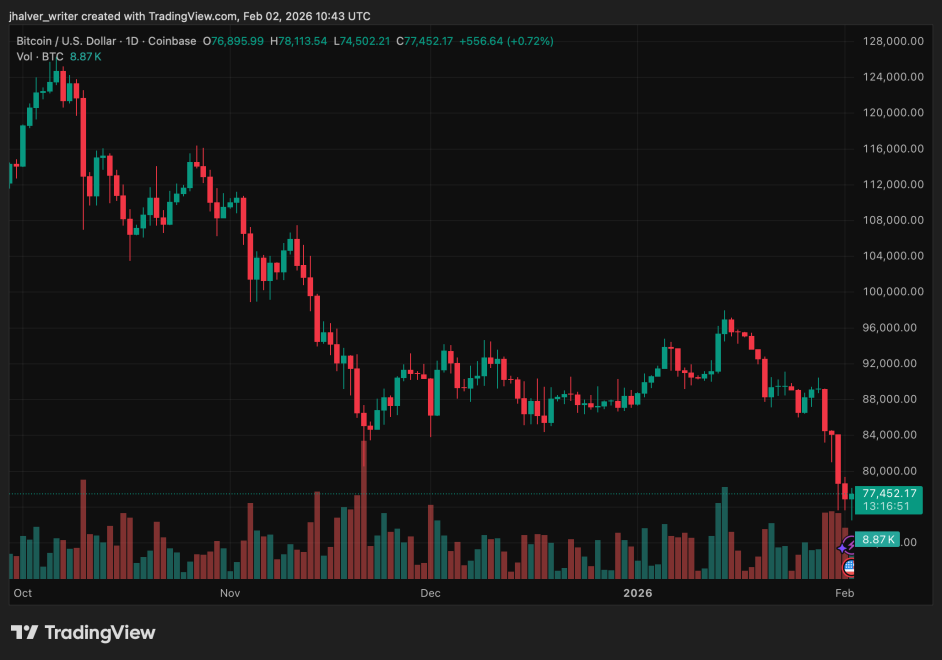
Related Reading: With Bitcoin Below $80K, ARK Reframes The Narrative Around Gold
As the market awaits the verdict, the case’s outcome could shape how Russian crypto mining firms approach compliance, financing, and governance in an increasingly restrictive environment.
Cover image from ChatGPT, BTCUSD chart from Tradingview
