Bitcoin Pioneer Adam Back Breaks Silence On Epstein Files Mention - What It Means For Crypto In 2026

When the Epstein documents hit, the crypto world held its breath. Not for the usual reasons—this wasn't about price swings or regulatory crackdowns. This was about reputation. And one name stood out: Adam Back, the cryptographer whose work laid the groundwork for Bitcoin itself.
The Unwanted Association
Finding a tech pioneer's name in those files creates instant, uncomfortable noise. For an industry still fighting for mainstream legitimacy, it's the kind of headline that makes traditional finance veterans smirk into their overpriced lattes. The connection, however fleeting, becomes a specter.
Transparency As The Only Shield
Back's response cut through the speculation. No corporate PR fluff, no legalistic dodges—just a direct address. In crypto, where trust is built on open ledgers and verifiable code, this approach isn't just personal; it's philosophical. Silence breeds conspiracy. Clarity, however brief, acts as a circuit breaker.
Why The Crypto Ecosystem Cares
This isn't about one man. It's about the foundational narrative. Bitcoin was born from a desire to bypass corruptible institutions—to create a system where proof-of-work matters more than who you know at a cocktail party. When its early architects get tangled in real-world scandals, it forces a uncomfortable question: can you truly separate the technology from its human origins?
The market barely flinched—because the math doesn't care. The protocol keeps running, blocks keep getting mined. But for adoption, perception is its own volatile currency. Every scandal, however tangential, gives ammunition to skeptics who still think crypto is just a playground for the shady and unaccountable.
The Path Forward
The episode highlights crypto's ongoing tightrope walk. It needs its pioneers as thought leaders, yet must constantly prove it's moved beyond just a club of early enthusiasts. The technology promises a future free from old-world gatekeeping, yet remains acutely sensitive to the reputational baggage of its creators.
In the end, Back's straightforward handling provides a template: address it, dispel the fog, and refocus on the code. Because while Wall Street gets bogged down in personality-driven drama, Bitcoin's value proposition remains stubbornly, beautifully impersonal. The network validates, not the names attached to it. A concept still utterly foreign to an industry that charges fees for handshakes.
Why Bitcoin OG Back Is Inside The Epstein Files
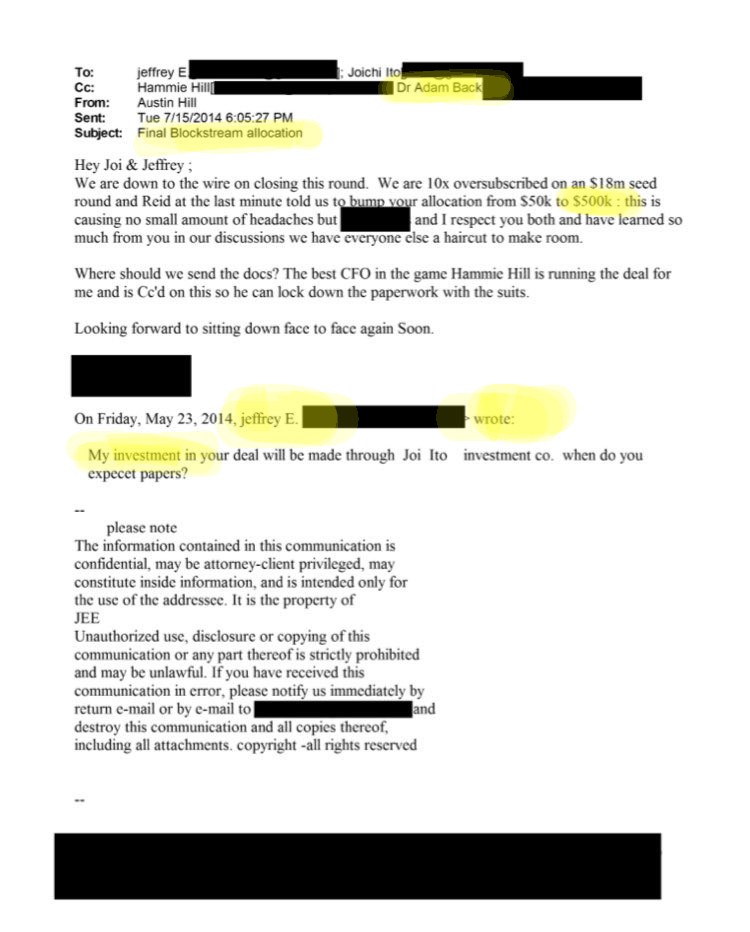
Notably, Epstein surfaced in Blockstream’s early fundraising. In a 2014 email, Blockstream co-founder Austin Hill told Epstein his seed-round allocation was being increased tenfold, from $50,000 to $500,000.
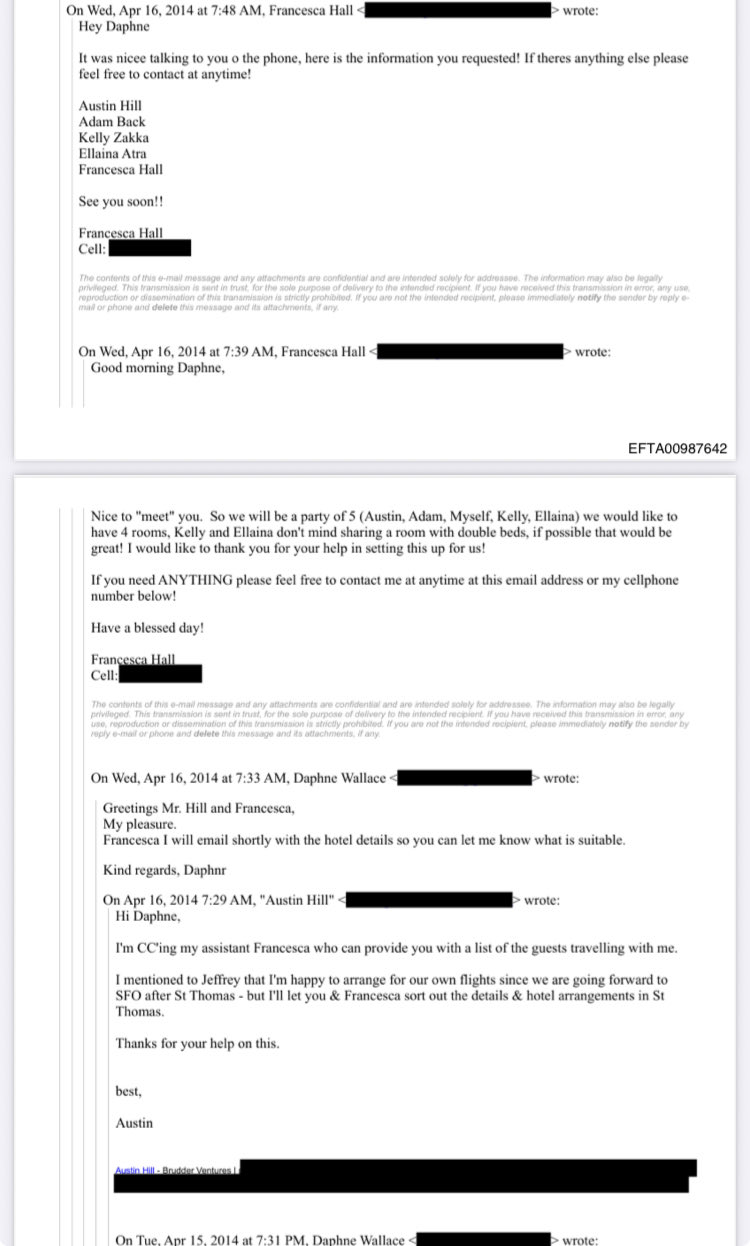
Separately, a travel-coordination email screenshot dated April 2014 includes Back’s name in a list of travelers and describes hotel-room needs for a St. Thomas trip. “Nice to ‘meet’ you. So we will be a party of 5 (Austin, Adam, Myself, Kelly, Ellaina).” The screenshot shows the message as part of a scheduling chain involving hotel arrangements, and it is one of the documents driving the current round of viral reposts.
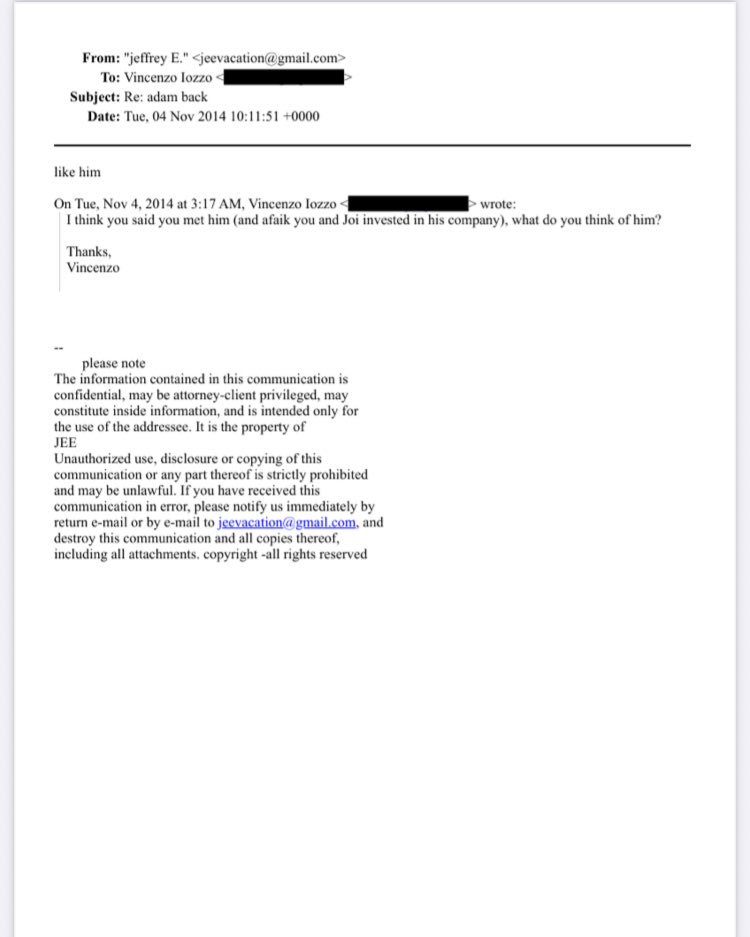
Moreover, Epstein said that he “liked him” (Back).
A X thread posted Feb. 2, 2026 by “pigeon man” attempts to lay out what it calls an “EPSTEIN AND BITCOIN” timeline, tying early Blockstream meetings and investment claims to later disputes over Bitcoin’s scaling path.
1/ EPSTEIN AND bitcoin – A TIMELINE
 THREAD pic.twitter.com/SPMlFfnL9J
— pigeon man (@B1LLYP1LGRIM) February 2, 2026
According to that thread, Epstein “meets with Adam Back and Austin Hill” in April 2014, describing the context as a meeting with executives of a new layer-2 company, Blockstream. The thread then claims that in July 2014, Epstein invested “at least $500,001” into Blockstream with Ito, and argues this created a financial tie to a company associated with influential Bitcoin Core developers.
The same thread highlights Blockstream’s October 2014 whitepaper release and names several developers it says were co-founders or co-authors, including Gregory Maxwell, Luke Dashjr, Pieter Wuille, and Matt Corallo. It also alleges that in 2015 Epstein had “encrypted conversations” with Austin Hill and others, claiming participants avoided email because “I don’t think the NSA deserves to hear what we say.”
The thread’s framing is designed to connect the social scandal to a much older technical and governance fault line: the 2016–2017 blocksize era. It argues that “keeping the block size limit” preserved demand for layer-2 systems and later claims “Bitcoin Core developers decide small blocks are what’s best for Bitcoin,” leading to a split.
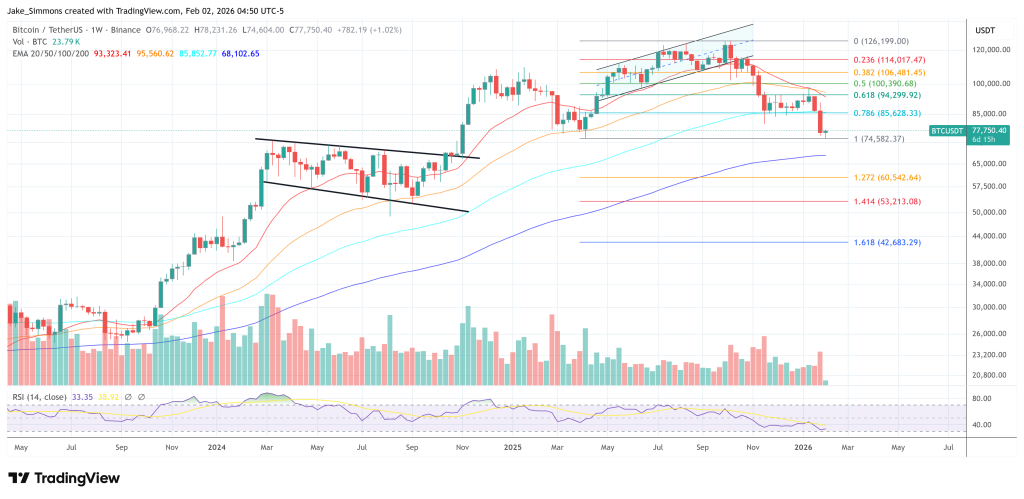
At press time, BTC traded at $77,750.