US Crypto Policy Debate Intensifies as CLARITY Act Support Fractures

Washington's crypto war just got messier. The CLARITY Act—once a beacon for regulatory certainty—now faces a mutiny within its own ranks. Lawmakers can't decide whether digital assets belong in securities law, commodities frameworks, or some new hybrid category. The stalemate leaves billions in capital twisting in the wind.
Political Fault Lines Emerge
Pro-crypto legislators argue the current patchwork of state regulations stifles innovation and pushes development overseas. Opposition voices—many from traditional finance committees—warn against creating a "wild west" exemption for tech that, let's be honest, sometimes feels like gambling with extra steps. The SEC and CFTC continue their jurisdictional turf war, each interpreting decades-old statutes to fit blockchain transactions.
Market Reaction: A Collective Shrug
Traders barely flinched at the news—another day, another regulatory delay. Institutional money keeps flowing into Bitcoin ETFs while DeFi protocols operate in legal gray zones. The real action's happening in courtrooms and agency backchannels, not on Capitol Hill. Some states are taking matters into their own hands, crafting friendlier regimes to attract crypto businesses tired of federal paralysis.
The irony? Wall Street spends millions lobbying against clear crypto rules while quietly building its own blockchain infrastructure. Old money still hates new money—until it can profit from it.
Coinbase Withdrawal Triggers Legislative Pause
The immediate turning point came when Coinbase CEO Brian Armstrong announced that the company could no longer support the current draft of the CLARITY Act.
Armstrong argued that the bill WOULD be worse than the existing regulatory uncertainty, citing concerns over limits on tokenized equities, restrictions on crypto rewards, and expanded government access to financial data.
Shortly after, Senate Banking Committee Chair Tim Scott introduced a brief pause in the bill’s progress, cancelling a scheduled markup.
Scott described the delay as procedural rather than political, stating that negotiations were ongoing and bipartisan talks continued. A new markup date has been set for January 27, once updated bill language is released.
Despite the setback, White House AI and crypto czar David Sacks reiterated that the administration still backs the legislation. He said the pause should be used to resolve remaining issues and push forward a framework that allows innovation while strengthening oversight.
Industry Split Over SEC and CFTC Roles
At the Core of the dispute is the division of regulatory authority between the Securities and Exchange Commission (SEC) and the Commodity Futures Trading Commission (CFTC) as outlined in the CLARITY Act.
Crypto exchanges generally favor the CFTC’s approach, which treats many digital assets as commodities. The SEC, by contrast, applies securities laws that impose stricter compliance requirements.
Critics argue the bill shifts too much power to the SEC, particularly over tokenized equities and certain crypto products. Coinbase has warned that the proposed rules could effectively block the development of on-chain stock trading and limit user reward programs.
Other industry leaders, including executives from Ripple, a16z, and Kraken, have taken a more cautious stance. While acknowledging flaws in the draft, they argue that passing some FORM of market structure legislation is better than leaving the sector in regulatory limbo.
Banks, Stablecoins, and the Broader StakesAnother contentious issue is stablecoin regulation. The CLARITY Act would make it difficult for crypto platforms to offer yield or interest-like rewards on stablecoin holdings. Banks support these restrictions, saying they protect financial stability.
Lawmakers also point to past failures, such as the FTX collapse, as evidence that clearer rules are needed to protect consumers and national security. However, frustration is growing behind the scenes.
Senate sources indicate that some committee members were dissatisfied with Coinbase’s timing, perceiving the withdrawal as disruptive to months of negotiations.
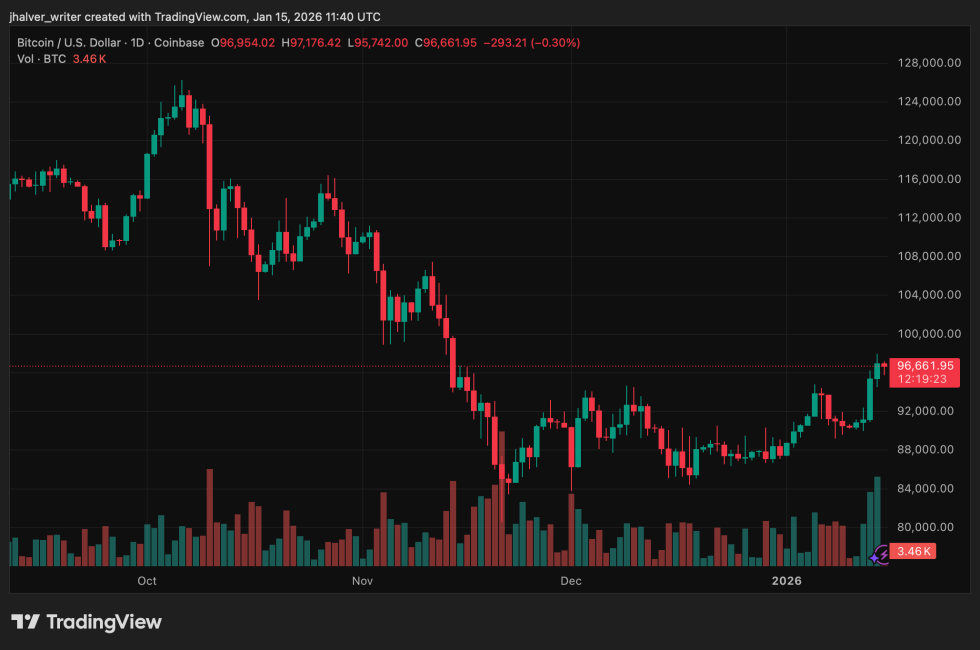
Cover image from ChatGPT, BTCUSD chart from Tradingview
