Bitwise CIO Fires Back: Bitcoin Belongs In Your 401(k) Despite Warren’s Latest Salvo

Another day, another Washington warning shot at crypto. Senator Elizabeth Warren just doubled down on her crusade against digital assets in retirement plans. Her timing? Impeccable—right as millions stare down another year of traditional portfolio mediocrity.
The Counter-Punch From Crypto's Corner
Enter Bitwise's Chief Investment Officer, Matt Hougan. He's not just shrugging off the political heat; he's leaning into the debate. His argument cuts straight to the core of modern portfolio theory: diversification. Hougan positions Bitcoin not as a speculative gamble, but as a non-correlated asset—a potential ballast when stocks and bonds wobble in unison. It's a defense built for fiduciary ears.
Why The 401(k) Fight Matters
This isn't academic. The 401(k) is the bedrock of American retirement. Getting crypto exposure there legitimizes it for the average investor, moving it from the fringe of a Coinbase account to the center of long-term financial planning. The regulatory pushback highlights the high stakes. Warren's camp sees risk; Hougan's sees progress being stifled. One man's prudent warning is another's innovation roadblock.
The Unspoken Reality Check
Let's be cynical for a second. The old-guard finance industry has built a towering, fee-laden fortress around your retirement savings. A direct, low-cost, self-custodied asset like Bitcoin? It bypasses the usual gatekeepers. That threatens a very lucrative status quo—one that has comfortably underperformed for decades while skimming its share off the top.
The bottom line: The debate has moved from 'Is Bitcoin real?' to 'Where does it belong?' That, in itself, is a seismic shift. The 401(k) battlefield might just decide if crypto remains an alternative investment or becomes a standard one. Buckle up.
Hougan Slams Bitcoin Restrictions In 401(k)s
On Monday, Bitwise CIO Matt Hougan discussed whether 2026 will be the year investors can own Bitcoin and other cryptocurrencies in 401(k) plans, as the inclusion of digital assets is becoming more common in individual retirement accounts (IRAs).
In an interview, the executive argued that providers are “slow to move,” but noted that the TRUMP administration’s pro-crypto shift, which removed “what was effectively a ban on Bitcoin from 401(k)s,” has opened the doors.
Hougan pointed out that large firms like Vanguard had strong restrictions but have recently relaxed their stance on Bitcoin investments. He argued that these bans are “ridiculous,” calling BTC “just another asset” that is no more volatile than stocks, such as those of Nvidia.
Does it go up and down? Absolutely. Is there risk in it? Absolutely. But it’s actually less volatile over the last year than Nvidia stock. And you don’t see any rules about banning 401k providers from offering Nvidia stock. That’s not that would seem ridiculous.
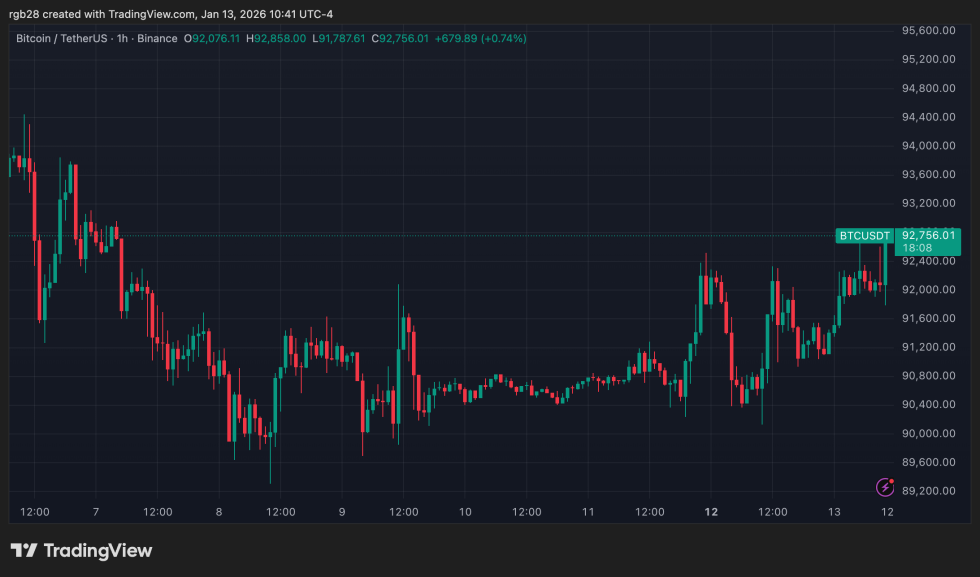
Recent K33 Research data showed that Bitcoin recorded the least volatile year in the asset’s history in 2025. Notably, BTC registered its lowest volatility level last year, with just 2.24%.
“So, I don’t know if the 401(k) providers will get all the way to the point of actually putting it in this year. These are very slow moving institutions, but we’re moving in that direction and eventually it’ll be normalized like other assets, which is how it should be treated,” he concluded.
Senator Warren Issues New Warning
Bitwise CEO’s remarks came as Democratic Senator Elizabeth Warren reached out directly to SEC chairman Paul Atkins to question how the Commission intends to protect investors from potential financial risks now that crypto investments are allowed in retirement plans.
As reported by Bitcoinist, the Department of Labor (DOL) rescinded in May a 2022 guidance that discouraged fiduciaries from including cryptocurrency investments in 401(k) retirement plans.
Months later, US President Donald Trump signed an Executive Order (EO) that aimed to allow more private equity, real estate, cryptocurrency, and other alternative assets in 401(k) retirement accounts.
The EO, signed on August 7, 2025, directed the DOL and the SEC to reduce regulatory barriers that prohibited investments in alternative assets in their defined contribution retirement plans.
In a new letter, the anti-crypto senator shared her concerns, cautioning that allowing Bitcoin and other crypto assets into these accounts could enable significant risks. She listed the “volatility associated with cryptocurrencies, the lack of market transparency, and potential conflicts of interest” as reasons to be cautious about introducing these assets into retirement plans.
She also emphasized that 401(k) plans are a vital source of retirement security for most Americans. Therefore, they should not be treated as a “playground for financial risk” that could put investors in vulnerable positions.
Despite Warren’s warnings, multiple US lawmakers have supported the Trump Administration’s efforts. In September, nine House members asked Atkins to provide “swift assistance” in implementing the president’s executive order and work with the DOL to protect workers.
Later, House of Representatives member Troy Downing proposed a bill to codify Trump’s directive, giving “the force and effect of law” and making it easier for investors to access Bitcoin and other alternative assets in their 401(k) retirement plans.