SEC Chair Declares: Blockchain Privacy Features Shouldn’t Trigger Automatic Regulatory Alarms

In a regulatory landscape where privacy often equals suspicion, the SEC's top official just threw a curveball.
The Privacy Paradox
For years, enhanced privacy on blockchain networks—think shielded transactions or confidential smart contracts—has drawn immediate scrutiny from watchdogs. The assumption? If you're hiding something, it must be illicit. The SEC Chair is now publicly challenging that knee-jerk reaction, suggesting the technology itself isn't inherently nefarious.
Reading Between the Regulatory Lines
This isn't a free pass. The statement carefully walks the line between acknowledging legitimate use cases for financial privacy and reiterating the SEC's mandate to police fraud. The message to builders: innovate on privacy, but don't think it's a cloak for skirting securities laws. The subtext for Wall Street? Maybe your precious, opaque over-the-counter derivatives desks should worry more than a zk-rollup.
A New Tone for a New Tech
The shift in rhetoric is subtle but significant. It moves the conversation from 'why do you need privacy?' to 'how are you using it?'—a fundamental reframe for an industry maturing under the microscope. It recognizes that in a digital age, the right to transactional privacy shouldn't be sacrificed at the altar of compliance, even if that compliance funds a lot of very nice suits in DC.
One cynical finance jab? Traditional banks have spent decades building systems so complex and interwoven that their privacy is guaranteed by sheer obscurity and regulatory capture. Blockchain just makes the hiding place a feature, not a bug.
Presumption Of Good Intent For Blockchain Privacy Users
Katherine Kirkpatrick Bos, general counsel at StarkWare, told reporters that regulators should not assume users of privacy tools are primarily engaged in wrongdoing. “Why must someone prove they are compliant upfront?” she asked.
“Instead, shouldn’t the starting point be that they are using it for legitimate purposes until proven otherwise?” She added that criminal use exists, but a balance is needed to avoid unfair suspicion.
More highlights from the @SECGov Crypto Task Force Roundtable on Financial Privacy & Surveillance
Three powerful voices made the case for privacy in crypto at the SEC’s roundtable:
J.W. Verret @theblockprof (George Mason Law) dropped a legal bombshell: He can’t find statutory… pic.twitter.com/jtSkFaltRK
— Paul Brigner (@paulbrigner) December 15, 2025
On Blockchain, AML And KYC Rules
The discussion also examined anti-money laundering (AML) and Know Your Customer (KYC) rules. Kirkpatrick Bos criticized current practices, noting that photo IDs can be faked in seconds.
She suggested cryptography-based tools could verify identity without exposing unnecessary personal information, such as home addresses, while still preventing fraud. Projects like Sam Altman’s World are already testing cryptographic keys that prove users are human without revealing private data.
Wayne Chang, CEO of SpruceID, said privacy is a growing demand among users of stablecoins. Reports indicate millions of dollars in stablecoins could MOVE on-chain if privacy features are available.
Some percentage of users will want to keep transactions private, Chang said. Privacy can drive adoption of stablecoins that haven’t fully migrated to on-chain systems, he said.
Atkins noted that blockchain and privacy tools have legitimate uses, including helping firms execute trades without tipping off competitors. Balancing public safety with privacy is critical, the SEC chief said.
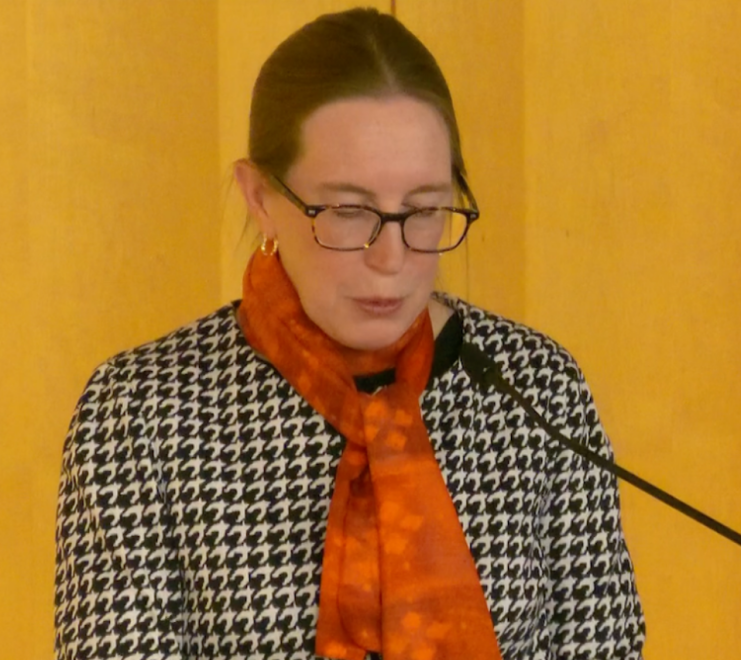
SEC Commissioner Hester Peirce, who leads the agency’s crypto task force, opened the roundtable alongside Atkins and Commissioner Mark Uyeda, discussing ways regulators might protect investors while respecting privacy as blockchain financial activity grows.
Blockchain: Ongoing Tensions On The SpotlightIndustry insiders said the roundtable did not result in immediate policy changes but highlighted ongoing tensions.
Regulators are weighing the benefits of privacy against risks of misuse, while market participants push for protections that could influence adoption and growth.
Based on reports, these conversations are likely to continue as technology evolves and crypto use becomes more mainstream.
Featured image from Yellow, chart from TradingView
