Major Ethereum Whale Returns: Buys $119M In ETH Amid Market Drop

Whale resurfaces, swallows $119 million in Ethereum as prices dip—a classic 'buy the fear' play that leaves retail traders scrambling.
The Signal in the Noise
Forget the panic on Crypto Twitter. While the crowd fixates on red candles, a single entity just executed a nine-figure vote of confidence in Ethereum's core infrastructure. This isn't casual accumulation; it's a strategic deployment of capital that speaks louder than any influencer's thread. The move targets ETH specifically, bypassing the altcoin casino entirely.
Decoding the Deposit Slip
The mechanics are telling. The capital didn't trickle in—it flooded a single address in a coordinated sweep, likely leveraging institutional-grade OTC desks to avoid slippage. This whale isn't day-trading; they're building a position, treating the recent market weakness as a discount window. It's the digital asset equivalent of a corporate buyback announcement, just without the shareholder press release and the CFO's carefully rehearsed optimism.
The Ripple Effect
Watch the order books. A purchase of this size doesn't just happen—it absorbs liquidity and can establish a local price floor. Other large holders (the 'pod' of whales) often interpret this as a leading indicator, potentially triggering a cascade of follow-on buying. Meanwhile, the average investor is still trying to time the bottom with a limit order for a fraction of an ETH, a quaint strategy in the age of nine-figure checks.
One cynical take? It's the ultimate 'smart money' flex—deploying capital that would bail out a small bank during a dip that's largely fueled by the emotional decisions of those using leverage they can't afford. The whale isn't trading against the market; it's patiently waiting for the market to come to its senses.
Whale Accumulation Raises Questions Amid Ethereum Weakness
Lookonchain data provides further insight into the recent actions of the 66kETHBorrow whale, highlighting a sequence that has drawn significant attention from the market. Over the past eight hours, the whale borrowed approximately $85 million in USDT from AAVE and transferred the funds to Binance.
Shortly after, he withdrew 38,576 ETH, valued at roughly $119.3 million, from the exchange. This rapid movement of capital during a market pullback has raised questions among smaller investors, many of whom are wondering whether this whale is acting on information or conviction that is not yet reflected in price.
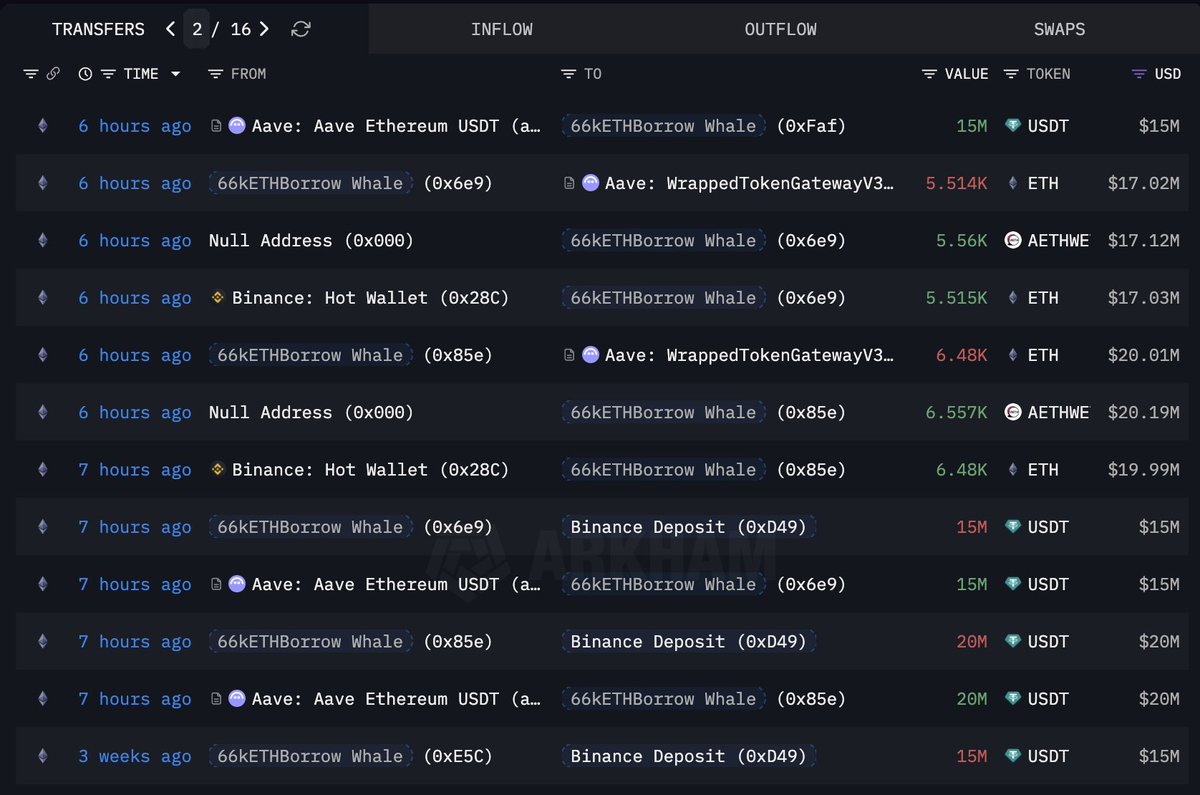
Such behavior is often interpreted as deliberate accumulation, particularly when ETH is withdrawn from exchanges rather than left on trading platforms. Exchange outflows generally reduce immediate sell-side liquidity, reinforcing the perception of long-term positioning. However, it is critical to acknowledge the limits of on-chain visibility. These transactions represent only the wallets that have been publicly identified and tracked.
There is no certainty that this whale’s exposure is fully transparent. He could be holding hedges, short positions, or additional long exposure through other wallets, centralized exchanges, or derivatives markets that are not visible on-chain. As a result, while the activity suggests confidence, it should not be interpreted as definitive directional confirmation.
ETH Price Struggles Below Key Moving Averages
Ethereum is currently trading NEAR the $3,150–$3,200 zone after a modest rebound, but the broader technical structure remains fragile. On the daily chart, ETH continues to trade below its 50-day and 100-day moving averages, both of which are now acting as dynamic resistance. The recent bounce stalled near the declining 50-day MA, highlighting the lack of strong follow-through from buyers.

The 200-day moving average, positioned closer to the $3,500 area, remains well above current price levels. This reinforces that Ethereum is still in a corrective phase within a larger macro uptrend. As long as price remains below this long-term trend indicator, upside attempts are likely to face selling pressure from both swing traders and systematic strategies.
Price action over the past weeks shows a series of lower highs following the rejection near $4,000 in October, confirming a short-term bearish market structure. However, ETH has so far defended the $2,800–$2,900 support region, suggesting that buyers are still active at lower levels.
For Ethereum to shift momentum decisively, bulls must reclaim and hold above the $3,300–$3,400 range. Failure to do so keeps downside risks open, with a potential retest of prior demand zones if broader market sentiment deteriorates.
Featured image from ChatGPT, chart from TradingView.com
