Matrixport Executes $352.5M Bitcoin Exodus From Binance: A Bullish Signal or Strategic Pivot?

In a move that sent ripples through the crypto ecosystem, institutional giant Matrixport orchestrated a massive withdrawal of Bitcoin from Binance. The $352.5 million transfer isn't just a routine transaction—it's a statement.
The Mechanics of a Mega-Move
Shifting that volume of assets requires more than just clicking a button. It involves navigating liquidity pools, managing slippage, and executing a strategy that often bypasses the public order book. This scale of movement suggests a premeditated plan, not a knee-jerk reaction to market noise.
Reading Between the Blockchain Lines
Large outflows from exchanges are traditionally interpreted as a bullish, long-term holding signal—coins moving into cold storage are coins taken off the immediate selling market. But context is king. Is this a vote of confidence in Bitcoin's intrinsic value, or a strategic reallocation ahead of anticipated volatility? Perhaps it's a bit of both, a hedge against the very exchange risk that centralized platforms inherently carry—a thought that would make any traditional finance risk manager's spreadsheet weep.
The Ripple Effect
When a whale like Matrixport moves, the tide changes for everyone. It impacts exchange reserves, influences market sentiment, and serves as a real-time case study in institutional crypto asset management. It reminds the market that while retail traders watch charts, major players are moving chess pieces on a much larger board.
One thing's clear: in the high-stakes game of digital asset custody, not your keys, not your coins—isn't just a mantra for the little guy. Sometimes, it's a $352.5 million strategy. The move underscores a growing preference for self-custody among sophisticated players, a trend that continues to reshape the landscape, proving that in crypto, the most significant signals often come from where the money *leaves*, not just where it goes.
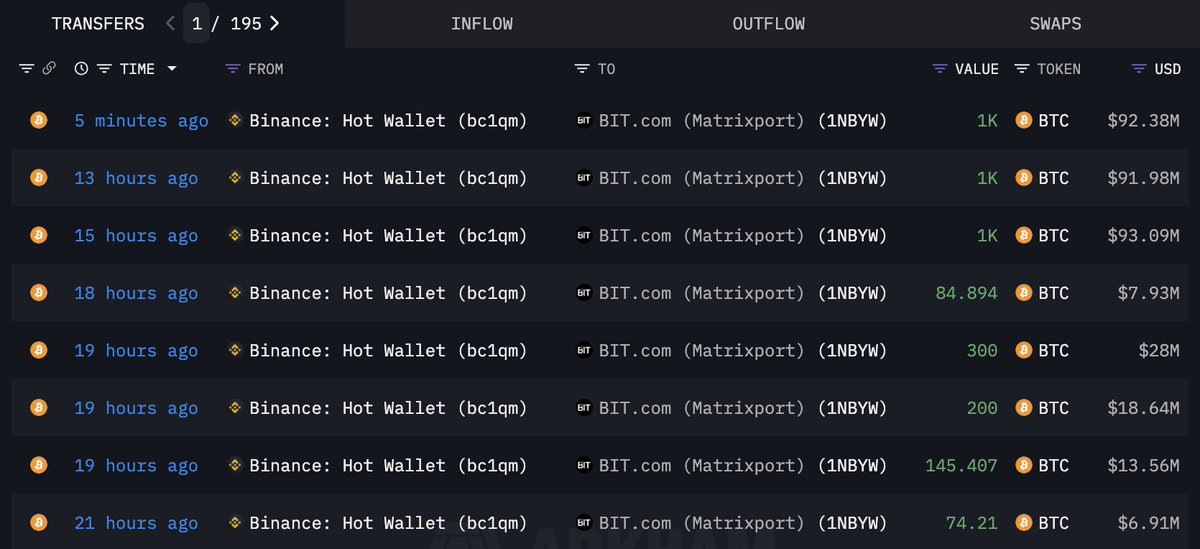
Large withdrawals from exchanges by institutions like Matrixport often signal accumulation, reduced selling pressure, or repositioning for custody and long-term holding. Combined with Bitcoin’s stabilization above $92K, this data adds an important LAYER of complexity to the current market outlook.
Institutional Positioning and a Changing Macro Landscape
Matrixport’s withdrawal of 3,805 BTC from Binance signals a potentially meaningful shift in institutional positioning. Large entities rarely move this size of capital without intention. Such withdrawals typically imply reduced selling pressure and a preference for custody over exchange liquidity, often interpreted as quiet accumulation.
For a firm managing billions in client assets, reallocating bitcoin off exchanges suggests growing confidence in medium-term price stability or an expectation of improving market conditions.
This move arrives at a pivotal moment in the global macro environment. The Federal Reserve has ended Quantitative Tightening (QT), marking a major transition from liquidity withdrawal to a more accommodative stance. Historically, the end of QT has preceded periods of asset reflation, as systemic liquidity begins to stabilize.
At the same time, Japanese bond yields have surged, signaling stress in one of the world’s most influential funding markets. A spike in Japanese yields often triggers global liquidity adjustments, particularly through the carry trade, which can ultimately redirect capital toward risk assets—including Bitcoin.
Additionally, markets expect the Federal Reserve to cut interest rates soon, further easing financial conditions. Lower rates weaken the dollar, reduce funding costs, and typically stimulate inflows into alternative and high-beta assets.
In this environment of softening monetary policy and rising liquidity, Matrixport’s aggressive Bitcoin accumulation could reflect growing institutional conviction that the worst of the downturn is behind us—and that Bitcoin may be entering a more favorable macro phase.
BTC Price Analysis: Testing Recovery Momentum
Bitcoin’s daily chart shows the market attempting to stabilize after the sharp decline that pushed price toward the mid-$80,000s. The rebound into the $91K–$93K zone marks the first meaningful recovery attempt, but the structure still reflects caution.
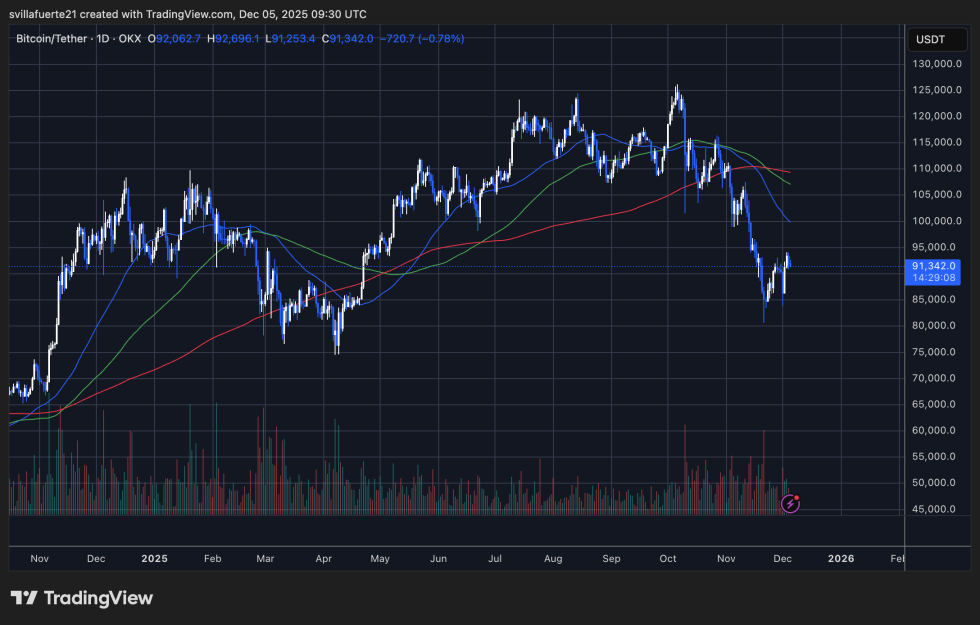
BTC remains below the 50-day and 100-day SMAs, which have both started to slope downward, signaling that the broader trend has not yet shifted back in favor of the bulls. Until Bitcoin reclaims these moving averages with strong volume, the market will likely see this move as a relief rally rather than a confirmed reversal.
Price is currently consolidating above the 200-day SMA, a level that often acts as a long-term trend gauge. Holding this region is essential; losing it WOULD risk a deeper drop toward earlier support zones near $82K–$84K. Volume activity during the bounce shows some improvement, yet it remains far below the levels seen during the late-October peak, suggesting that buyers are cautious and large players are not fully engaged.
The chart also shows a clear lower-high structure forming since September, confirming the bearish pressure that has dominated the last several weeks. For sentiment to shift decisively, BTC must break above $95K and rebuild momentum toward the psychological $100K mark. Until then, volatility and hesitation remain the defining features of this recovery.
Featured image from ChatGPT, chart from TradingView.com
