Binance’s Bitcoin Vault Dwindles as Market Chaos Intensifies

Binance's once-massive Bitcoin stockpile is shrinking—fast. The exchange's reserves are bleeding out amid a market storm that's rattling even the most hardened crypto veterans.
What's Behind the Exodus?
It's not just retail panic. The drain points to a perfect storm of institutional flight and regulatory pressure. When the world's biggest exchange starts losing its core asset, you know the tremors are real. This isn't a minor correction; it's a fundamental shift in where the 'smart money' parks its digital gold.
The Ripple Effect Across Crypto
Binance's shrinking Bitcoin balance acts like a canary in the coalmine for exchange liquidity. It forces the question: if the top player is feeling the pinch, what does that mean for everyone else? Trading pairs get thinner, spreads widen, and the entire ecosystem braces for impact—a classic case of finance where the 'liquidity' everyone praises vanishes the second you actually need it.
A New Chapter for Digital Asset Custody
This drawdown signals more than just market jitters. It's a loud, clear move towards self-custody and decentralized finance rails. Why trust a single ledger when you can hold the keys yourself? The era of blindly stacking coins on exchanges is fading, pushed aside by a demand for transparency and control that centralized platforms struggle to offer.
The bottom line? Binance's Bitcoin bleed is a symptom, not the disease. It highlights a market maturing through pain, where security and sovereignty finally trump convenience. The shakeout is brutal, but it separates the true believers from the fair-weather fans—and that's ultimately what builds a resilient future for finance, one skeptical investor at a time.
Binance Reserves Shrink
Based on an analysis by CryptoQuant, Binance’s bitcoin reserves have declined as more coins move off the exchange. Some of that shift comes from holders moving funds into private cold wallets for safekeeping.
Reports show that large buyers in the US — including spot ETF managers — are also taking coins off the market and placing them with custodians.
Those moves reduce the float available to traders and can add upward pressure on prices when demand rises.
Why Binance’s Bitcoin Reserves Are Declining
“Historically, such conditions have supported medium- to long-term price appreciation. The current trend suggests that Binance’s reserve decline is a normal re-accumulation phase.” – By @xwinfinance pic.twitter.com/g3TCG4o6GD
— CryptoQuant.com (@cryptoquant_com) December 3, 2025
ETF Buying And Self-Custody
According to analysts, US spot ETFs have been buying meaningful amounts of Bitcoin for their products. Funds from big issuers are held by trusted custodians rather than on trading platforms.
At the same time, ordinary holders and whales frequently shift holdings to self-custody during rallies, signaling they do not plan to sell soon.
Together, these trends remove supply from exchanges and help explain why reserves on Binance are shrinking.
Derivatives activity also played a role in recent exchange balances. Daily futures wipeouts have climbed from averages of about $28 million long and $15 million short in the prior cycle to NEAR $68 million long and $45 million short in the current run.
That uptick in forced exits peaked on Oct. 10, when over $640 million per hour in long positions were liquidated as Bitcoin slid from $121,000 to $102,000.
Open interest dropped roughly 22% in under 12 hours, falling from close to $50 billion to $38 billion at the time.
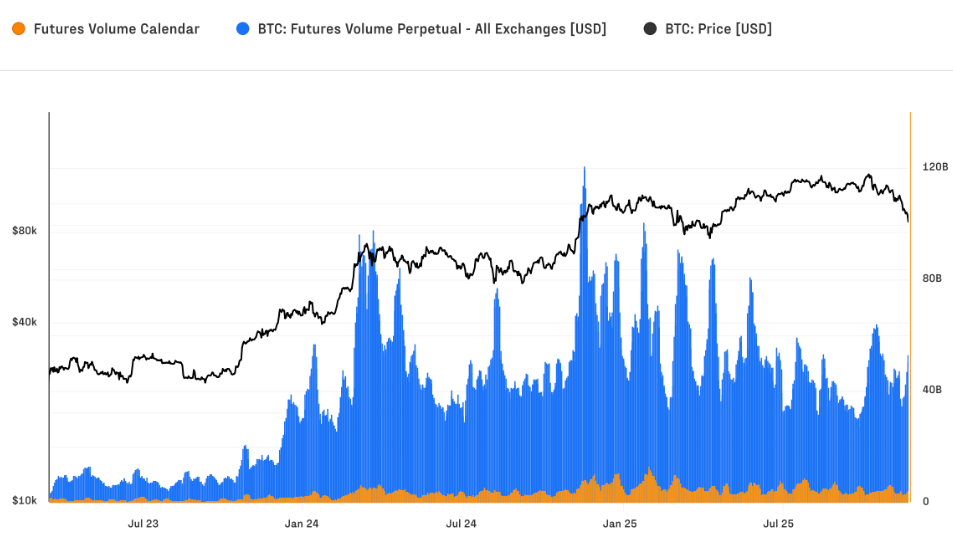
While those liquidations were dramatic, the futures market has grown overall. Open interest is at a record $67 billion and daily futures turnover reached $68 billion.
More than 90% of that activity is in perpetual contracts, which tend to amplify short-term moves. That combination raises both trading volume and the potential for sharp moves when sentiment flips.
Price Levels To WatchBased on trader calls, the market is watching the $92,000–$94,000 zone as a key resistance area. A clean daily close above that band could speed momentum toward $100K.
Nearer-term support sits around $88,000–$89,000, where buyers are expected to step in if prices pull back. Trading volume on a busy day climbed close to $86 billion, showing renewed interest from both retail and institutional participants.
Featured image from Safelincs, chart from TradingView
