🚀 Dogecoin Makes History: First-Ever Spot ETF Launches November 26

The meme coin that defied gravity—and skeptics—just scored Wall Street's ultimate validation.
From joke to juggernaut
Dogecoin's ETF debut marks a surreal milestone for crypto's favorite underdog. No longer just Elon Musk's Twitter plaything, DOGE now gets the institutional treatment—complete with management fees that'll make Bitcoin ETFs look charitable.
What's really in the prospectus?
The filing reveals 1:1 DOGE backing, but leaves one burning question: Will the fund actually pay dividends in memes?
Traditional finance never saw this coming. While analysts were busy dismissing 'internet funny money,' DOGE quietly built a $12B market cap—now it's getting the last laugh. Cue the institutional FOMO.
Countdown For A Spot Dogecoin ETF Is Now Ticking
The legal basis rests on the mechanics of Section 8(a). When an issuer removes the standard “delaying amendment” language from its S-1 registration and specifies effectiveness “in accordance with Section 8(a),” the filing is slated to become effective automatically after 20 days—unless the SEC acts to stop, delay, or require further amendments.
Context matters. In September, the SEC adopted generic listing standards that streamline the path for spot digital-asset ETFs on major exchanges, replacing the previous case-by-case 19b-4 gauntlet and compressing timelines. That policy shift has coincided with issuers increasingly leveraging 8(a) to go effective without an explicit “green light” order, as seen during October’s government shutdown when several non-BTC/ETH crypto ETFs launched after dropping their delaying amendments.
The October precedents are the real story behind Dogecoin’s timeline. On October 28, Bitwise’s solana Staking ETF (ticker: BSOL) began trading on the NYSE, giving investors 100% direct SOL exposure with staking economics in the wrapper; within hours it established orderly primary and secondary market flow and became the reference instrument for US SOL exposure.
In parallel, Canary Capital listed a spot Hedera product on Nasdaq under ticker HBR, opening regulated access to HBAR and demonstrating that smaller-cap networks could also clear the operational bar on day one.
Those launches landed while the SEC’s capacity was constrained, and they arrived precisely because issuers had removed the delaying amendments and allowed their S-1s to go effective after 20 days.
Balchunas’s read on Dogecoin—“plan on going effective in 20 days barring an intervention”—aligns with how those October debuts actually materialized. In each case, there was no splashy, bespoke approval order; instead, the clock simply ran under 8(a) and trading commenced when the window closed without SEC objection.
That is why the implied calendar date matters here: as Bitwise pulled its delaying amendment on November 6, the statutory count points to effectiveness around Tuesday, November 26, assuming the Commission does not intercede with a stop order or a further-amendment request which could as depend on the end of the US government shutdown.
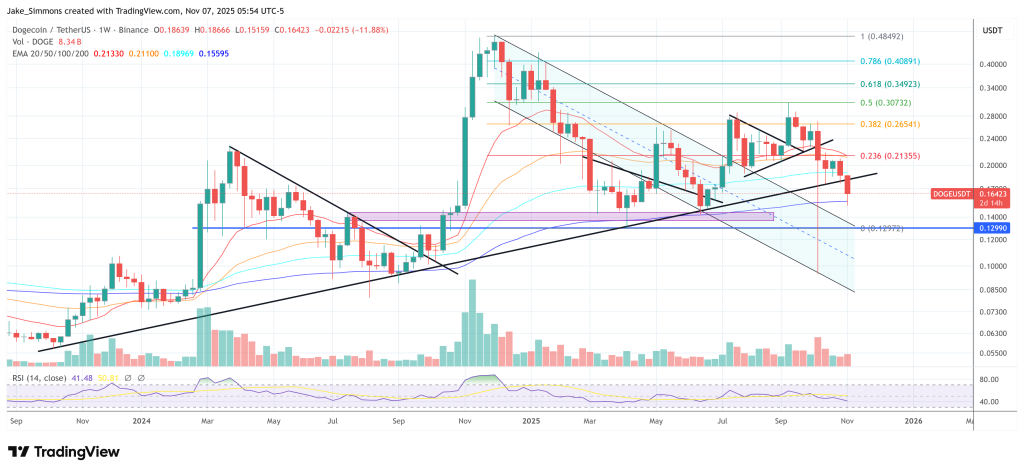
At press time, Doge traded at $0164.