BTC Pulls Back After Surging Above $81,000 — How Should Traders Approach the Next Move?

Over the past week, the crypto market has re-entered a period of elevated volatility. Bitcoin gained roughly 23%, briefly breaking above $81,000 before pulling back toward $79,000. ETH retreated to around $2,465, SOL fell toward $97, while major cryptocurrencies including XRP and DOGE also posted modest corrections. Despite the short-term pullback, BTC remains up more than 20% over the week and ETH is still nearly 29% higher, indicating that overall market momentum remains strong.
Market Analysis
The latest rally has been driven by a combination of macro liquidity conditions, improving regulatory expectations and short covering.
After the U.S. Treasury expanded its long-term Treasury buyback program, the dollar weakened and the “debasement trade” returned to focus, prompting capital to rotate into assets such as gold and Bitcoin. At the same time, expectations for a more favorable U.S. crypto regulatory environment strengthened, while ETF inflows resumed. BTC’s rapid breakout above key technical levels also triggered large-scale short liquidations, further accelerating the rally.
However, after a rapid sequence of gains, the market has shifted from a one-way rebound into high-level consolidation. In the near term, traders should closely monitor support around $78,000 and the $81,000–$82,000 resistance zone.
If BTC can reclaim and hold above $82,000, the broader trend could strengthen further. If it continues to struggle above $80,000 and subsequently breaks below $78,000, additional profit-taking could follow.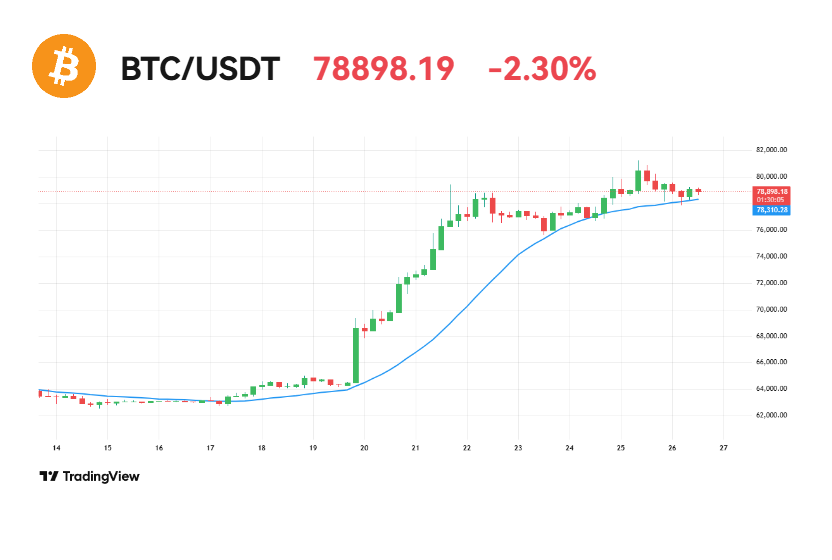
Market Views
Institutional investors and analysts have generally turned more constructive on Bitcoin’s medium-term outlook, although there is a clear divide over whether BTC can continue rising immediately in the short term.
Geoff Kendrick, Global Head of Digital Assets Research at Standard Chartered, said the U.S. Treasury’s expansion of long-term Treasury buybacks is “exactly the kind of thing Bitcoin likes.” He noted that one of Bitcoin’s original design principles was to provide investors with an asset outside this type of policy intervention. With long-end yields facing policy pressure and the dollar weakening, Bitcoin could continue to benefit from the “debasement trade.”
IG market analyst Tony Sycamore said concerns about currency debasement resurfaced after the Treasury announced larger bond buybacks, driving buyers toward both physical and digital assets. He added that if BTC can sustain a breakout from the current zone, it could open a path toward $95,000–$100,000.
From a technical perspective, Galaxy Research views Bitcoin’s 50-week moving average as a key dividing line. Its analysis shows that in 11 of the previous 13 completed bear markets, the bear-market low had already been established by the time BTC reclaimed its 50-week moving average. That average is currently near $81,000. If BTC can reclaim and hold around $82,000 on a weekly closing basis, historical patterns would provide stronger support for the view that the latest bear market has ended.
However, signs of short-term overheating are also emerging. CoinDesk noted that Bitcoin’s seven-day gain reached roughly 25% at one point, a reading that has been extremely rare over the past five years. Historically, similar moves have tended to be followed by slower upside momentum or temporary consolidation rather than another immediate surge.
Strategy Reference
Bullish Scenario:
BTC remains in a high-level consolidation structure, with $78,000–$79,000 serving as the primary short-term support zone. If price retests this area and quickly recovers, while trading volume improves and lower time frames form a Higher Low, it would suggest that bullish demand remains intact. Traders could then continue watching for a rebound toward the $81,000–$82,000 resistance zone.
A stronger trend confirmation would come from a decisive breakout above $81,000–$82,000. Rather than focusing on a brief intraday spike, greater importance should be placed on whether the four-hour or daily candle can close above resistance, accompanied by a moderate increase in trading volume and Open Interest (OI). If BTC then retests the $81,000 area and holds, former resistance could turn into support, strengthening the bullish structure further.
One risk to watch is weakening momentum. If BTC rebounds on steadily declining volume, or if price makes a new high while RSI, volume and other momentum indicators fail to confirm the move, a bearish divergence could develop and the risk of chasing longs would increase significantly.
Bearish Scenario:
The first question for bears is whether BTC can reclaim and hold above $80,000. If repeated rebounds fail to recover the $80,000–$81,000 area and price forms a Lower High at elevated levels, it would suggest that overhead selling pressure remains strong.
A clearer bearish confirmation would come from a decisive break below $78,000 support. If BTC breaks this level on the four-hour chart and then fails to reclaim $78,000–$79,000 on a retest, former support could turn into resistance, signaling a shift from high-level consolidation into a more formal correction.
The first downside target would be the $75,500–$76,500 area, which is close to a previous high-volume trading zone formed during the rally. If selling pressure intensifies further, secondary support around $74,000 should be monitored.
However, if BTC strongly reclaims $80,000 and subsequently breaks above $81,000–$82,000, the bearish thesis would weaken considerably. Continuing to short against the trend under that scenario would carry substantially higher risk.
Higher-beta assets such as ETH and SOL typically amplify Bitcoin’s directional moves. As a result, if BTC loses key support, altcoins could experience significantly larger drawdowns.
Explore More Trading Opportunities
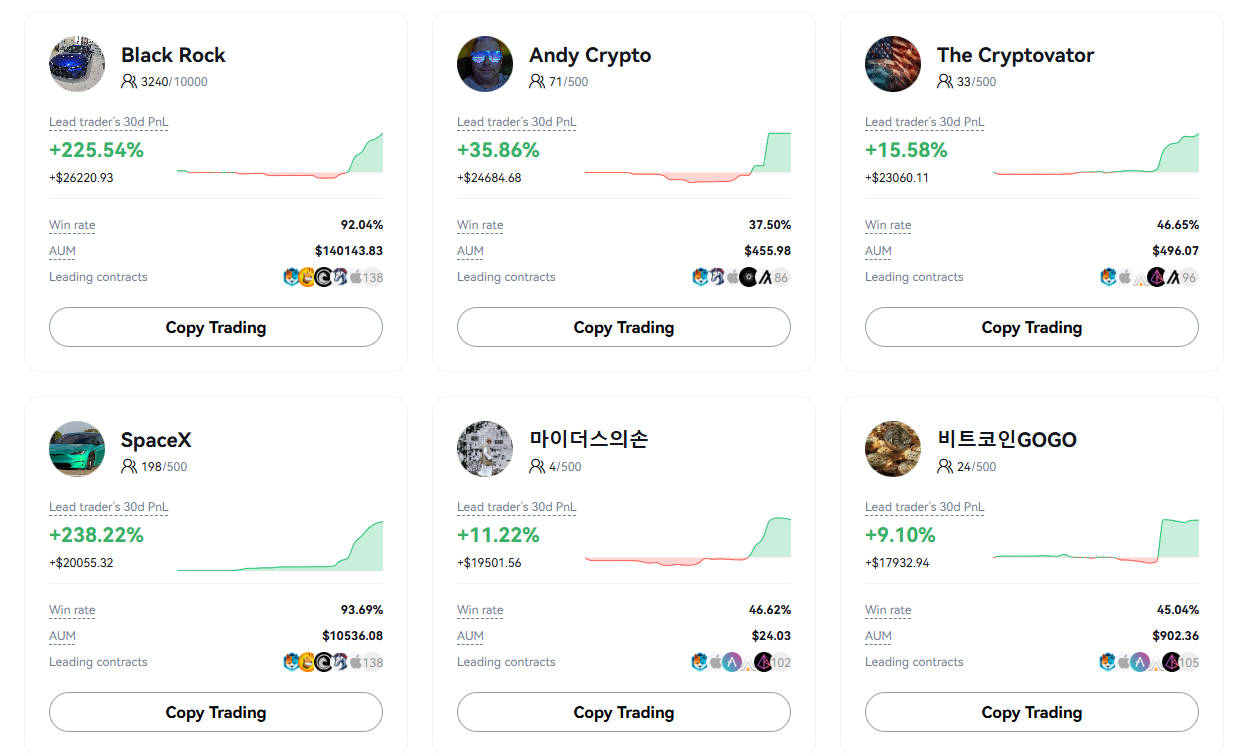
Volatility in BTC, ETH and SOL has increased significantly in recent sessions, creating more opportunities on both the long and short sides. Users who prefer a simpler way to participate can also explore copy trading by following top global traders and setting up their strategy with just a few steps.
BTCC is also offering an exclusive promotion for new copy-trading users: losses on your first copy trade are covered, providing additional protection for users trying copy trading for the first time.
👉 Start Copy Trading on BTCC Now
Disclaimer: Cryptocurrency prices are highly volatile. Copy trading does not guarantee profits, and past performance is not indicative of future results. Please participate according to your own risk tolerance.
This content is for informational and educational purposes only and does not constitute investment advice related to BTCC. BTCC makes every effort but cannot guarantee the truthfulness, accuracy, or originality of the content above.