Cold Wallet for Crypto: Top Devices Experts Trust to Protect Your Coins in 2026
 Written by AdekunleLast updated:
Over $2 billion has been lost to hackers and hot wallet compromises in 2025 alone. It is a great opportunity to remind newbies: if you don’t hold the keys, you don’t own the coins. And when it comes to holding the keys, a cold wallet for crypto does it best.
In this article, you’ll get to know the best way to handle your wallets, top crypto cold wallets for 2026.
Table of Contents
- What is a cold wallet?
- Top Cold Wallet for Crypto in 2026
- GridPlus Lattice1- Best Cold Wallet For High-Security Professionals
- Ledger Flex – Best Cold Wallet for New & Everyday Crypto Users
- Trezor Safe 5 – Best Cold Wallet For Transparency-Focused Users
- Comparison Table (Cold Wallets Overview)
- How to Choose the Best Cold Wallet for Crypto in 2026
- Conclusion- Cold Wallet for Crypto
- Sources
- How to Trade Crypto on BTCC?
- BTCC FAQs
/ You can claim a welcome reward of up to 10,055 USDT🎁\
What is a cold wallet?
A cold wallet is an offline wallet that is used to store your private keys. It is called a “cold” wallet because it is not connected to the internet (except for when you want to transfer tokens).
Cold wallets are also called hardware wallets, but there is a slight difference. Hardware wallets are physical devices that store keys offline, while cold wallets are simply offline wallets. So, all hardware wallets are cold wallets, but not all cold wallets are hardware wallets.
People choose cold wallets because they protect against malware, phishing, and remote network attacks. However, not all cold wallets are built the same.
In this crypto wallet security guide, we have handpicked the top cold wallets for crypto that experts trust. We also included tips on how to choose a cold storage wallet so you can make the best choice.
Top Cold Wallet for Crypto in 2026
Rather than give you a long list of popular offline crypto storage devices that can ultimately confuse you, we will narrow our recommendation to the best three options on the market. These are:
- GridPlus Lattice1- Best cold callet for high-security professionals
- Ledger Flex – Best cold wallet for new & everyday crypto users
- Trezor Safe 5 – Best cold wallet for transparency-focused users
GridPlus Lattice1- Best Cold Wallet For High-Security Professionals
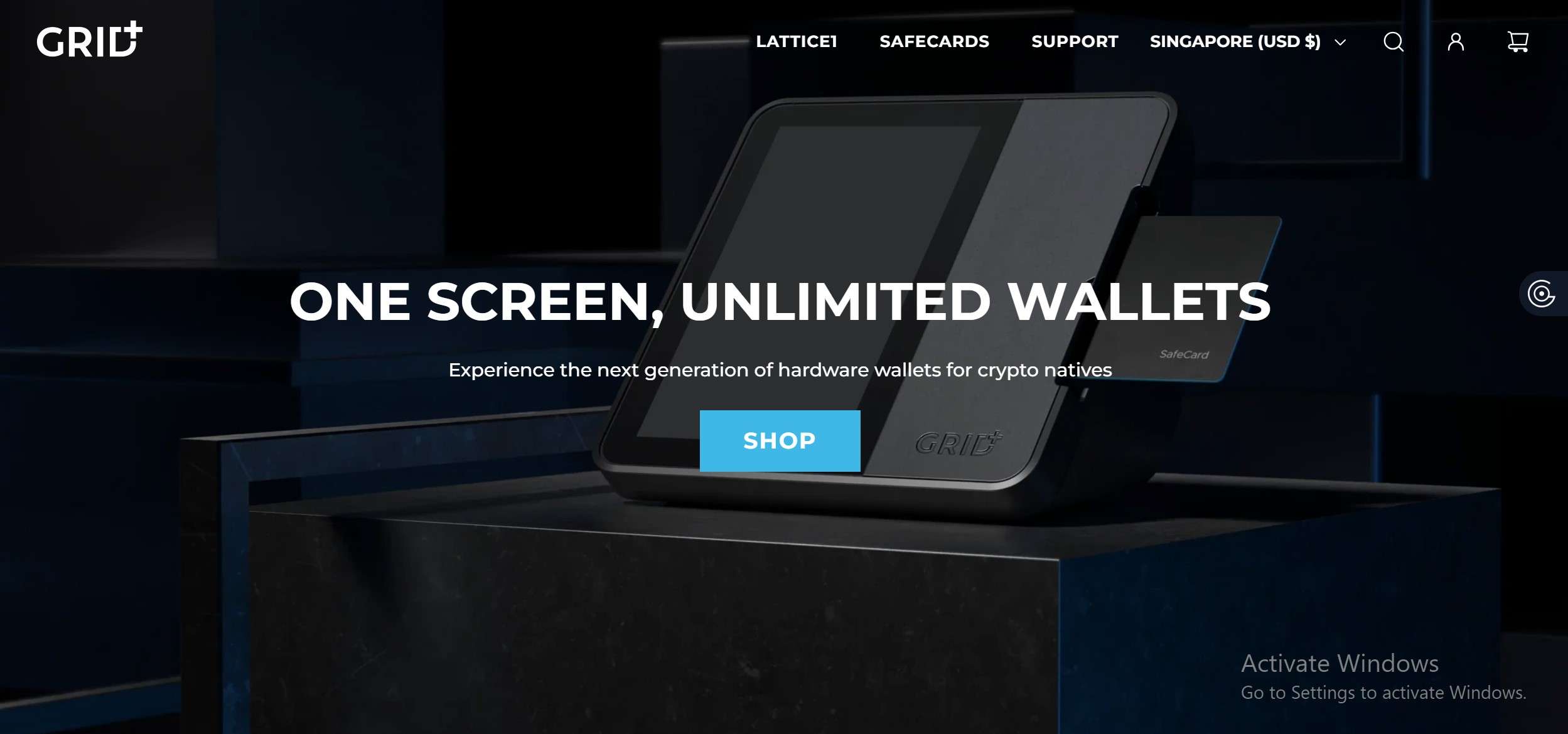
The GridPlus Lattice1 is designed like a point-of-sale terminal with a large touchscreen. Its large screen ensures that you can review and verify all transactions. Underneath, the cold wallet uses SafeCards (they look like credit cards) to back up crypto assets. This system ensures that your private keys remain safe from prying eyes.
The wallet supports popular blockchains and tokens, including Bitcoin, Ethereum, ERC-20 tokens, as well as NFTs. You can also use it with Web3 applications via MetaMask integration. This makes it great for high-volume traders, developers, and regular crypto users.
The only downside is that the firmware isn’t open source, so independent experts have not been able to audit the code for safety and privacy. For non-techie users, this may not be an issue.
Pros
- High-end security
- Large touchscreen display
- Supports most crypto assets
- Web3 compatible
Cons
- Not open source
/ You can claim a welcome reward of up to 10,055 USDT🎁\
Ledger Flex – Best Cold Wallet for New & Everyday Crypto Users
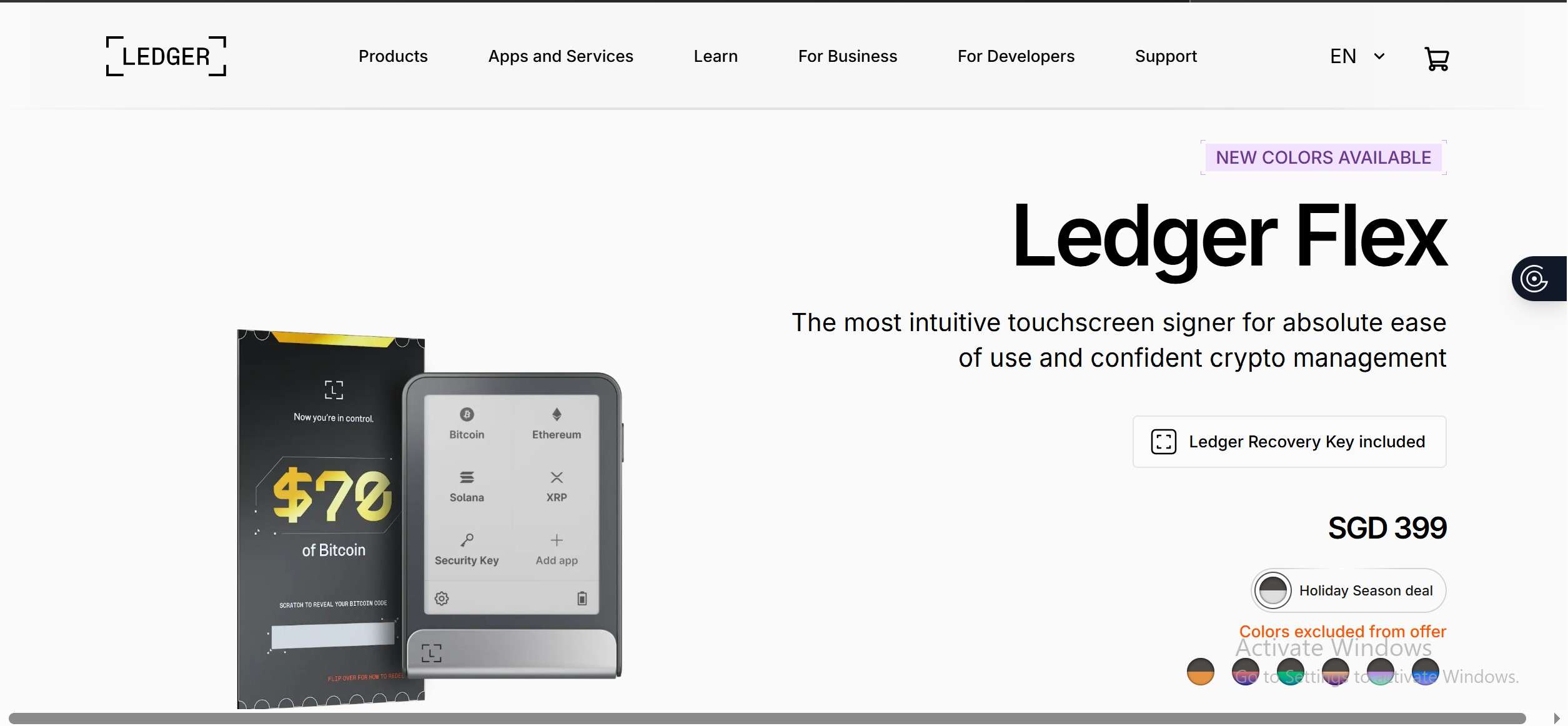
The Ledger Flex hardware wallet features an intuitive touchscreen and support for thousands of crypto assets. It is currently the best choice for users who want to match pricing with features when it comes to Ledger hardware wallet solutions. It works great with multiple devices and supports Web3 applications via its integration with MetaMask, Phantom, and Rabby.
The star feature is its 2.8-inch E Ink touchscreen display that allows users to review and sign transactions with ease. Under the hood, the key security feature is its Secure Element (SE) chip that keeps private keys secure from online attacks. The device has a low-power consumption model that extends battery life.
The Ledger Flex is recommended by experts for both high-volume investors, traders, developers, and regular users. The code is closed source, so independent reviewers have yet to audit it. But with years of solid safety and privacy output, experts are more than happy to recommend this wallet.
Pros
- 2.8-inch next-generation display
- Supports over 5,500 coins, tokens, and NFTs
- Certified Secure Element (SE) chip
- Supports multi-device connectivity via USB-C, bluetooth, and NFC
Cons
- Might be pricey
Trezor Safe 5 – Best Cold Wallet For Transparency-Focused Users

The Trezor Safe 5 is great for many reasons, chief of which is that the firmware is open source. Independent experts have audited the underlying code and consider it the best hardware wallet for developers, technical users, and even regular traders and investors.
It features a vibrant touchscreen display with a durable anodized aluminum body. Under the hood, the security architecture is powered by the NDA-free EAL6+ Secure Element. The wallet works great for both beginners and seasoned users. If you want an extra layer of security, you can create a passphrase. A passphrase secures your funds even if your seed phrase is compromised.
Thanks to its third-party integrations, it works seamlessly with Web3 applications as well as the Trezor trading platform. It also supports 9,000 assets, but through Trezor Suite.
Pros
- Users can choose a Bitcoin-only or multi-coin firmware version
- NDA-free EAL6+ Secure Element
- Premium design and touchscreen display
- Supports 9,000 cryptocurrencies and tokens
Cons
- The passphrase option can be complex for non-advanced users.
Comparison Table (Cold Wallets Overview)
| Feature | Ledger Flex | Trezor Safe 5 | GridPlus Lattice1 |
| Security Level | CC EAL6+ Secure Element | Open-source firmware, Secure Element | Physical SafeCards, air-gapped |
| Supported Assets | 5,500+ coins & tokens | 9,000+ (via integrations) | Major assets + SafeCard backups |
| Connectivity | USB-C, Bluetooth 5.2, and NFC, | USB-C | Wi-Fi (2.4 GHz only) and Ethernet (LAN cable), |
| Ease of Use | Very beginner-friendly | Beginner-friendly | Moderate learning curve |
| Unique Feature | Flexible E-Ink design, portable | Completely open-source, transparent | SafeCard vaults + tamper resistance |
| Best For | New & everyday crypto users | Transparency-focused users | High-security professionals |
/ You can claim a welcome reward of up to 10,055 USDT🎁\
How to Choose the Best Cold Wallet for Crypto in 2026
The most important feature device experts consider when selecting a hardware wallet is the security element. However, most users will also want to consider other factors like ease of use, connectivity, crypto support, and pricing.
Security elements
A good hardware wallet is only as good as its secure element. We won’t get technical, but you must ensure that the device is tamper-proof. All our recommendations come with a physical, tamper-proof chip that stores the private key.
Technical users may want to go one step further to audit the underlying code for vulnerabilities. Some hardware wallets, like Trezor Safe 5, allow this. Others, like Ledger Flex, are closed source. But unless you are on the technical side, you don’t need to worry about this.
Ease of use
Ideally, you want a hardware wallet that connects with the blockchain instantly and allows you to make your transactions without stress. The best cold wallets for crypto make this possible by offering touchscreen displays, mobile app connectivity, and physical buttons.
That said, you might have a small learning curve ahead of you. This is no issue since most devices offer intuitive displays. In most cases, you simply connect the wallet to your phone app and carry out transactions from there.
Connectivity
When you decide to make transactions, you will have to connect to the blockchain. The most common method is connecting to your phone via Bluetooth. A secure crypto wallet can also offer other connectivity options like NFC, WiFi, and USB.
If you do stuff in the Web3 space, then you need a wallet with built-in DeFi/NFT integration. The top hardware wallets of 2026, such as Ledger, GridPlus, and Trezor models, come with built-in integration with MetaMask and other platforms to access decentralized applications without compromising your keys.
Cryptocurrency support
Generally speaking, you can expect all hardware wallets to support popular crypto assets like Bitcoin, Ethereum, Solana, and the like. Many of them also support NFTs.
However, if you are a collector of niche tokens or you expect to amass not-so-popular crypto tokens, you just need to ensure your chosen wallet supports those tokens. You typically cannot go wrong with Ledger in this aspect. That said, it doesn’t hurt to confirm.
Pricing
Pricing comes last because what you pay to secure your crypto assets will always be smaller than what you lose when your wallet becomes compromised. That said, hardware wallets can easily cost hundreds of dollars. While this is insignificant for large-volume traders and investors, newbies might find the prices prohibitive. Thankfully, there are a number of affordable options on the market that do not sacrifice safety for price.
Conclusion- Cold Wallet for Crypto
From the article, it is clear that there is no perfect solution; however, the three hardware wallets here work great for most cases. If open source is a main priority, then the Trezor Safe 5 is the go-to option. Otherwise, the Ledger Flex and GridPlus Lattice1 wallets are equally great options.
However, remember that the goal of a cold wallet for crypto is to keep your private keys and assets safe. Don’t share your details under any circumstances, and don’t approve transactions you don’t recognize.
Sources
Elliptic – North Korea’s crypto hackers have stolen over $2 billion in 2025
Trezor – What is a hardware wallet?
Ledger – Security for DeFi and web3
For more educational contents about cryptocurrency, forex, wallets safety, altcoins trading, BTCC Academy is your sure bet
See Also:
- Cold Storage Wallet Comparison 2025: Best Devices for Secure Crypto Storage
- How to Swap Crypto Inside Your Wallet With the Lowest Fees in 2025 (Step-By-Step Guide)
- Hot Wallets vs. Cold Wallets: Which One Is Better?
How to Trade Crypto on BTCC?
This brief instruction will assist you in registering for and trading on the BTCC exchange.
Step 1: Register an account
The first step is to hit the “Sign Up” button on the BTCC website or app. Your email address and a strong password are all you need. After completing that, look for a verification email in your inbox. To activate your account, click the link in the email.

Step 2: Finish the KYC
The Know Your Customer (KYC) procedure is the next step after your account is operational. The main goal of this stage is to maintain compliance and security. You must upload identification, such as a passport or driver’s license. You’ll receive a confirmation email as soon as your documents are validated, so don’t worry—it’s a quick process.

Step 3. Deposit Funds
After that, adding money to your account is simple. BTCC provides a range of payment options, such as credit cards and bank transfers. To get your money into your trading account, simply choose what works best for you, enter the amount, and then follow the instructions.
- Fiat Deposit. Buy USDT using Visa/Mastercard (KYC required).
- Crypto Deposit. Transfer crypto from another platform or wallet.

Step 4. Start Trading
If you wish to follow profitable traders, you might go for copy trading, futures, or spot trading. After choosing your order type and the cryptocurrency you wish to trade, press the buy or sell button. Managing your portfolio and keeping track of your trades is made simple by the user-friendly interface.

Look more for details: How to Trade Crypto Futures Contracts on BTCC
BTCC FAQs
Is BTCC safe?
Based on its track record since 2011, BTCC has established itself as a secure cryptocurrency exchange. There have been no reports of fraudulent activity involving user accounts or the platform’s infrastructure. By enforcing mandatory know-your-customer (KYC) and anti-money laundering (AML) procedures, the cryptocurrency trading platform gives consumers greater security. For operations like withdrawals, it also provides extra security features like two-factor authentication (2FA).
Is KYC Necessary for BTCC?
Indeed. Before using BTCC goods, users must finish the Know Your Customer (KYC) process. A facial recognition scan and legitimate identification documents must be submitted for this process. Usually, it is finished in a few minutes. This procedure has the benefit of strengthening the security of the exchange and satisfying legal requirements.
Because their accounts will have a lower daily withdrawal limit, those who do not finish their KYC are unable to make deposits. It should be noted that those who present a legitimate ID without a facial recognition scan will likewise have restricted withdrawal options.
Is There a Mobile App for BTCC?
Indeed. For users of iOS and Android, BTCC has a mobile app. The exchange’s website offers the mobile app for download. Since both the web version and the mobile app have the same features and capabilities, they are comparable.
Will I Have to Pay BTCC Trading Fees?
Indeed. BTCC levies a fee for trade, just like a lot of other centralised exchanges. Each user’s VIP level, which is unlocked according to their available money, determines the different costs. The BTCC website provides information on the charge rates.
Can I Access BTCC From the U.S?
You can, indeed. According to its website, BTCC has obtained a crypto license from the US Financial Crimes Enforcement Network (FinCEN), which enables the cryptocurrency exchange to provide its services to investors who are headquartered in the US.
According to BTCC’s User Agreement document, its goods are not allowed to be used in nations and organisations that have been sanctioned by the United States or other nations where it has a licence.
BTCC Guide:
- How to Trade Crypto Futures Contracts on BTCC
- BTCC Guide-How to Deposit Crypto on BTCC?
- What is Crypto Futures Trading – Beginner’s Guide
- What is Leverage in Cryptocurrency? How Can I Trade at 100X Leverage?
- BTCC Review 2024: Best Crypto Futures Exchange
Crypto Buying Guides:
- How To Buy Bitcoin (BTC)
- How To Buy Picoin
- How To Buy Ethereum (ETH)
- How To Buy Dogecoin (DOGE)
- How To Buy Pepe Coin (PEPE)
- How To Buy Ripple (XRP)
Crypto Prediction:
- Ethereum (ETH) Price Prediction 2024, 2025, 2030 — Will ETH Reach $10,000?
- Ethereum Price Prediction 2024, 2025, 2030: How High Can ETH Go in 2024?
- Bitcoin (BTC) Price Prediction 2024, 2025, 2030 — Is BTC a Good Investment?
- Ripple (XRP) Price Prediction 2024, 2025, 2030 — Will XRP Reach $1 After SEC Lawsuit?
- Pi Coin Price Prediction 2024,2025,2030 — Is Pi Coin a Good Buy?
- Pepe (PEPE) Price Prediction 2024, 2025, 2030 – Will PEPE Reach $1